


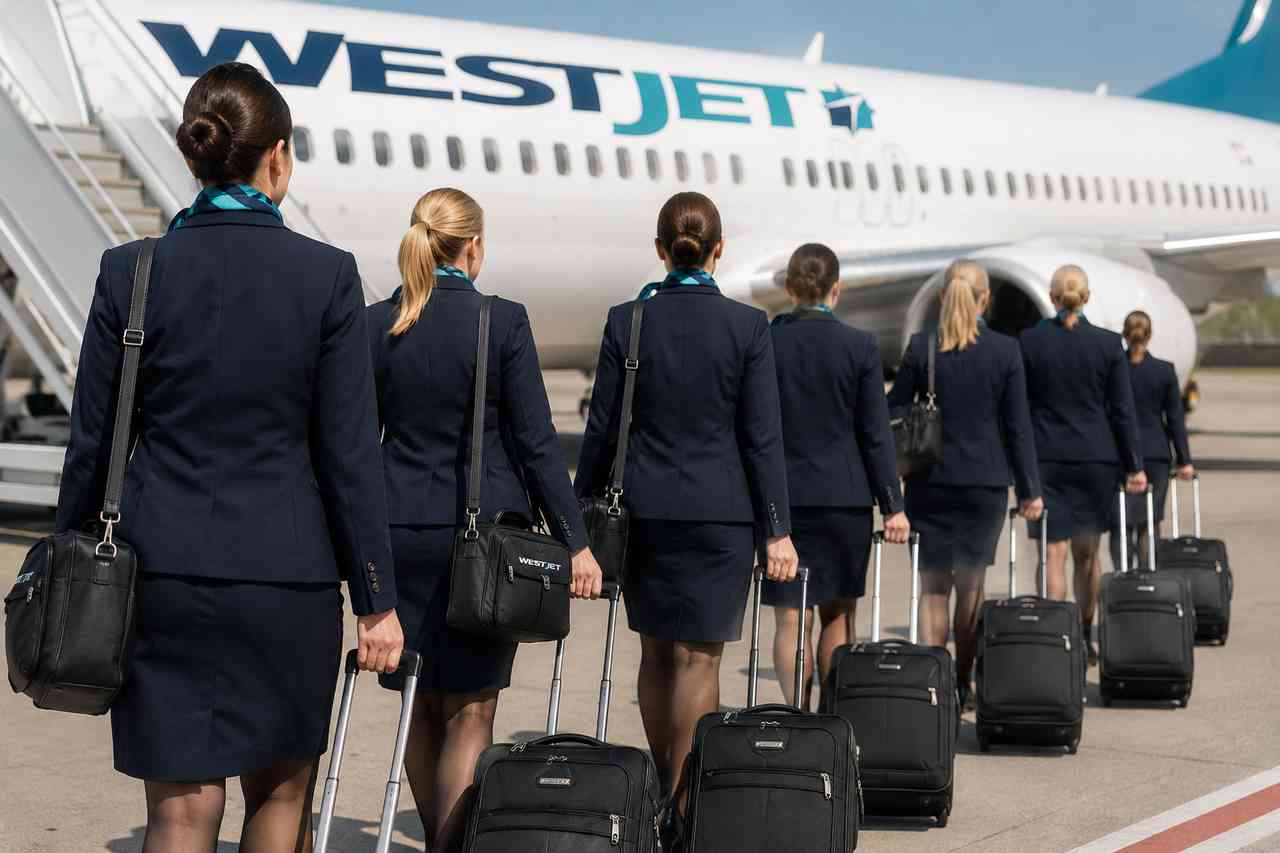
Labor dispute over unpaid ground-duty compensation could disrupt hundreds of flights across Canada and international routes
OTTAWA — WestJet could face significant travel disruptions during Canada’s busy August long weekend as the airline’s flight attendants move closer to a potential strike, following an overwhelming vote in favor of job action.
Approximately 4,400 flight attendants represented by the Canadian Union of Public Employees (CUPE) Local 8125 have authorized strike action after negotiations over a new collective agreement reached a critical stage. The union said 99.4% of participating members voted in favor of a strike mandate, with voter turnout reaching 97.3%.
The legal 21-day cooling-off period is scheduled to end Sunday, allowing strike action to begin if the two sides fail to reach an agreement. While the possibility of a work stoppage has raised concerns for travelers, both the airline and the union have indicated that negotiations remain active and a strike is not guaranteed.
The Calgary-based airline operates nearly 200 aircraft and serves more than 30 countries, with over 700 daily flights connecting more than 30 Canadian airports. Any labor disruption could affect thousands of passengers traveling during one of the country’s busiest holiday travel periods.
Travelers flying through major hubs, including Calgary International Airport, Toronto Pearson International Airport, and Vancouver International Airport, are being urged to closely monitor their flight status as bargaining continues.
Strike vote follows months of contract negotiations
Bargaining began after previous labor agreement expired
Contract negotiations between WestJet and its flight attendants began in September 2025 after the previous collective agreement expired in December. Federal conciliators entered the negotiations in May after a formal notice of dispute was filed, reflecting the growing gap between the two sides.
The strike authorization represents a key milestone in the bargaining process but does not necessarily signal an immediate work stoppage. Company officials have emphasized that strike votes are a standard component of collective bargaining and do not automatically result in labor action.
WestJet has also stated that negotiations have made progress, with dozens of contract provisions already settled while discussions continue on several remaining issues. According to CTV News, both sides are still working toward a negotiated agreement before the cooling-off period concludes.
Compensation for ground duties remains the central issue
Union seeks pay for all hours worked
At the center of the dispute is compensation for work performed outside scheduled flight time. The union argues that flight attendants complete an average of 35 unpaid hours each month under what it considers an outdated compensation model.
CUPE has maintained that its primary goal is to negotiate a new agreement while minimizing inconvenience for travelers. Union leaders contend that cabin crew members should receive pay for all hours worked, including duties performed before boarding and after passengers leave the aircraft.
WestJet, meanwhile, has said it remains committed to reaching a fair agreement that reflects the professionalism of its flight attendants while maintaining the airline’s long-term financial sustainability and competitive position within the aviation industry.
The company has reiterated that discussions are ongoing and expressed confidence that a mutually acceptable agreement remains possible before any strike action occurs.
Passengers offered flexibility amid uncertainty
Eligible travelers can change or cancel bookings without fees
To help customers manage uncertainty surrounding the potential labor disruption, WestJet has introduced flexible travel options for passengers scheduled to fly between July 30 and August 4.
Eligible travelers may make a one-time change to their itinerary or cancel their reservation without paying additional fees if they prefer not to travel during the period when a strike could occur.
Should a strike result in canceled flights, WestJet has indicated that such disruptions would generally be considered circumstances outside the airline’s control. Under Canadian air passenger protection regulations, passengers would typically not be entitled to compensation for cancellations resulting from labor action.
The potential disruption recalls last year’s three-day Air Canada flight attendant strike, which interrupted thousands of passenger journeys and required more than a week for the carrier’s network to fully recover.
With the August long weekend approaching, travelers, industry observers, and airline employees will be closely watching negotiations in hopes that an agreement can be reached before any labor action affects WestJet’s operations.
