


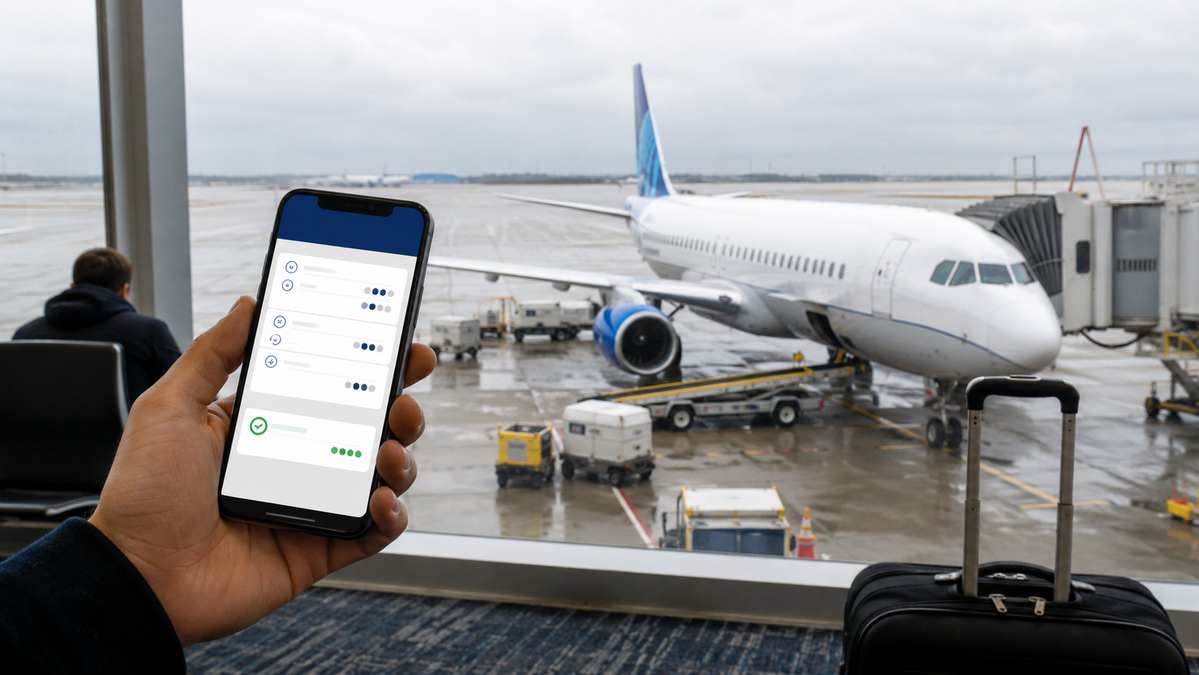
United Airlines has introduced a mobile app feature that gives passengers affected by travel disruptions more opportunities to secure an earlier departure. While the update provides greater flexibility for paying customers, it could make last-minute seat availability less predictable for airline employees and other non-revenue travelers.
United Expands Standby Options Following Disruptions
The Chicago-based carrier introduced the feature on September 1, 2026, describing it as an industry-first capability. Eligible passengers who are rebooked onto a later flight following a cancellation, delay or other disruption can join the standby lists for as many as three earlier United flights.
Previously, travelers could face a difficult choice between keeping a confirmed reservation and attempting to secure a seat on an earlier departure. United’s new system allows passengers to retain their confirmed itinerary while waiting for space on alternative flights.
The airline monitors seat availability on the selected services and sends the passenger a text message if a seat becomes available. The customer can then accept the earlier departure or keep the existing reservation.
Jennifer Schwierzke, United’s Vice President of Customer Operations, Strategy & Execution, said the feature allows customers to maintain their confirmed itinerary while standing by for three additional flights. She said United will monitor availability and alert customers when a seat opens.
Why the Feature Matters for Non-Rev Travelers
The update may create additional competition for airline employees and other non-revenue travelers who fly using space-available benefits.
Non-rev passengers generally receive seats only after paying customers and travelers with higher standby priority have been accommodated. Their ability to board often depends on seats remaining vacant shortly before departure.
Under the new system, a paying passenger affected by a disruption can hold a confirmed seat on a later flight while simultaneously pursuing space on up to three earlier departures. If a seat becomes available, that customer may receive the opportunity before it reaches the conventional non-rev standby pool.
The feature does not eliminate employee standby travel. However, it introduces another source of demand for seats that open during irregular operations, making passenger loads and final boarding prospects more difficult for non-rev travelers to predict.
United Builds on Automatic Rebooking Technology
United already uses automatic rebooking tools during major delays and cancellations. These systems are intended to move customers onto available alternatives without requiring them to wait in line at an airport service counter.
The expanded standby option adds another layer of flexibility. Passengers can pursue an earlier flight without surrendering the security of their confirmed booking.
United’s digital disruption tools can also provide eligible meal and hotel vouchers, track checked luggage and deliver updated itinerary information. These self-service capabilities are especially relevant at major hubs such as Chicago O’Hare International Airport, where severe weather or operational disruptions can affect large numbers of connecting passengers.
Mobile App Becomes Central to Customer Service
United said more than 85% of its customers use the airline’s mobile app on the day they travel. That figure is slightly higher than the more than 84% usage rate reported in December 2025.
Other app features include real-time checked-bag tracking, personalized connection assistance, airport directions and estimated walking times between gates.
United’s ConnectionSaver technology can identify passengers facing tight connections. When operational conditions permit, the system may recommend briefly holding a departing aircraft for customers who have a realistic chance of reaching the gate.
The airline has also introduced a virtual gate feature that displays the boarding group currently being called and shows boarding progress. Passengers can monitor the process remotely instead of gathering around the physical gate.
Rollout Comes Ahead of Labor Day Demand
United is introducing the expanded standby capability ahead of the 2026 Labor Day travel period. The airline expects more than 3.4 million customers to travel between September 3 and September 8, approximately 300,000 more than during the comparable period a year earlier.
The rollout reflects a broader airline industry shift toward app-based travel management. Ryanair, for example, moved to fully digital boarding passes on November 12, 2025. Its passengers are generally expected to complete online check-in and retrieve their boarding passes through the airline’s app, although certain airport assistance remains available.
Digital Tools Reshape Standby Competition
For disrupted United customers, the advantage of the new feature is clear: they can seek an earlier departure without losing their confirmed seat on a later flight.
For non-rev travelers, the consequences are less favorable. Seats that appear available may be assigned to disrupted revenue passengers before employee travelers reach the final stages of standby processing.
The exact impact will vary according to flight demand, available inventory and United’s priority rules. Still, the feature demonstrates how automated recovery tools are reshaping the allocation of last-minute seats—and potentially making non-revenue travel more challenging during busy or disrupted operating periods.
