


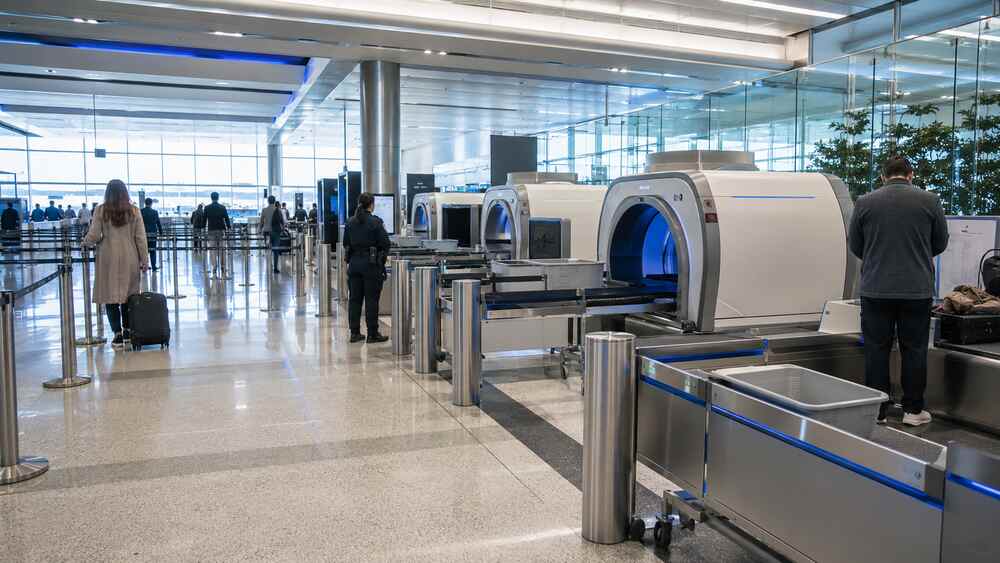
Hong Kong International Airport has taken the top position for airport security screening in the 2026 Skytrax World Airport Awards, leading a global ranking that includes major aviation hubs in Asia, Europe and the Middle East.
The World’s Best Airport Security Processing category evaluates several parts of the passenger screening experience, including efficiency, waiting times, queue management, priority lanes, technology and staff professionalism. Airports must balance rigorous safety requirements with growing passenger expectations for faster and less stressful journeys.
The latest ranking highlights how investments in computed tomography scanners, biometric identification and automated screening lanes are reshaping airport operations. Japan placed three airports in the top 10, while the United Kingdom and Italy each secured two positions.
Hong Kong Leads the Global Ranking
1. Hong Kong International Airport
Hong Kong International Airport ranked first after integrating advanced CT baggage scanners, biometric identification and efficient passenger-processing systems.
At many checkpoints, travelers can leave liquids and electronic devices inside their carry-on bags, reducing preparation time and helping queues move faster. The airport’s single-token biometric system also allows passengers to complete multiple stages of their journey using facial recognition.
Organized queue management, limited waiting times and professional security personnel further strengthened Hong Kong’s performance.
2. Chubu Centrair International Airport
Chubu Centrair International Airport in Nagoya, Japan, secured second place. Its screening areas are recognized for short waits, clear passenger guidance and a calm operating environment.
Dedicated lanes for families, older travelers and business passengers help manage different screening needs. Modern equipment and attentive service support the airport’s reputation for operational consistency.
3. London Heathrow Airport
London Heathrow Airport placed third following major investments in CT scanners, upgraded screening lanes and improved queue-management systems.
Handling tens of millions of passengers each year makes security processing particularly complex at Heathrow. Fast Track lanes, clearer signage and newer equipment have helped the airport reduce congestion and simplify procedures at many checkpoints.
European Airports Make a Strong Showing
4. Copenhagen Airport
Copenhagen Airport ranked fourth with a security operation built around automated tray-return systems, smart body scanners and spacious checkpoint layouts.
Its organized queues and passenger-focused design help maintain relatively short waiting times. Security employees are also recognized for combining a professional approach with clear and friendly communication.
5. Rome Fiumicino Airport
Rome Fiumicino Airport claimed fifth place as continued investment in infrastructure and customer service strengthened its international standing.
The airport operates dedicated lanes for families, business travelers and passengers requiring additional assistance. This approach helps distribute traffic more effectively while providing a screening process suited to different passenger needs.
6. Tokyo Haneda Airport
Tokyo Haneda Airport placed sixth, supported by orderly queues, multilingual signage and well-staffed checkpoints.
The airport maintains an organized security environment even during busy travel periods. Clear instructions and courteous employees help international passengers navigate screening requirements with minimal confusion.
7. Bahrain International Airport
Bahrain International Airport ranked seventh and was the highest-placed Middle Eastern facility on the list.
Its newer terminal features modern screening equipment, larger checkpoint areas and dedicated lanes for families and travelers with special requirements. These improvements have helped reduce congestion and strengthen Bahrain’s reputation as a regional aviation hub.
Technology Investments Drive Final Rankings
8. Tokyo Narita Airport
Tokyo Narita Airport became the third Japanese airport in the ranking, taking eighth place.
Advanced scanning systems, well-organized lanes and professional staff allow the airport to maintain efficient processing during major international departure periods. Clear communication also helps travelers complete security procedures without unnecessary delays.
9. Milan Malpensa Airport
Milan Malpensa Airport ranked ninth after upgrading its security technology, automated systems and checkpoint layouts.
As one of Italy’s busiest airports, Malpensa handles substantial international traffic. Its investments have improved passenger flow, reduced waiting times and created a more comfortable screening environment.
10. London Gatwick Airport
London Gatwick Airport completed the top 10. The airport has installed next-generation CT scanners and strengthened checkpoint management to process large numbers of passengers more efficiently.
Simplified procedures, clear guidance and trained personnel have helped Gatwick improve throughput while maintaining security standards.
Airports Focus on Faster, Less Stressful Screening
The 2026 ranking shows that the strongest airport security operations rely on more than advanced machinery. Effective queue design, trained employees, passenger communication and specialized lanes remain central to performance.
As global air traffic continues to expand, airports are expected to invest further in biometrics, automation and screening technology. The challenge will be maintaining strict safety requirements while delivering the speed, clarity and convenience increasingly expected by travelers.
