


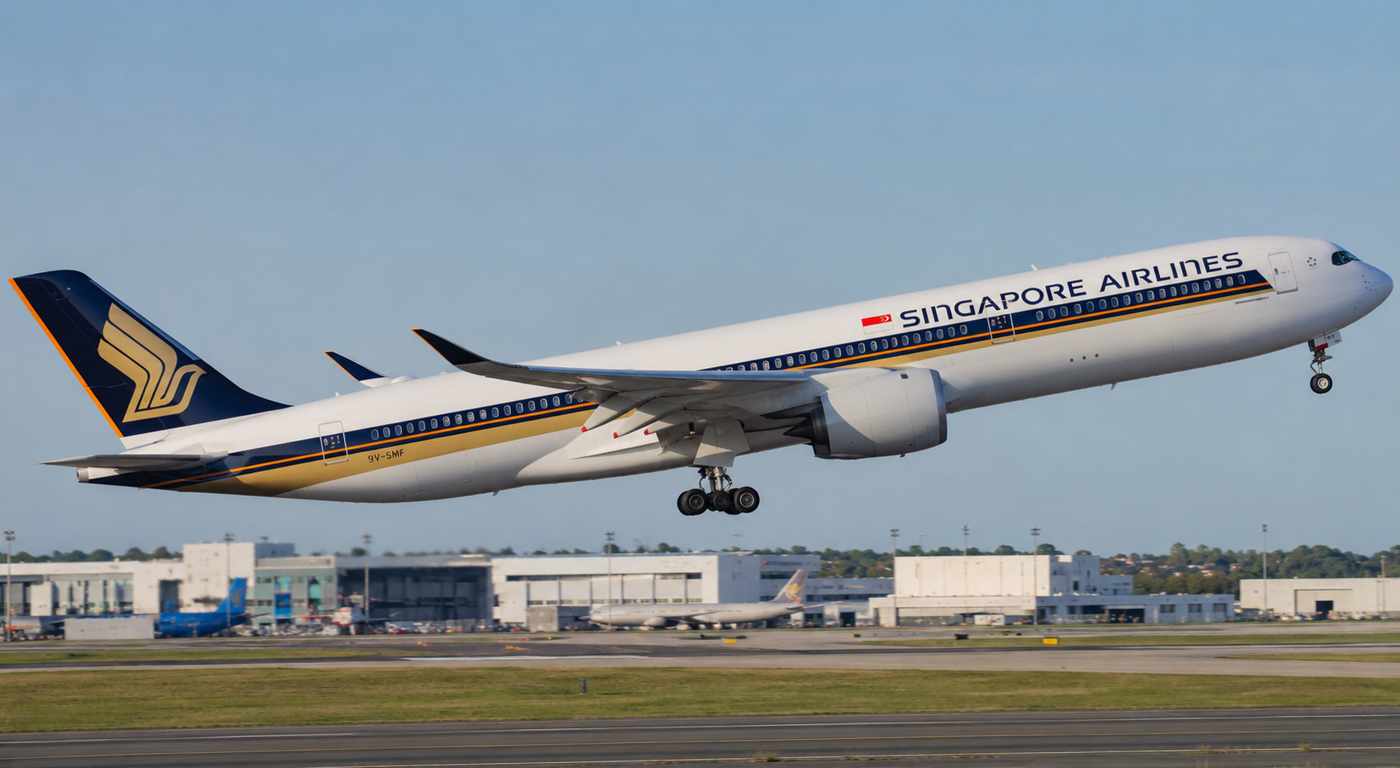
Singapore Airlines Expands Amsterdam Service Through October 2026
Singapore Airlines will increase flight frequencies between Singapore and Amsterdam in 2026, adding three additional weekly services as travel demand between Asia and Europe continues to strengthen.
The carrier said it will operate 10 weekly flights between Singapore Changi Airport and Amsterdam Schiphol Airport from Aug. 1 through Oct. 22, 2026. The temporary increase adds to the airline’s existing daily schedule on one of its most important long-haul European routes.
The expanded service comes as airlines across the Asia-Pacific region continue to restore and grow international capacity following a sustained rebound in both leisure and business travel.
Singapore Airlines said the additional flights will be operated using its Airbus A350-900 aircraft, a core component of the carrier’s long-haul fleet strategy.
Additional Flights Target Peak Travel Season
Under the revised schedule, Flight SQ334 from Singapore to Amsterdam will operate on Tuesdays, Thursdays and Saturdays. The return service, Flight SQ333, will depart Amsterdam on the same days.
According to the airline, the outbound flight will depart Singapore at 11:10 a.m., while the Amsterdam-bound return service will leave at 8:35 p.m. local time.
The carrier confirmed that tickets for the newly added services became available for purchase on May 25 across its booking and distribution platforms.
The move is designed to provide additional flexibility for travelers during the late-summer and early-autumn peak travel season, a period that typically sees strong demand for transcontinental flights between Southeast Asia and Europe.
Amsterdam remains a major gateway for both tourism and business travel within Europe, while Singapore continues to function as a critical aviation hub connecting passengers from across the Asia-Pacific region.
Amsterdam Seen as Strategic European Gateway
Singapore Airlines executives said the Dutch capital continues to play a significant role within the airline’s broader European network strategy.
Singapore Airlines Senior Vice-President of Marketing Planning Dai Haoyu said Amsterdam remains central to the carrier’s long-term European growth plans because of its strong connectivity and sustained passenger demand.
He added that Singapore’s Changi hub enables smooth onward connections for travelers originating from across Asia-Pacific markets and other international destinations.
The executive also indicated that the airline may evaluate whether to extend the additional Amsterdam services beyond October 2026 if market demand remains strong.
Industry analysts have identified continued demand for premium and leisure travel between Asia and Europe as a major factor driving network expansion by international carriers. Amsterdam, in particular, continues to serve as a key transfer hub for passengers traveling across the European continent.
Broader European Expansion Underway
The Amsterdam increase forms part of a wider European growth strategy by Singapore Airlines as global aviation markets continue recovering from pandemic-era disruptions.
In recent months, the airline has announced expanded services to several European destinations, including Manchester, Milan, Munich and London. The carrier is also preparing to launch a new route to Madrid later this year as it deepens its presence across the region.
The expansion reflects broader industry trends, with major airlines increasing long-haul frequencies to capitalize on rising international travel demand and improved passenger confidence.
Singapore Airlines has steadily rebuilt capacity across its network since global travel restrictions were lifted, focusing particularly on long-haul international operations.
The airline has also accelerated deployment of newer, fuel-efficient aircraft as part of its operational strategy aimed at balancing capacity growth with cost efficiency and sustainability goals.
Airbus A350-900 Central to Long-Haul Strategy
The Airbus A350-900 has become a cornerstone of Singapore Airlines’ intercontinental operations, particularly on routes connecting Asia with Europe and North America.
The twin-engine widebody aircraft is designed to deliver lower fuel consumption and reduced operating costs while offering improved passenger comfort on long-haul journeys.
Singapore Airlines operates several variants of the A350 fleet, including long-haul and ultra-long-range configurations used on some of the world’s longest commercial flights.
The aircraft has played a central role in the airline’s post-pandemic recovery and network rebuilding efforts, allowing the carrier to restore capacity efficiently while maintaining operational flexibility.
The additional Amsterdam services are expected to strengthen connectivity between Southeast Asia and Europe through Singapore Airlines’ hub operations at Singapore Changi Airport, one of the region’s busiest international transit centers.
