


Air Canada Crew Union Challenges Rouge Fleet Expansion Beyond Contract Limit
Union Accuses Airline of Breaching Labor Agreement
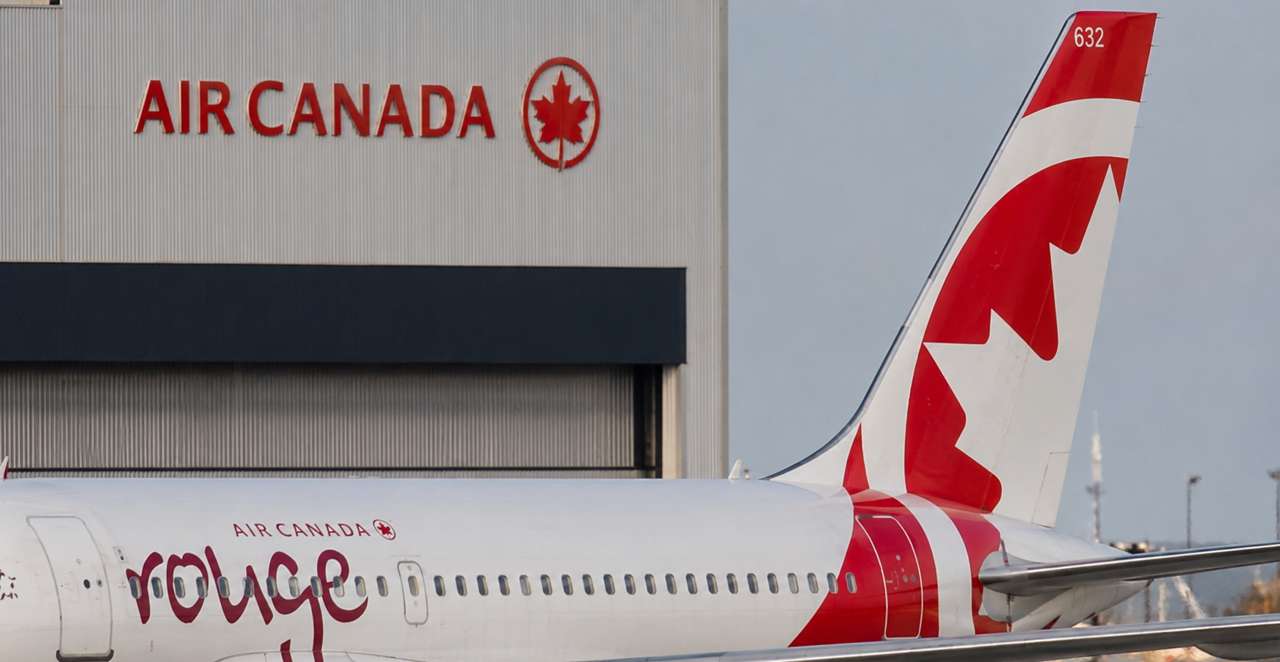
Air Canada is facing growing opposition from its cabin crew union after announcing plans to temporarily expand the fleet of its low-cost subsidiary, Air Canada Rouge, beyond a negotiated 50-aircraft limit.
The dispute has intensified tensions between the airline and the Canadian Union of Public Employees (CUPE), which represents Air Canada’s mainline flight attendants. Union officials argue that the carrier’s decision violates long-standing contractual protections designed to prevent the expansion of Rouge without union approval.
Air Canada recently informed employees that Air Canada Rouge would temporarily operate 52 aircraft, surpassing the cap established in collective bargaining agreements. CUPE responded by challenging the move and insisting that any increase above 50 aircraft requires explicit union consent, regardless of whether the expansion is permanent or temporary.
The labor group said it is seeking immediate compliance with the agreement and remedies for any impact on mainline cabin crew jobs. CUPE has also requested documentation supporting the airline’s interpretation of the contract provisions.
Rouge’s Role in Air Canada’s Network Strategy
Air Canada launched Air Canada Rouge in 2013 as part of a broader strategy to compete with lower-cost leisure carriers serving vacation destinations and seasonal markets.
The subsidiary enabled the airline to reduce operating expenses through lower labor costs, different staffing arrangements, and simplified onboard services compared with Air Canada’s mainline operation. Rouge primarily operates routes to sun destinations, tourist markets, and select leisure-focused international services.
From the outset, however, mainline flight attendants expressed concerns that the lower-cost subsidiary could eventually take over routes traditionally operated by Air Canada’s primary network.
During labor negotiations, CUPE secured protections that included a strict limit on the number of aircraft Air Canada Rouge could operate. The agreement capped the fleet at 50 aircraft unless the union agreed to any expansion during the life of the contract.
Contractual Protections at the Center of the Dispute
CUPE maintains that the airline’s latest move directly conflicts with multiple provisions in the collective agreement.
According to the union, one clause specifically restricts Air Canada Rouge to a maximum fleet of 50 aircraft, while another requires union approval before any increase can occur. Union officials contend that no such agreement was negotiated or approved.
Labor representatives argue that exceeding the limit could weaken employment protections established for mainline flight attendants after years of bargaining. The union has warned that allowing Rouge to expand beyond the agreed threshold could shift more flying away from the parent airline’s cabin crews.
The disagreement comes as Air Canada continues adapting its network strategy to strong demand for leisure travel, particularly on price-sensitive routes where lower-cost operations are viewed as increasingly important.
Industry analysts have noted that legacy airlines worldwide continue relying on low-cost subsidiaries to compete more aggressively in vacation markets while maintaining profitability.
Onboard Service Changes Add to Union Concerns
The fleet dispute follows another ongoing disagreement involving Air Canada Rouge’s evolving onboard product and service model.
Earlier this year, the airline introduced upgraded Boeing 737 MAX aircraft equipped with Premium Economy seating, seatback entertainment systems, and complimentary high-speed Wi-Fi. Air Canada Rouge also expanded complimentary onboard offerings, including free beer and wine service along with premium snack selections on certain North American and Caribbean flights.
CUPE argues that these upgrades are narrowing the distinction between Rouge and Air Canada’s mainline operation.
Union representatives said the subsidiary was originally intended to maintain clearly differentiated branding, cabin layouts, and service standards. According to the union, the increasing similarities between the two products could have broader implications for work allocation and long-term job protections for mainline flight attendants.
PYOK previously flagged the concerns surrounding the overlap between Rouge’s upgraded passenger experience and Air Canada’s core service offering.
Pressure Builds Ahead of Potential Labor Discussions
The dispute over the Rouge fleet cap adds another layer of labor pressure for Air Canada at a time when airlines across North America continue balancing operational growth with workforce concerns.
While Air Canada has not publicly indicated whether it plans to reverse the temporary fleet increase, the issue could become a significant point of contention in future labor discussions with CUPE.
For the union, the disagreement represents more than a short-term operational change. Labor officials view the fleet cap as a central protection intended to preserve mainline jobs and limit the expansion of lower-cost operations within Air Canada’s broader network strategy.
As demand for leisure travel remains strong, the outcome of the dispute may influence how Air Canada balances growth at Rouge with its contractual obligations to mainline cabin crew employees.
