


Airline Reports First Quarterly Net Loss Since 2022 as Rising Fuel Expenses Offset Record Revenue and Passenger Traffic
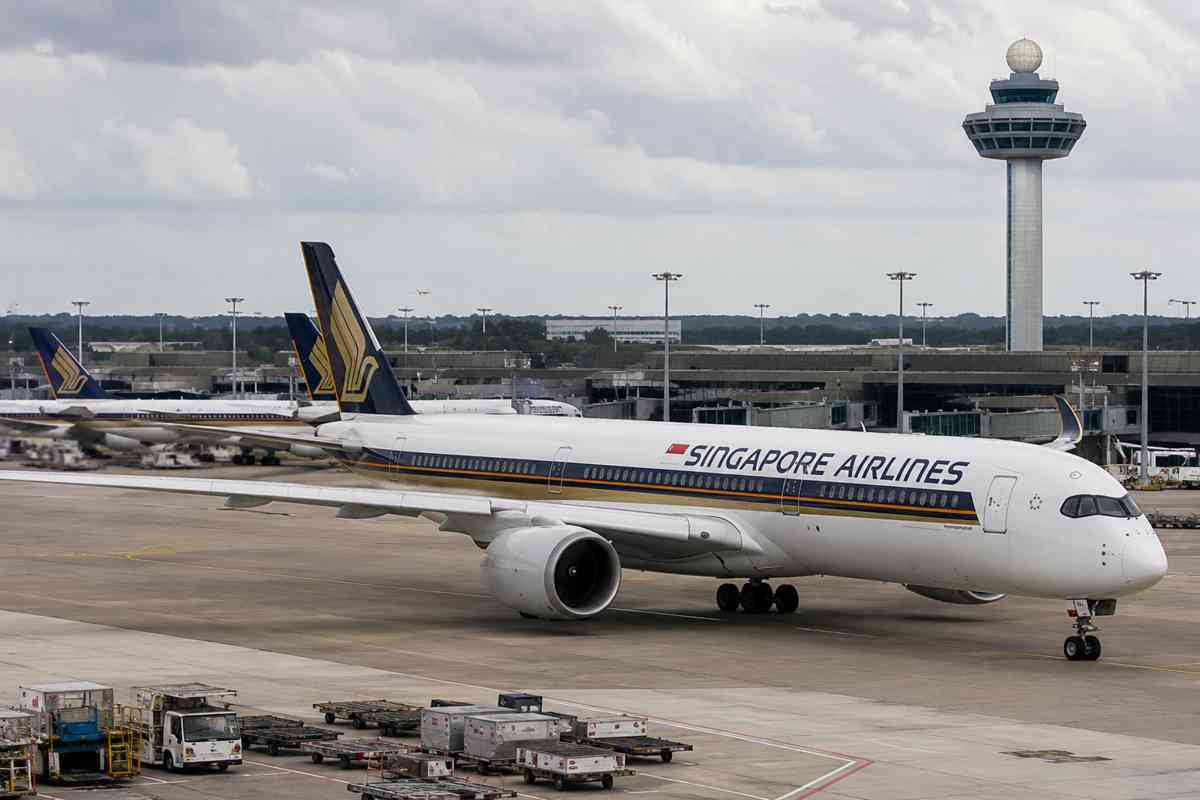
Singapore Airlines (SIA) is moving forward with a broad range of customer experience investments despite posting its first quarterly net loss in more than three years, underscoring the carrier’s long-term strategy to strengthen its premium travel offering while navigating rising operating costs.
The Singapore-based airline reported a net loss of S$76 million for the first quarter ended June 30, according to a filing with the Singapore Exchange on July 28. The quarterly deficit marked the airline’s first loss since 2022, as sharply higher fuel expenses erased gains from record passenger traffic and revenue.
Despite the loss, Singapore Airlines and its low-cost subsidiary Scoot transported a record 10.9 million passengers during the quarter, while the airline announced a series of initiatives that include upgraded airport lounges, enhanced cabin products, expanded airline partnerships and the future rollout of Starlink satellite internet connectivity.
Fuel Costs Overwhelm Record Revenue Performance
Singapore Airlines’ financial performance was heavily affected by soaring fuel prices during the quarter. Net fuel costs climbed 78.5% year over year to S$2.25 billion, increasing by S$991 million compared with the same period last year. Fuel costs before hedging more than doubled during the three months ended June 30.
The spike in fuel prices followed escalating geopolitical tensions linked to the Middle East conflict, which began on Feb. 28 and disrupted shipping through the Strait of Hormuz, one of the world’s most critical routes for global oil and gas transportation.
Fuel remains the airline’s largest operating expense, contributing to a 27.9% increase in total group expenditure. As a result, operating profit fell 73.8% to S$106 million.
The quarterly loss reversed a profit of S$186 million reported during the same period last year and was substantially worse than analysts’ expectations. Market consensus compiled by LSEG had projected a loss of approximately S$4.3 million.
Even so, Singapore Airlines achieved record quarterly revenue of S$5.71 billion, representing a 19.3% increase from a year earlier.
Passenger revenue rose 18.6% to S$4.58 billion, supported by a 12% increase in passenger yields. Cargo operations also performed strongly, with cargo revenue increasing 33.5% to S$708 million as both yields and freight loads improved.
Air India Investment Continues to Weigh on Earnings
Singapore Airlines said its 25.1% stake in Air India contributed additional pressure on quarterly earnings, with a higher share of losses from the Indian carrier reducing results by S$42 million.
However, the airline expressed confidence in Air India’s long-term transformation, stating that the carrier has made “tangible progress” under its restructuring plan alongside majority owner Tata Sons.
The update follows comments from Tata Sons Chairman N. Chandrasekaran, who recently described Air India’s turnaround as a five- to ten-year effort involving fleet modernization, operational improvements, supply chain recovery and cultural transformation. He also highlighted a significant improvement in the airline’s Net Promoter Score, which rose from minus 35 during fiscal 2023 to plus 42 as of June 2026.
Singapore Airlines said it is expanding cooperation with Air India through enhanced network connectivity, broader codeshare agreements and closer collaboration on loyalty programs, with additional initiatives expected to roll out progressively during 2026.
Airline Expands Strategic Partnerships Across Asia
Singapore Airlines is also strengthening relationships with other major Asian carriers as it seeks to expand regional connectivity.
The airline has received final regulatory approval for its commercial joint business with Malaysia Airlines. The two carriers introduced joint fare products for travel between Singapore and Kuala Lumpur in June, with additional customer benefits—including reciprocal lounge access and coordinated flight schedules—expected to follow.
Meanwhile, Singapore Airlines signed a commercial joint venture agreement with Air China in June. Subject to regulatory approval, the partnership is expected to include expanded codeshare services, coordinated scheduling, joint fare offerings and revenue-sharing arrangements.
Major Investments Planned for Passenger Experience
Alongside its partnership strategy, Singapore Airlines continues investing heavily in customer experience improvements across both its airport facilities and onboard products.
A new First Class SilverKris Lounge has opened at Singapore Changi Airport Terminal 2, while lounges in Brisbane, Bangkok and Hong Kong have already undergone refurbishment.
Work continues on upgraded Business Class SilverKris and KrisFlyer Gold lounges at Terminal 2, as well as a new SilverKris Lounge in Melbourne. The Terminal 2 redevelopment represents a S$45 million investment and will increase lounge capacity by approximately 50%, with completion targeted for mid-2027.
Later in 2026, Singapore Airlines plans to introduce next-generation long-haul cabin products featuring upgraded seating, a refreshed inflight entertainment platform, enhanced dining options and new amenity kits.
Beginning in 2027, the carrier will also progressively introduce Starlink’s low Earth orbit satellite broadband service across its fleet to improve onboard internet connectivity.
The airline said it remains firmly committed to investing in and enhancing its product and service offerings to elevate the end-to-end customer experience.
Geopolitical Risks Continue to Shape Industry Outlook
While demand for passenger travel and air cargo remains strong, Singapore Airlines cautioned that geopolitical uncertainty continues to create significant challenges for the aviation sector.
The airline said geopolitical developments, particularly the ongoing Middle East conflict, remain a major source of uncertainty, primarily because of their impact on jet fuel prices.
“Sustained elevated prices relative to pre-conflict levels have added significant cost pressure,” the airline said.
Singapore Airlines noted that although it and Scoot have adjusted passenger fares and cargo rates to offset some of the increased costs, those measures have not fully compensated for the sharp rise in fuel expenses.
The airline also warned that a prolonged Middle East conflict “may also affect supply chains, global trade and macroeconomic conditions.”
Looking ahead, Singapore Airlines said it will continue pursuing growth opportunities by leveraging its diversified passenger and cargo network, supported by Singapore’s role as a strategic Asia-Pacific aviation hub. The airline added that its dual-brand strategy, combining premium carrier Singapore Airlines with low-cost operator Scoot, provides the flexibility to adjust capacity and schedules as travel demand evolves.
Following the earnings announcement, Singapore Airlines shares rose 0.78% to S$7.77 on the Singapore Exchange.
