


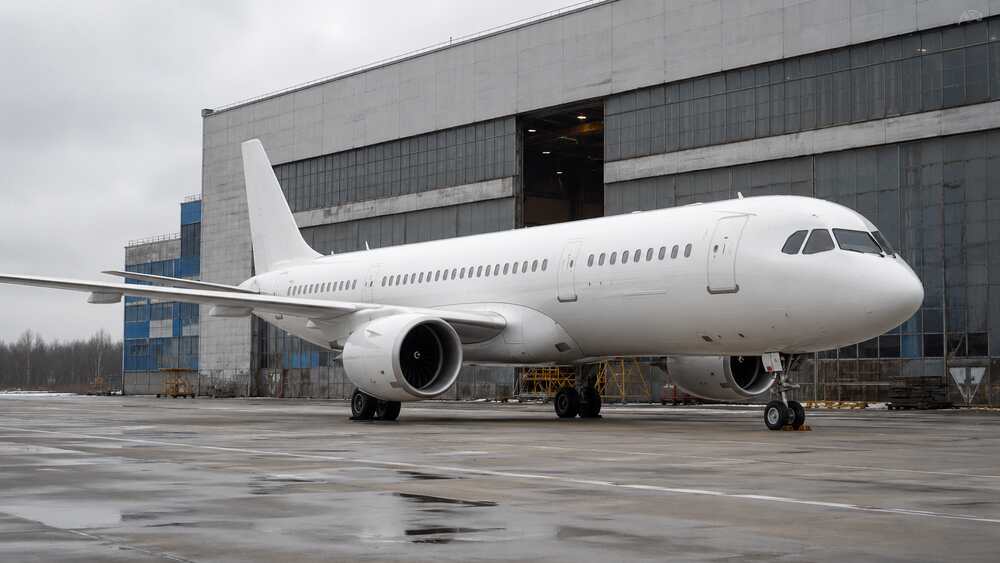
Russia is moving closer to introducing the Yakovlev MC-21 into commercial service, positioning the narrow-body aircraft as a cornerstone of its effort to rebuild a domestic aviation industry increasingly isolated from Western suppliers. However, escalating costs, reduced range, certification delays and limited production capacity threaten to restrict the jet’s impact on the country’s airline fleet.
Russia Pushes Domestic Aircraft Program After Western Sanctions
The MC-21 is being assembled at the Irkutsk Aviation Plant, with Russia’s largest airline, Aeroflot, expected to receive the first production aircraft after certification is completed.
Moscow has accelerated the program as sanctions imposed following Russia’s invasion of Ukraine disrupted access to Boeing and Airbus aircraft, engines, avionics and replacement components. Those restrictions have increased pressure on the country to develop an independent commercial aviation supply chain.
The MC-21 was initially designed with significant foreign content. Sanctions subsequently forced United Aircraft Corporation and its subsidiaries to replace imported equipment with Russian-made engines, systems and composite materials.
Those modifications have produced an aircraft that differs substantially from the original design. They have also created new technical and commercial challenges involving weight, operating performance, certification and manufacturing capacity.
Certification Progress Comes With Continued Delays
Production Aircraft Completes First Flight
The production-standard MC-21-310 completed its first flight in August 2026. The aircraft remained in the air for 1 hour and 23 minutes and reached an altitude of 6,000 meters, or approximately 19,700 feet.
State-owned industrial conglomerate Rostec reported that the MC-21 had completed more than half of its certification flight program. An initial group of 18 aircraft is also being prepared for delivery.
Russian officials have indicated that Aeroflot could receive those aircraft during 2026 and 2027. That timetable, however, remains dependent on certification progress and the ability of domestic manufacturers to produce critical components consistently and at scale.
Russia previously announced more ambitious production goals for the MC-21. Persistent industrial constraints and the extensive redesign of the aircraft have made those targets increasingly difficult to achieve.
Added Weight Reduces Range and Raises Operating Concerns
The shift to Russian-made components has affected the aircraft’s weight and performance. The localized MC-21 is reportedly about six metric tons, or roughly 13,200 pounds, heavier than originally planned.
That additional weight has reduced the jet’s effective range. The current version cannot operate nonstop between Moscow and Vladivostok under the conditions originally envisioned, limiting its usefulness on one of Russia’s most important long-distance domestic routes.
The reduced range could require airlines to assign the MC-21 to shorter routes or accept restrictions on passengers, cargo or fuel. Added weight may also weaken fuel efficiency, increasing operating expenses over the aircraft’s service life.
These limitations place Russian carriers in a difficult position. Purchasing a domestically manufactured aircraft would reduce their exposure to foreign suppliers, but higher acquisition and operating costs could undermine that strategic benefit.
Costs Climb as Russia Localizes Production
The projected cost of producing the first 18 localized MC-21 aircraft has risen from 58.3 billion rubles to 96.1 billion rubles. The estimated cost per aircraft has increased to approximately 5.34 billion rubles.
Such increases may require additional government support, subsidized financing or favorable leasing arrangements to make the jet commercially viable for Russian airlines.
The aircraft’s long-term economics will depend not only on its purchase price but also on fuel consumption, maintenance requirements, component availability and dispatch reliability. Establishing a dependable domestic support network will be essential if the MC-21 is expected to operate across Russia’s vast territory.
Aging Western-Built Fleet Adds Urgency
More than 400 foreign-owned aircraft, primarily Boeing and Airbus jets, remained in Russia after Western leasing companies terminated contracts following the invasion of Ukraine.
Russian airlines have continued operating many of those aircraft by expanding local maintenance capabilities, obtaining components through alternative channels and, in some cases, removing parts from existing planes to support others.
Approximately 20% of Russia’s commercial fleet has reportedly been grounded in recent years. The Moscow Times also reported that the number of recorded aircraft malfunctions reached 300 in 2024.
The MC-21 could provide Russia with an important domestically produced alternative, but its introduction will not resolve the country’s broader fleet challenges on its own. Certification must be completed, production must expand and costs must be controlled before the aircraft can become a meaningful replacement for aging Western-built jets.
