


Australian Investigators Examine Runway Safety and Air Traffic Control Operations
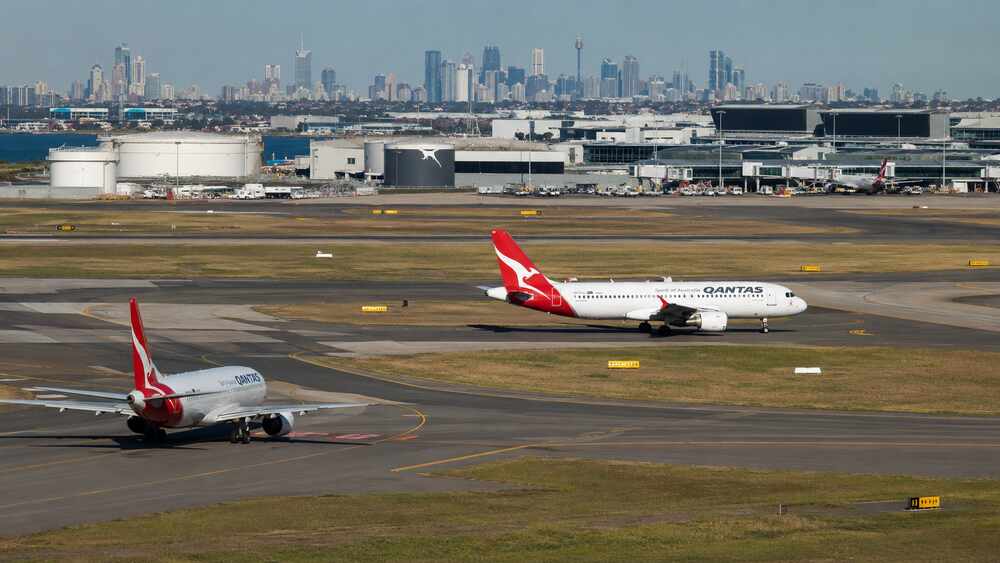
Two Qantas aircraft avoided a potential ground collision at Sydney Kingsford Smith Airport, prompting a formal safety investigation and intensifying scrutiny of air traffic operations at Australia’s busiest airport.
The incident involved a Qantas Airbus A321 preparing to depart for Gold Coast Airport and a Qantas Boeing 737 arriving from Melbourne Airport. It was the fourth reported near miss at Sydney Airport in approximately one month.
The Australian Transport Safety Bureau said neither aircraft faced an immediate risk of collision. However, investigators will examine whether conflicting or unclear air traffic control instructions contributed to the incident.
Airbus Crew Stopped Before Crossing Boeing’s Path
According to the ATSB, the Boeing 737 received clearance to make a right turn after landing in Sydney. At approximately the same time, the Airbus A321 was cleared to proceed while preparing for its scheduled flight to the Gold Coast.
As the Airbus approached the taxiway, its pilots noticed the Boeing moving toward them from the left. The Airbus crew applied the brakes normally and stopped the aircraft, allowing the Boeing 737 to pass safely ahead.
The bureau said the Airbus remained well clear of the Boeing’s path. The event was therefore classified as a safety incident rather than a serious incident under Australian transport safety regulations.
Despite the absence of immediate danger, the ATSB opened a full investigation because the circumstances appeared similar to several other recent runway incidents at Sydney Airport.
Investigation to Review Air Traffic Control Instructions
Investigators will interview the pilots and air traffic controllers involved in the event. They will also examine recorded radio communications, radar information, flight data and other operational records to reconstruct the sequence of events.
The ATSB will assess whether the instructions issued to the two flight crews were conflicting, unclear or misunderstood. It will also consider whether common contributing factors connect the latest incident with other runway events currently under investigation at the airport.
A preliminary report is expected within six to eight weeks. The bureau may release urgent safety findings earlier if investigators identify an issue requiring immediate action.
Qantas said both aircraft were operating in accordance with instructions provided by air traffic control. The airline also confirmed that it would cooperate fully with the investigation.
Sydney Airport Records Multiple Runway Incidents
The latest occurrence follows three other reported incidents at Sydney Airport since late July.
On July 27, a QantasLink aircraft arriving from Canberra came into conflict with a Qantas Boeing 737 taxiing after a flight from Queenstown. Investigators said one aircraft had received clearance to enter a runway while another was making its final approach to land.
On August 9, Virgin Australia Flight VA555, scheduled to travel from Sydney to Perth, and Qantas Flight QF728, bound for Ayers Rock Airport, were involved in a runway incursion. The incident resulted in a rejected takeoff.
Later that day, a Jetstar Airbus A320 and a Qatar Airways Boeing 777 came into close proximity during airport operations.
The ATSB is investigating the incidents separately while considering whether wider procedural or operational problems may have contributed to the recent pattern.
Air Traffic Controller Staffing Faces Greater Scrutiny
The string of runway incidents has renewed attention on staffing at Airservices Australia, the government-owned organization responsible for managing the country’s air traffic control system.
The Civil Air union has previously warned that shortages among Sydney air traffic controllers have increased overtime and operational pressure. Recently published roster information showed that eight of the airport’s 17 controllers worked more than 200 hours of overtime during the previous year. One controller reportedly recorded more than 900 overtime hours.
Staffing constraints have also affected airport capacity. Airservices Australia has occasionally increased the distance between aircraft during busy periods, reducing departure rates and contributing to delays.
Airservices Australia Chief Executive Rob Sharp has acknowledged that staffing shortages have caused frustration for airlines and passengers, but maintained that safety has not been compromised. The agency reduces traffic levels when staffing conditions require additional safety margins.
Recruitment Efforts Aim to Improve Operational Resilience
Airservices Australia plans to increase staffing by approximately 10%. The organization has trained and certified 55 new air traffic controllers this year, with another 40 expected to qualify in the coming months.
It is also developing a larger standby workforce at Sydney Airport to reduce overtime, stabilize work schedules and strengthen operational resilience.
Although the latest Qantas incident did not create an immediate collision risk, its similarity to other recent events has increased regulatory attention. The ATSB’s findings will help determine whether Sydney Airport requires procedural changes, clearer communications or additional safeguards to prevent future runway conflicts.
