


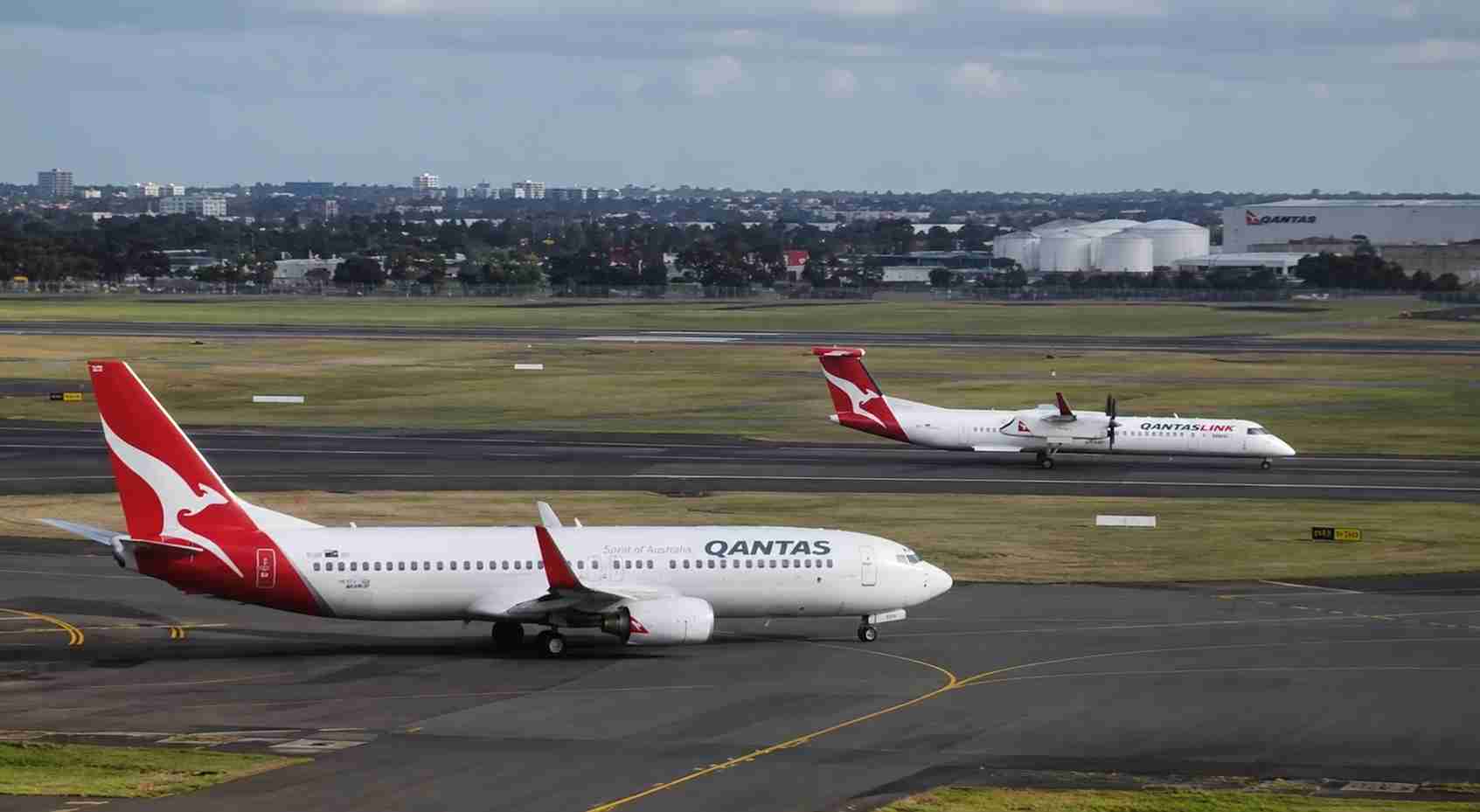
Australian investigators examine runway coordination after Qantas Boeing 737 and QantasLink Q400 were involved in a serious operational incident at Sydney Airport
Australian aviation safety investigators have launched a formal investigation into a serious runway incident involving two Qantas-operated aircraft at Sydney Airport, raising renewed questions about runway coordination and air traffic control procedures at one of the country’s busiest aviation hubs.
The incident occurred on July 27, 2026, when a Qantas Boeing 737 was cleared to cross an active runway while a QantasLink Dash 8 Q400 was still completing its landing roll on the same runway. Although the conflict was identified before either aircraft entered a dangerous situation, the occurrence has been classified by the Australian Transport Safety Bureau (ATSB) as a breakdown in operational coordination.
The investigation will focus on how the conflicting instructions were issued, while also examining broader operational conditions that may have contributed to the event.
Runway Conflict Prevented Before Aircraft Entered Active Runway
Controllers identified the conflict in time to avoid a runway incursion
According to the ATSB, the Boeing 737 had been waiting on Runway 25 when air traffic control instructed it to cross Runway 34L. At the same time, a QantasLink Dash 8 Q400 was still rolling out after landing on Runway 34L.
Before the Boeing 737 entered the active runway, air traffic controllers recognized the conflicting clearances and immediately alerted both flight crews. The Boeing 737 stopped at the designated holding point, preventing what could have become a serious runway incursion.
No injuries were reported, neither aircraft entered an unsafe position, and airport operations resumed after the incident without further disruption.
Qantas said both flight crews complied with all instructions issued by air traffic control throughout the event. The airline also confirmed it will cooperate fully with investigators as they work to establish the sequence of events and determine whether any operational factors contributed to the incident.
ATSB Launches Comprehensive Investigation
Investigators reviewing communications, radar data and operational procedures
The ATSB has begun collecting evidence from multiple sources to determine how the conflicting runway clearances were issued.
As part of the investigation, officials are reviewing communications between pilots and controllers, analyzing recorded radar information, examining technical data, and interviewing personnel directly involved in the occurrence.
Investigators aim to reconstruct the sequence of events in detail before determining whether procedural shortcomings, communication issues, or other operational factors played a role.
The investigation is expected to continue through the remainder of the year before the ATSB publishes its final report. That report may include recommendations designed to strengthen runway safety procedures, improve coordination between air traffic controllers and flight crews, and reduce the likelihood of similar incidents in the future.
Air Traffic Management Under Increased Scrutiny
Investigation comes amid wider concerns over staffing and operational pressures
The runway incident comes as Airservices Australia faces growing scrutiny regarding air traffic management performance across the country.
In recent months, airlines and airport operators have raised concerns over repeated flight delays and cancellations associated with shortages of qualified air traffic controllers. Industry groups have argued that staffing constraints have forced aircraft to remain on the ground longer than scheduled and, in some cases, enter airborne holding patterns while awaiting landing clearance.
These operational disruptions have increased costs for airlines, airports, and passengers while placing additional pressure on the country’s aviation network.
Airservices Australia, which manages Australia’s air traffic control system, said aviation safety remains its highest priority and confirmed it is assisting the ATSB throughout the investigation. The agency declined to provide further comment while the inquiry is ongoing.
Although investigators have not indicated that staffing shortages directly contributed to the July 27 incident, the inquiry is expected to examine whether broader operational pressures influenced the circumstances surrounding the conflicting runway clearances, according to the Daily Mail.
Industry Awaits Final Safety Findings
The ATSB’s final report is expected to provide a comprehensive assessment of how the coordination breakdown occurred and identify any safety improvements needed to strengthen runway operations.
As Sydney Airport continues to handle high volumes of domestic and international air traffic, aviation regulators, airlines, airport operators, and pilots will closely monitor the investigation’s findings. The outcome could influence future air traffic management procedures and reinforce safeguards designed to maintain the highest standards of runway safety at Australia’s busiest airport.
