


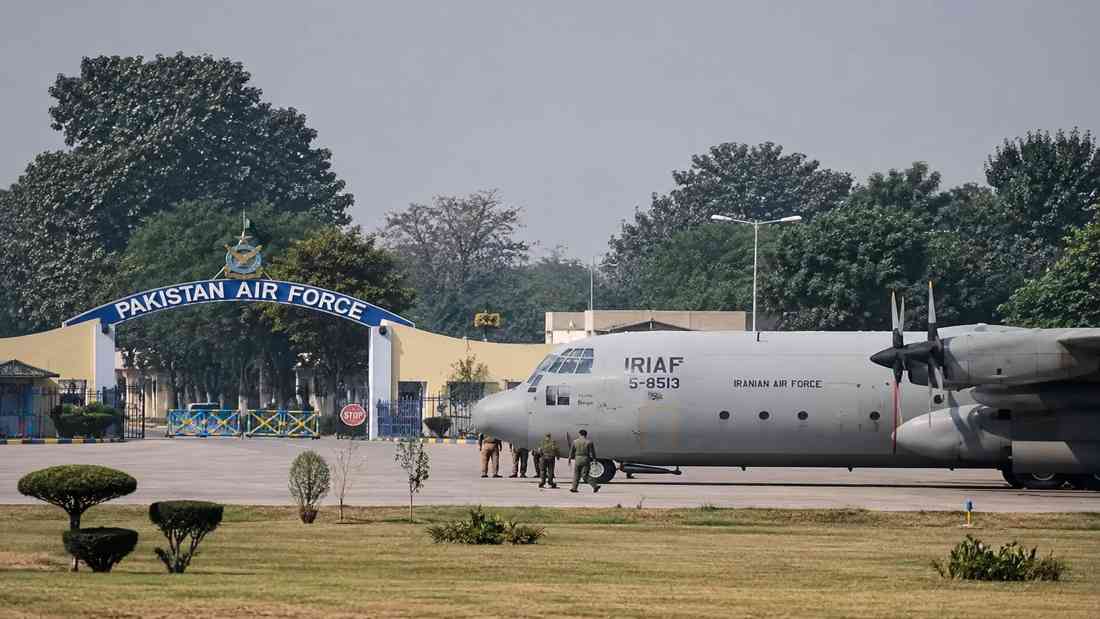
U.S. officials say Iranian RC-130 reconnaissance aircraft and other planes were stationed at Pakistan’s Nur Khan Airbase near Rawalpindi
ISLAMABAD — Pakistan reportedly permitted Iran to station military aircraft, including an Iranian Air Force RC-130 reconnaissance aircraft, at the strategically significant Pakistan Air Force Base Nur Khan near Rawalpindi during the recent Iran-United States conflict, according to U.S. officials cited by CBS News.
The reported aircraft movements occurred during a fragile ceasefire period in early April, at a time when Islamabad publicly portrayed itself as a neutral intermediary between Tehran and Washington. U.S. officials said the aircraft deployments appeared intended to protect Iranian military assets from potential American strikes as tensions escalated across the region.
The development highlights Pakistan’s increasingly delicate diplomatic balancing act as it seeks to maintain relations with the United States, Iran and China simultaneously amid a rapidly shifting geopolitical landscape.
Iranian Aircraft Reportedly Relocated to Pakistan
RC-130 reconnaissance plane among aircraft parked at Nur Khan base
According to U.S. officials cited by CBS News, Iran transferred multiple aircraft to Pakistan Air Force Base Nur Khan shortly after President Donald Trump announced a ceasefire with Iran earlier this year.
Among the aircraft reportedly stationed at the base was an Iranian Air Force RC-130, a reconnaissance and intelligence-gathering version of the Lockheed C-130 Hercules tactical transport aircraft. Officials speaking on condition of anonymity said the aircraft movements were likely aimed at shielding Iranian assets from possible U.S. military action during the height of the crisis.
Nur Khan Airbase, located near the military hub of Rawalpindi, is one of Pakistan’s most strategically important air facilities and has historically played a major role in both military logistics and diplomatic operations.
A senior Pakistani official rejected the allegations, telling CBS News that concealing multiple aircraft at the base would be impossible given its location in a densely populated urban area.
Pakistan Denies Military Arrangement
Foreign Ministry says Iranian planes supported diplomatic operations
Pakistan’s Ministry of Foreign Affairs acknowledged Tuesday that Iranian aircraft had entered the country during the ceasefire period but denied the presence was tied to any military contingency arrangement.
The ministry characterized claims of covert military coordination as “speculative and misleading,” stating that the aircraft were being used to transport diplomatic personnel and security teams connected to possible peace negotiations.
Islamabad also reiterated that it had consistently acted as an impartial facilitator throughout the crisis and maintained transparency with all relevant stakeholders. While formal negotiations between Tehran and Washington have not resumed, Pakistani officials said senior-level diplomatic communications remain active.
Iranian Civilian Aircraft Also Moved to Afghanistan
Mahan Air aircraft relocated from Kabul to Herat during regional tensions
Separate reports also indicated that Iran moved civilian aircraft into neighboring Afghanistan during the conflict. An Afghan civil aviation official told CBS News that a Mahan Air aircraft landed at Kabul International Airport shortly before hostilities intensified and remained there after Iranian airspace was closed.
During Pakistani airstrikes on Kabul in March, Taliban-led aviation authorities reportedly transferred the aircraft to Herat International Airport near the Iranian border as a precaution against possible bombing.
The Afghan official said the Mahan Air aircraft was the only Iranian plane still present in Afghanistan. However, Taliban chief spokesman Zabihullah Mujahid denied the claim, telling CBS News that reports of Iranian aircraft in Afghanistan were false.
Pakistan Navigates Competing Alliances
Islamabad balancing ties with Washington, Tehran and Beijing
The controversy underscores Pakistan’s increasingly complex strategic position as it balances relations among major global powers. Pakistan has deepened military and economic cooperation with China over the last decade, with a study by the Stockholm International Peace Research Institute showing China supplied roughly 80% of Pakistan’s major arms imports between 2020 and 2024.
At the same time, Islamabad has attempted to present itself to Washington as a stabilizing regional intermediary while avoiding policies that could alienate Tehran or Beijing, Iran’s most influential international partner.
China has publicly praised Pakistan’s efforts to facilitate indirect communication channels between Iran and the United States during the crisis.
Ceasefire Remains Fragile Amid Ongoing Clashes
Strait of Hormuz tensions continue despite diplomatic efforts
Despite the ceasefire announcement, regional tensions remain high. Iran recently proposed conditions for formally ending the conflict, including demands for U.S. war reparations, recognition of Iranian sovereignty over the Strait of Hormuz and the lifting of American sanctions. Iran’s state-run broadcaster disclosed the proposal through a social media post.
President Trump publicly dismissed Tehran’s proposal as “totally unacceptable,” though he did not specify which demands were rejected.
Meanwhile, sporadic clashes have continued around the Strait of Hormuz, highlighting the instability of the ceasefire arrangement. The United Arab Emirates reported renewed Iranian drone activity targeting its territory, while three U.S. Navy destroyers transiting the strategic waterway reportedly came under attack last week, prompting retaliatory American strikes on two Iranian ports near the strait.
President Trump is expected to discuss the Iran conflict during upcoming meetings with Chinese President Xi Jinping in Beijing, where trade disputes and Taiwan-related tensions are also expected to dominate the agenda.
