


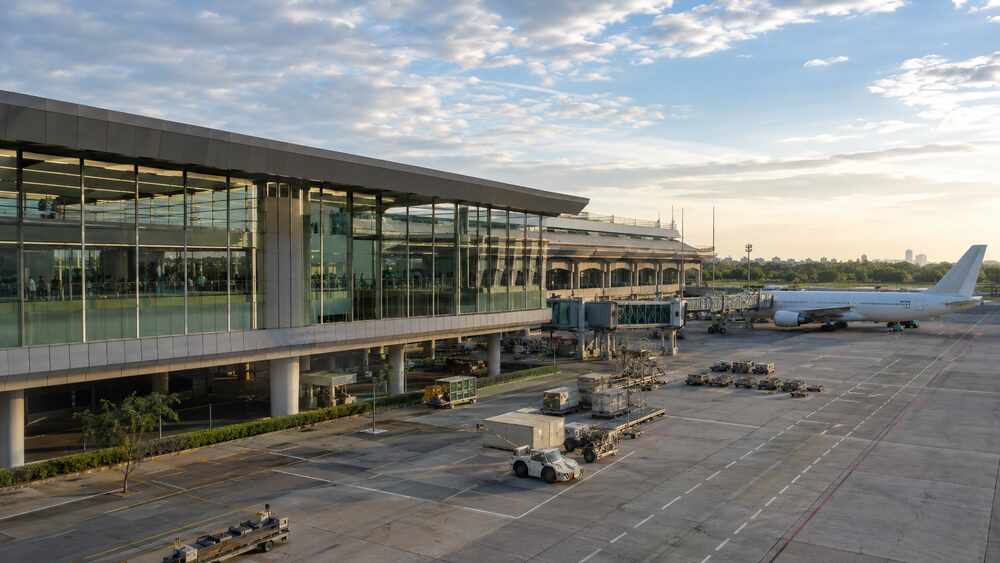
Private Operator Pushes Ahead With NAIA Modernization
MANILA — Ninoy Aquino International Airport is undergoing a sweeping modernization program designed to ease congestion, improve passenger services and repair the reputation of the Philippines’ primary international gateway after years of criticism over its aging infrastructure and difficult terminal connections.
New NAIA Infra Corp., or NNIC, began managing the airport in September 2024 after securing the rights to operate and rehabilitate the facility. The consortium is backed by Philippine conglomerate San Miguel Corp. and South Korea’s Incheon International Airport Corp.
The overhaul comes after overcrowding, operational disruptions and deteriorating facilities led some online rankings to describe NAIA as the world’s worst airport. Philippine transportation officials subsequently moved to privatize the airport’s management, seeking private-sector investment and operational expertise.
Despite its problems, NAIA retains a significant advantage: its location near central Manila. That proximity makes it convenient for many business and leisure travelers, although the airport’s four terminals are spread across the complex and have historically made connections challenging.
Terminal Upgrades Focus on Passenger Experience
Visible improvements are already emerging at Terminal 3, one of NAIA’s principal international facilities. Passengers entering the terminal are welcomed by the word “mabuhay”, meaning “welcome” in Tagalog, displayed prominently on a wall.
A nearby sign directs travelers to a recently reopened food court that can also serve as a meeting point. The dining area resumed operations in December and features cafes and stores run by local brands.
Additional restaurants are being developed in the departures area beyond immigration, expanding food and retail options for passengers waiting to board their flights.
The commercial improvements form one part of a broader effort to make the terminal more comfortable and easier to navigate. NNIC is also working to address operational bottlenecks that have contributed to long lines, delays and crowded passenger areas.
Flight and Passenger Flows Reorganized
The operator has reorganized the complicated distribution of flights among NAIA’s terminals. Domestic and international services, along with flights operated by low-cost and full-service carriers, had previously been mixed in ways that created confusion and inefficient passenger movement.
The revised arrangements are intended to establish more orderly flows and reduce pressure on individual terminal facilities.
The Philippine government is separately working to accelerate immigration and customs procedures. New automated gates equipped with biometric technology are expected to help eligible passengers complete border formalities more quickly.
Together, the terminal renovations, airline reassignments and automated processing systems are designed to make NAIA more efficient without requiring an immediate expansion of its constrained urban site. As reported by Nikkei Asia, the changes are part of a wider campaign to improve the airport following years of public complaints about its services and infrastructure.
New Bulacan Airport Adds Capacity and Competition
NAIA’s rehabilitation is proceeding alongside construction of New Manila International Airport in Bulacan province, north of the capital. San Miguel is involved in both projects, creating a two-airport strategy that could reshape aviation across the Manila metropolitan region.
The Bulacan airport was proposed as NAIA moved closer to its practical capacity limits. Its larger site offers room for new runways, terminals and supporting infrastructure that cannot easily be added at the existing airport.
San Miguel originally aimed to complete the new facility in 2027. However, difficulties obtaining construction materials have delayed the project.
In June, San Miguel CEO Ramon Ang said the first runway could be completed during the April-to-June quarter of 2028, or possibly earlier. Finishing the runway would represent an important milestone, but additional terminal and infrastructure work would still be required before commercial operations could begin.
Roles of Manila’s Two Airports Remain Unclear
New Manila International Airport is expected to supplement NAIA rather than replace it immediately. Authorities and airport operators have not yet fully explained how airlines, routes and passenger traffic will ultimately be divided between the two gateways.
NAIA is likely to remain attractive because of its proximity to Manila’s business districts and densely populated communities. Bulacan, meanwhile, could accommodate future passenger growth and relieve pressure on the existing airport.
The success of the emerging two-airport network will depend on surface transportation links, airline participation and effective coordination between the facilities.
For now, NNIC’s immediate challenge is to demonstrate that better terminal amenities, reorganized passenger flows and more reliable operations can transform NAIA while the Bulacan airport advances. If the modernization produces measurable reductions in congestion and delays, Manila’s long-criticized gateway may finally begin to move beyond its unfavorable global reputation.
