


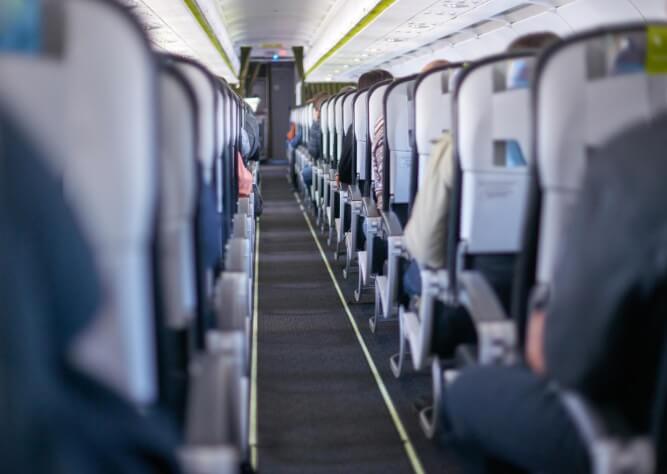
A late-night EasyJet flight from Naples to Edinburgh became the setting for a serious criminal case that has renewed attention on passenger safety, airline responsibility, and the long-lasting impact of in-flight sexual assault. Nicola Cristiano, a 45-year-old Italian national, has been sentenced to six years in prison after being convicted of sexually assaulting a woman during the flight.
The incident occurred aboard an EasyJet service travelling from Naples to Edinburgh. According to court proceedings, Cristiano deliberately moved seats to position himself next to a woman travelling alone and subjected her to a series of non-consensual sexual acts during the journey.
Incident Unfolds at 30,000 Feet
Prosecutors told the High Court that Cristiano repeatedly touched the victim inappropriately after sitting beside her. His actions escalated as he attempted to kiss her and forced her hand toward his exposed crotch. The woman, who was travelling alone, resisted and eventually alerted cabin crew.
Evidence presented at trial showed that Cristiano grabbed the woman by the hand and neck and attempted to fondle her breast. Nearby passengers later confirmed that the contact was entirely without consent, undermining Cristiano’s partial admission that he had engaged in some inappropriate behavior.
Although the woman had consumed wine offered by Cristiano earlier in the flight, the court was clear that no sexual activity was consensual at any stage.
Cabin crew responded promptly once notified, separating the victim from Cristiano and ensuring her safety for the remainder of the flight. Police officers arrested Cristiano immediately after landing at Edinburgh Airport.
Police and Court Response
Cristiano was charged and later stood trial at the High Court of Justiciary in Edinburgh last month. Police described his actions as “despicable,” emphasizing that he deliberately targeted a lone traveller in a confined environment where escape was difficult.
Detective Chief Inspector Steph Garnett told the court that the swift response by cabin crew was critical, preventing further harm and allowing law enforcement to act immediately upon landing.
The case highlighted the importance of victims reporting sexual crimes as soon as possible, particularly in aviation settings where early intervention can limit ongoing risk and preserve evidence.
Sentencing and Judicial Findings
On Friday, Judge Alison Stirling sentenced Cristiano to six years in prison. In delivering the sentence, she referenced the victim’s impact statement, which detailed significant and ongoing emotional trauma resulting from the assault.
The judge said the woman now feels unsafe while travelling and has been unwilling to undertake trips she had previously planned. Custodial sentencing, the court concluded, was necessary to punish the offender, protect the public, and support Cristiano’s rehabilitation.
Cristiano followed the proceedings through an Italian interpreter and showed no visible reaction as the sentence was handed down. Upon completion of his prison term, he will be deported to Italy and placed under indefinite notification requirements.
According to reporting by The Times, the court also noted that Cristiano had not fully accepted the jury’s guilty verdict, despite acknowledging certain inappropriate conduct.
Broader Implications for Airline Safety
The case has renewed focus on how airlines address sexual misconduct on board aircraft. While such incidents are statistically rare, aviation experts stress that the confined nature of aircraft cabins can heighten risk and trauma when offenses occur.
Airlines like EasyJet continue to invest in cabin crew training designed to identify, de-escalate, and report in-flight assaults. Industry observers note that rapid crew intervention is often decisive in protecting victims and ensuring offenders face justice.
The case also underscores the psychological toll such incidents can have on victims and the importance of providing immediate and long-term support services following an assault.
Bottom Line
Cristiano’s conviction serves as a stark reminder that criminal behavior in the air carries serious consequences on the ground. For solo travellers, the case reinforces the importance of remaining vigilant and reporting inappropriate behavior without delay.
Swift action by airline staff not only reduces immediate danger but also plays a critical role in supporting law enforcement and securing accountability—sending a clear message that passenger safety remains a priority across the aviation industry.
