


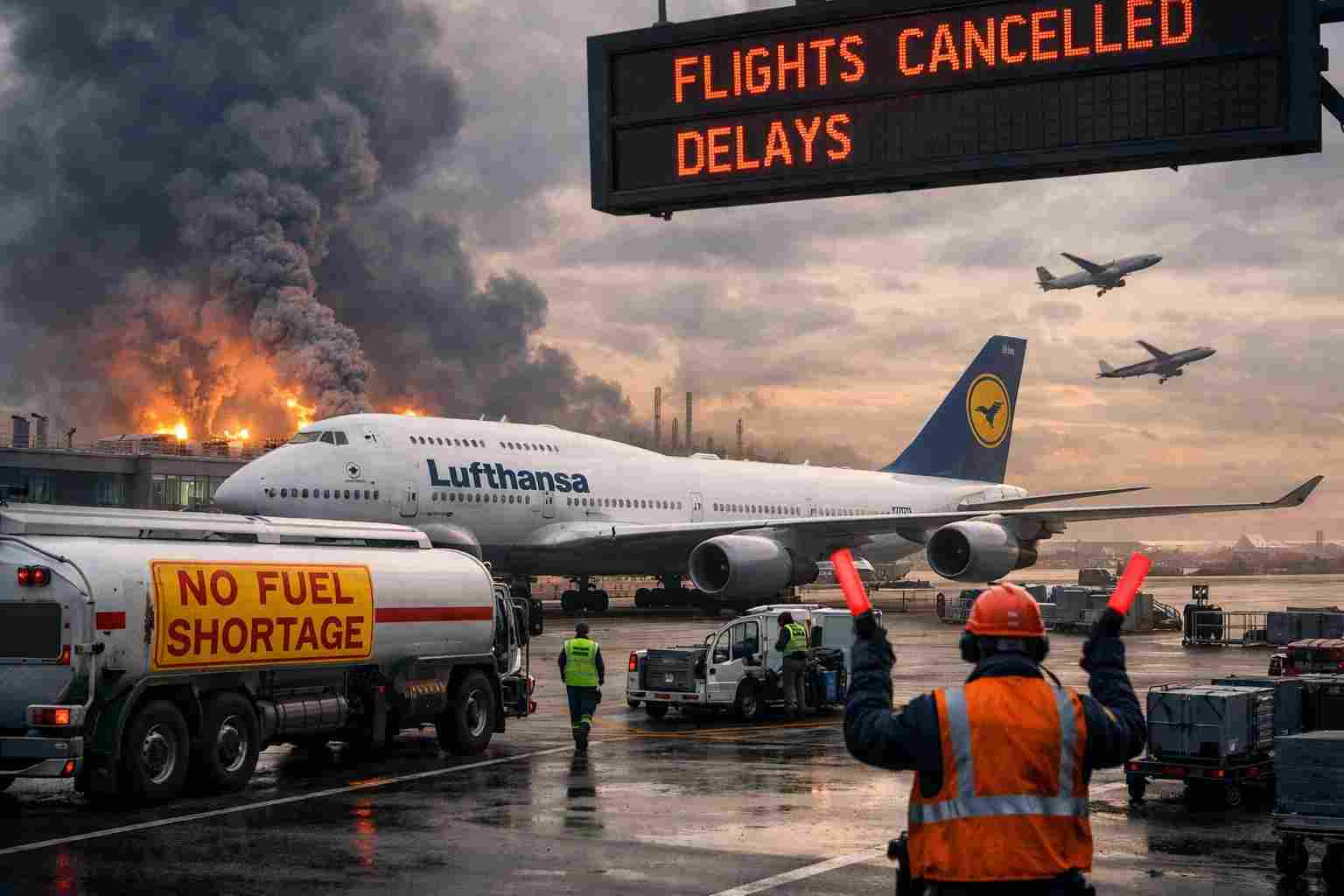
Airline Signals Capacity Reductions and Strategic Reset Amid Soaring Fuel Costs
FRANKFURT — Lufthansa is preparing to scale back operations as a deepening fuel crisis triggered by the ongoing Gulf War sends aviation costs soaring and disrupts global kerosene supply chains. Chief Executive Officer Carsten Spohr acknowledged that the severity of the crisis has exceeded earlier expectations, marking a sharp shift from his previously optimistic outlook.
Europe’s largest airline group is now evaluating a reduction of up to five percent of its total flight capacity, equivalent to grounding roughly 40 aircraft from its fleet of around 800. The move could also lead to short-time work arrangements across German operations and may influence ongoing strategic investments and acquisition plans.
Lufthansa Weighs Fleet Cuts Amid Gulf War Fuel Crisis
The unfolding crisis is exposing structural vulnerabilities within the aviation sector, particularly around fuel procurement strategies. Airlines have long relied on hedging mechanisms to stabilize fuel costs, but these measures are proving insufficient under current market conditions.
While European carriers typically secure a portion of fuel at fixed rates, as much as 30 percent is still purchased on the volatile spot market. Since the onset of the conflict, kerosene prices have surged dramatically—from approximately $0.50 per liter to $1.20—driving Lufthansa’s per-passenger operating costs up by about 4.5 percent.
Fuel accounts for roughly 22 percent of Lufthansa’s total operating expenses, meaning the sharp increase threatens to erode not only passenger margins but also profitability across cargo and maintenance divisions.
Equally concerning is the growing issue of fuel availability. According to Spohr, major aviation hubs including Singapore, Bangkok, and several cities across India have already begun restricting additional flights to preserve limited fuel supplies. With Europe sourcing around 40 percent of its aviation fuel from the Gulf region—and tanker traffic from the area severely disrupted—rationing at European airports is emerging as a realistic near-term risk.
Strategic Opportunity Behind the Crisis Response
Beyond immediate operational challenges, industry analysts suggest Lufthansa may be using the crisis as an opportunity to accelerate internal restructuring efforts that have been delayed in recent years.
Two internal teams have reportedly been tasked with developing cost-reduction strategies, with recommendations expected in May. Implementation is unlikely before the third quarter, but early signals indicate a focus on fleet modernization and route optimization.
A key priority involves phasing out older, less efficient aircraft such as the Airbus A340, which remain in service partly due to delivery delays from manufacturers like Boeing and Airbus. Lufthansa has continued operating several marginally profitable or loss-making routes to maintain pilot utilization, but the current crisis provides a rationale to retire underperforming assets sooner than planned.
Spohr recently indicated that a new generation of aircraft, including the Boeing 777X, is expected to begin entering the fleet next year, potentially strengthening Lufthansa’s long-term competitive position once market conditions stabilize.
Wage Talks and TAP Acquisition Also in Play
The crisis is also influencing labor negotiations and merger activity. Aviation consultant Shakeel Adam of Aviado Partners noted that deteriorating financial conditions could strengthen Lufthansa’s position in ongoing wage discussions with cabin crew, as management leverages the challenging outlook to push for concessions.
At the same time, the situation may reshape Lufthansa’s bid for Portuguese carrier TAP Air Portugal. The Portuguese government is ожидаing final offers from Lufthansa and Air France-KLM by the end of the week.
Unlike other recent acquisition targets, TAP remains profitable, offering immediate revenue potential. However, worsening industry conditions could drive down its valuation. Should Air France-KLM withdraw due to its own financial pressures, Lufthansa may be positioned to secure the airline at a significantly lower price.
Demand Decline Adds Further Pressure
Compounding Lufthansa’s challenges is a rapid decline in travel demand. Data from travel analytics firm TDA shows holiday booking revenues dropped 16 percent in the second week of March compared to the previous year.
At the same time, ticket prices for destinations perceived as safer have risen by up to 20 percent, according to booking platform HolidayCheck. This dynamic is concentrating demand among fewer यात्रers while compressing overall yields, further straining airline profitability.
Despite mounting headwinds, Lufthansa leadership remains cautiously optimistic about the long-term outlook. Spohr emphasized that the arrival of more fuel-efficient aircraft and structural reforms could ultimately leave the airline stronger once the crisis subsides.
As the aviation industry navigates one of its most challenging periods in recent years, Lufthansa’s response may serve as a bellwether for how global carriers adapt to a rapidly shifting economic and geopolitical landscape.
