


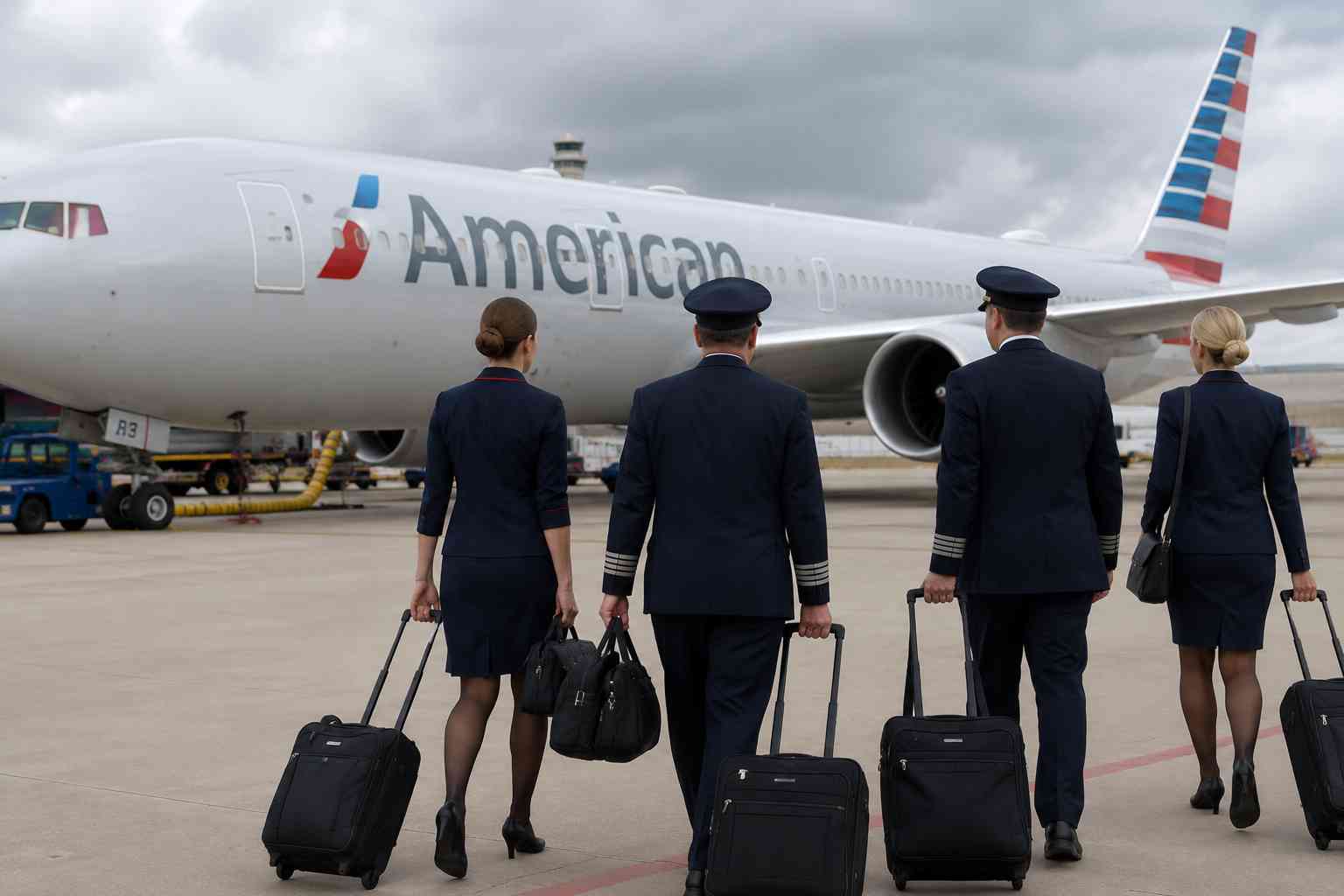
FORT WORTH, Texas — American Airlines will face an annual cost of approximately $2.64 million under a new Transportation Security Administration (TSA) crew access program that will allow pilots and flight attendants to continue bypassing standard airport security screening through biometric verification.
The fee is part of the Department of Homeland Security’s (DHS) transition from the long-standing Known Crewmember (KCM) program to a new system known as the Crewmember Access Point (CMAP), which is being introduced at major U.S. airports.
American Airlines, which employs more than 47,500 pilots and flight attendants, will incur the largest bill among U.S. carriers due to the size of its workforce. The fee is set at $19 per crew member annually and will take effect on January 1, 2027.
The CMAP program is currently being tested at Washington National Airport, Dulles International Airport, and Las Vegas Harry Reid International Airport as federal officials prepare for a broader rollout.
How the New CMAP System Works
Under the new framework, airlines will provide the TSA with Master Crew Lists or Master Personnel Lists, enabling the agency to maintain its own centralized database of eligible crew members.
When a pilot or flight attendant arrives at a designated CMAP access point, the TSA will capture a photograph and compare it with both the CMAP database and an existing federal photo record. If the biometric verification is successful, the crew member will be permitted to bypass standard passenger screening procedures.
Crew members whose biometric verification cannot be confirmed will be directed to TSA PreCheck lanes. Participation in the program remains voluntary, meaning employees who choose not to enroll will continue using traditional airport security checkpoints.
Crew members may also be directed to regular screening lanes under TSA’s random and unpredictable screening procedures.
Airlines Prepare for New Costs
The introduction of CMAP marks a significant shift in how airlines fund expedited security access for flight crews.
American Airlines is expected to pay approximately $2.64 million annually based on its workforce of roughly 30,000 flight attendants and 17,500 pilots. Other carriers will also face substantial costs under the new structure. JetBlue Airways, for example, is expected to pay about $456,000 each year.
Despite the added expense, crew members will retain the same access privileges they previously enjoyed under the KCM program. Eligible participants will be able to use CMAP while on duty and when traveling domestically for personal reasons.
End of the Known Crewmember Era
The transition represents the final phase of a program that has been in place for more than a decade.
Since 2011, pilots and flight attendants have been able to bypass traditional passenger screening through the Known Crewmember initiative, a partnership between the Air Line Pilots Association and Airlines for America (A4A), the airline industry’s primary trade association.
Under KCM, A4A maintained a database of vetted crew members and shared eligibility information with the TSA. At airport checkpoints, TSA officers verified a crew member’s identity by scanning an airline-issued badge and matching it with information stored in the system.
Last year, A4A and the TSA agreed to phase out the KCM program. Federal officials expect it to be fully retired by the end of 2026.
Until now, participating airlines indirectly funded KCM through their membership contributions to A4A. Under CMAP, airlines will pay the federal government directly for access to the program.
Federal Mandate Behind the New Fee
According to DHS, the fee stems from a congressional directive requiring the TSA to recover the costs associated with operating registered traveler programs.
While CMAP will continue rolling out throughout 2026, airlines will not begin paying the per-crew-member fee until the start of 2027.
The move reflects the TSA’s broader effort to modernize identity verification through biometric technology while maintaining operational efficiency at airports.
Operational Importance for Airlines
Fast-track security access has long been considered essential by airlines because it allows pilots and flight attendants to reach departure gates quickly and reduces the risk of operational disruptions caused by long security lines.
The issue became particularly visible in 2022 when American Airlines pilots threatened to stop using the KCM program after an increase in random screening checks. The prospect raised concerns within the airline industry that delays at security checkpoints could affect flight schedules and crew availability.
For federal security officials, however, the new biometric system is viewed as a more secure and efficient alternative. By automating identity verification and maintaining direct oversight of crew eligibility records, the TSA believes CMAP will allow security personnel to focus more resources on screening higher-risk travelers while preserving expedited access for trusted airline employees.
