


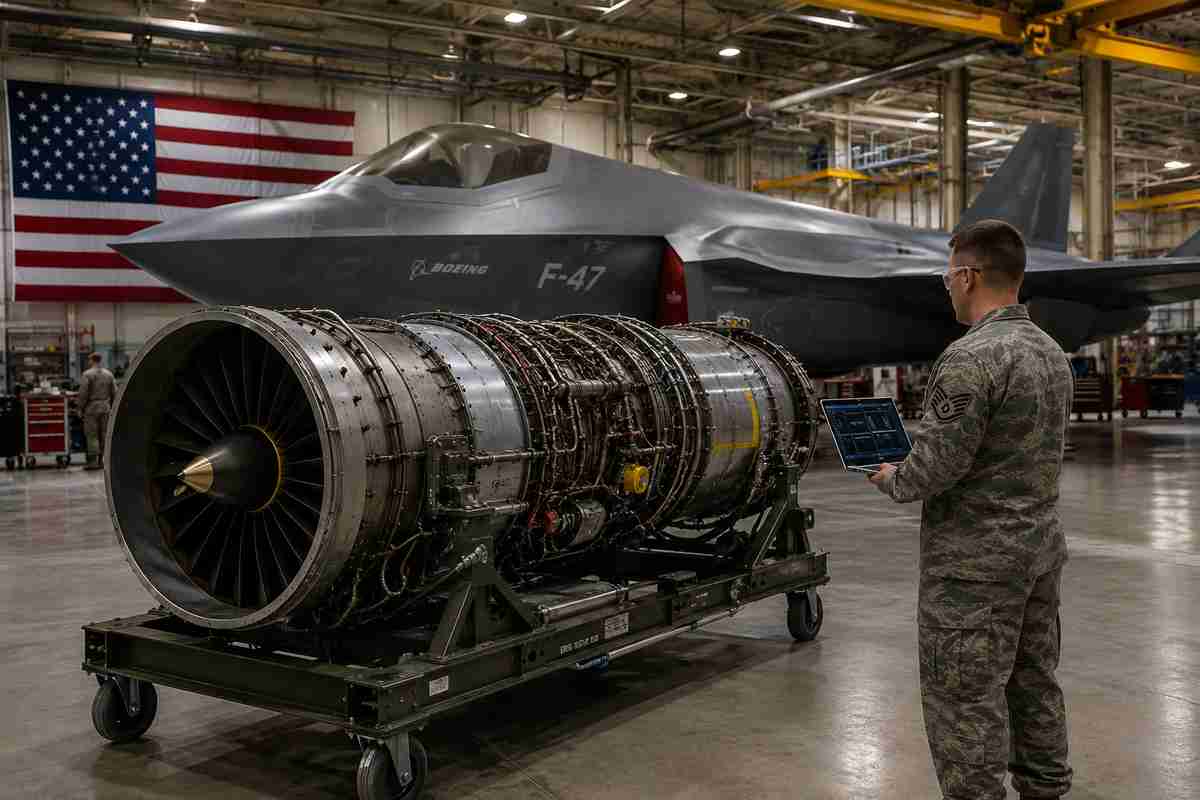
U.S. Air Force Targets Adaptive NGAP Engine Integration Around 2030 as Future F-47 Option Remains Under Evaluation
The U.S. Air Force is advancing development of its next-generation adaptive fighter engine with the goal of integrating the technology into an operational aircraft around 2030, a move that could significantly reshape the future of American air combat capabilities.
Military officials say the engine, being developed under the Next Generation Adaptive Propulsion (NGAP) program, remains a potential powerplant for the future Boeing F-47 stealth fighter. However, the Air Force has not yet committed the engine to any specific aircraft platform, choosing instead to focus on creating a flexible propulsion system capable of supporting multiple future combat aircraft.
The program represents one of the Air Force’s most ambitious modernization efforts, combining advanced propulsion technology with long-term plans for sixth-generation air superiority.
Air Force Prioritizes Engine Development Before Platform Selection
Speaking at the Life Cycle Industry Days conference in Dayton, Ohio, John Sneden, chief of the U.S. Air Force’s Propulsion Directorate, outlined the service’s strategy for developing adaptive propulsion technology before determining its final operational application.
The Air Force expects the NGAP engine to reach the stage where it can be integrated into an aircraft by approximately 2030. That timeline positions the program as a critical element of the service’s broader modernization strategy, although officials continue to evaluate multiple aircraft options.
Rather than designing the engine exclusively for one fighter, the Air Force is pursuing a platform-agnostic approach that allows the propulsion system to support evolving operational requirements across different aircraft.
Industry heavyweights GE Aerospace and Pratt & Whitney are currently preparing to build and evaluate competing NGAP engine prototypes over the next several years. Maintaining competition between the two manufacturers remains a central part of the acquisition strategy as the service seeks to deliver the most capable propulsion system possible.
F-47 Remains a Leading Candidate
Although the Boeing F-47 is widely regarded as the most likely aircraft to receive the adaptive engine, Air Force officials have emphasized that no final decision has been made.
The F-47 is being developed as the Air Force’s sixth-generation stealth fighter under the Next Generation Air Dominance (NGAD) program. Earlier Air Force planning envisioned NGAP as the aircraft’s propulsion solution, but the engine program was intentionally designed with sufficient flexibility to support additional platforms in the future.
Because the F-47 is expected to enter operational service before NGAP completes development, defense analysts believe the aircraft could initially fly with an interim engine before transitioning to the adaptive propulsion system through a later upgrade.
Adaptive Engine Technology Promises Major Performance Gains
Adaptive turbofan technology is considered one of the most significant advancements in military aircraft propulsion in decades.
Unlike conventional fighter engines, adaptive designs can automatically adjust airflow during flight, allowing pilots to optimize either fuel efficiency or maximum thrust depending on mission requirements. The technology is expected to provide longer combat range, lower fuel consumption, increased electrical power generation for advanced onboard systems, and improved overall performance during demanding combat operations.
Those capabilities are viewed as increasingly important as future fighter aircraft require greater electrical power to support advanced sensors, electronic warfare systems, and other next-generation technologies.
Funding Increases Despite Earlier Delays
While the NGAP program has experienced cumulative delays of roughly three years, the Air Force continues to expand investment in the effort.
The delays largely stemmed from the service’s decision to preserve competition between GE Aerospace and Pratt & Whitney while balancing available funding. Despite the revised timeline, budget plans indicate growing financial support as prototype development accelerates.
According to Air Force budget documents, the service is requesting approximately $514 million for NGAP during fiscal year 2027. Funding is projected to increase to nearly $906 million in fiscal year 2028 as testing and prototype development move forward.
Officials believe sustained investment is essential to maintaining America’s technological advantage in military aviation. The current effort also marks the first completely new U.S. fighter engine development program since the 1990s, highlighting the significance of the initiative.
In parallel with NGAP, the Air Force is also advancing the Engine Core Upgrade (ECU) program for the Lockheed Martin F-35 Lightning II.
Led by Pratt & Whitney, the ECU program is expected to reach flight testing around 2030 following a critical design review scheduled in the coming weeks. The upgraded engine is intended to provide additional power and cooling capacity to support the F-35’s expanding mission requirements before entering production later in the decade.
Together, the NGAP and ECU initiatives underscore the Air Force’s broader strategy of investing in advanced propulsion technologies to ensure future U.S. fighter aircraft remain capable of meeting increasingly complex operational demands.
