


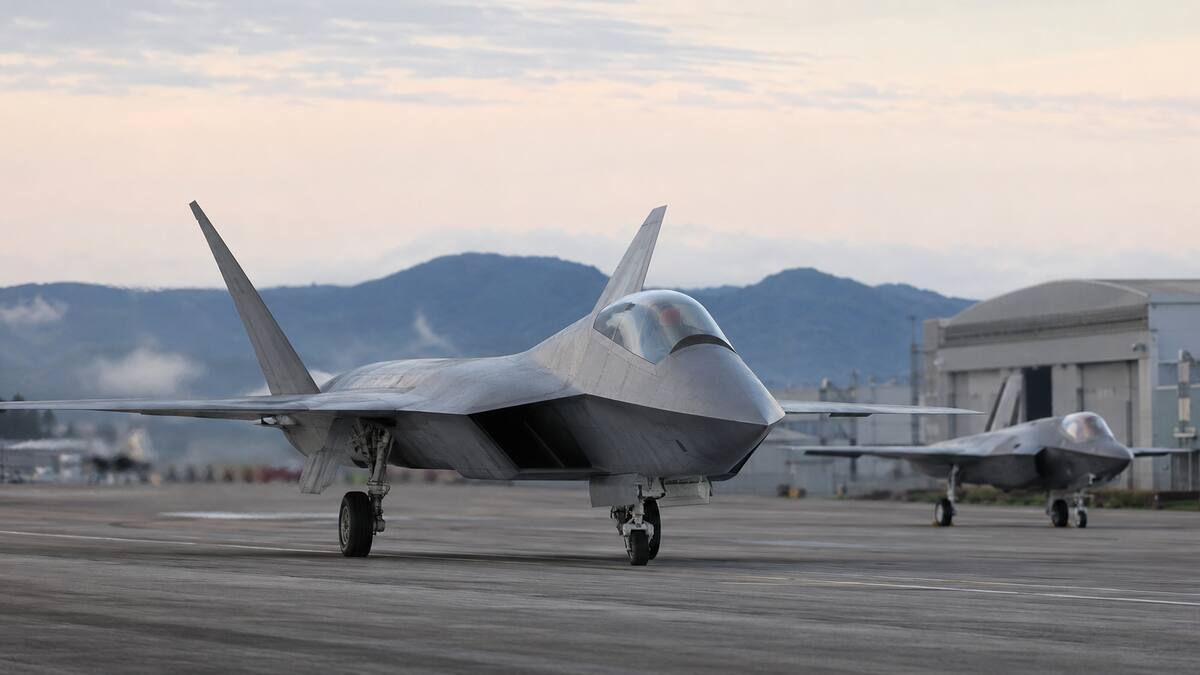
Japan is strengthening its commitment to the Global Combat Air Programme as the country seeks greater control over the weapons, software and technologies that will shape its future air-combat capabilities.
The sixth-generation fighter initiative, developed jointly with the United Kingdom and Italy, is expected to complement Japan’s planned fleet of 147 F-35 aircraft. GCAP remains targeted for service entry in 2035 and is intended to give Tokyo a larger role in aircraft development, systems integration and long-term upgrades.
Japan Balances F-35 Fleet With Sixth-Generation Fighter
The Japan Air Self-Defense Force plans to operate 105 conventional-takeoff F-35As and 42 short-takeoff and vertical-landing F-35Bs. Together, the aircraft will form a central part of Japan’s modern air-defense structure.
The F-35 provides stealth, advanced sensors and networked combat capabilities. However, its tightly controlled software and weapons architecture limits the ability of international operators to make independent modifications.
F-35 users generally require authorization from U.S. authorities and Lockheed Martin for sensitive work involving software updates, source-code access and the integration of domestically developed weapons. According to the source material, a Japanese official said the inability to integrate weapons independently could create restrictions and delay requested changes.
Those limitations have become increasingly important as Japan develops weapons and mission systems tailored to security conditions in the Indo-Pacific. Tokyo wants its next fighter to evolve alongside Japanese sensors, weapons and software without relying on foreign approval for every major modification.
Israel has received special flexibility to adapt its F-35I Adir aircraft for some domestic systems and weapons. Japan, however, is pursuing greater technological independence through GCAP instead of depending exclusively on changes to its F-35 fleet.
GCAP Advances Into Major Industrial Development
GCAP was formed by combining Japan’s F-X fighter project with the British-led Tempest program and Italy’s next-generation combat-air efforts. The resulting aircraft is expected to replace Japan’s Mitsubishi F-2 and, for the European partners, the Eurofighter Typhoon.
$6.1 Billion Contract Supports 2035 Target
In July 2026, the three participating governments awarded a contract valued at approximately $6.1 billion to advance the next phase of aircraft design and development. The agreement reinforced their commitment to introducing the new fighter beginning in 2035.
The contract was awarded through the GCAP International Government Organisation to Edgewing, an industry joint venture involving Japan Aircraft Industrial Enhancement, Britain’s BAE Systems and Italy’s Leonardo.
Companies from the three countries are also taking responsibility for major components. Japan’s IHI is working with Rolls-Royce and Italy’s Avio Aero on the aircraft’s power and propulsion system. Mitsubishi Electric is collaborating with British and Italian partners on advanced sensing, communications and electronics.
Mitsubishi Electric is also preparing three facilities to support GCAP-related electronics production. Reuters reported that the company expects work connected to the program to begin contributing to its earnings around fiscal 2029 or 2030.
GCAP Designed as a Connected Combat System
GCAP is being developed as more than a conventional crewed fighter. The broader system is expected to combine a sixth-generation aircraft with uncrewed combat platforms, next-generation weapons, advanced sensors and secure data-sharing networks.
The fighter could operate as an airborne command platform, coordinating collaborative combat aircraft and processing information through artificial intelligence, communications systems and electronic-warfare technologies.
Integrated Systems Become Central to Development
A major element is the Integrated Sensing and Non-Kinetic Effects and Integrated Communications Systems architecture, commonly known as ISANKE and ICS. It is intended to bring sensing, communications and electronic effects together within a wider combat network.
For Japan, the trilateral structure offers access to British and Italian engineering expertise while distributing the substantial cost of developing a sixth-generation fighter. It may also create commercial opportunities for Japanese aerospace and electronics companies.
The multinational approach still presents risks involving budgets, intellectual property, technology sharing, industrial work allocation and differing national priorities. Managing those issues will be critical if the partners are to meet the 2035 timetable.
Japan’s strategy ultimately positions GCAP alongside—not in place of—its F-35 fleet. The combination would preserve access to an established advanced fighter while giving Tokyo greater influence over the technologies, weapons and upgrades that will define its future airpower.
