


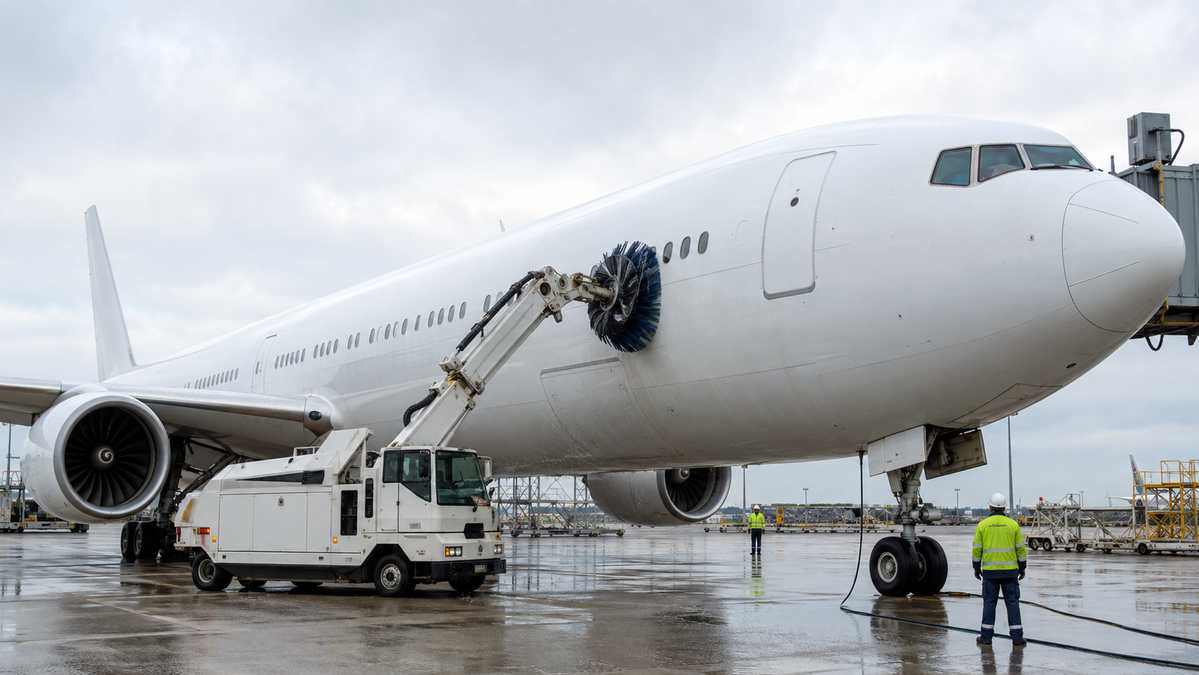
Japan Airlines Co. is introducing an automated aircraft-washing robot at Tokyo’s Narita International Airport, marking the first use of the technology by a Japanese domestic airline and advancing the carrier’s efforts to improve productivity and workplace safety.
The airline plans to begin full-scale operations with the AW3 robot later in 2026 after employees complete the necessary training. Developed by Sweden-based Aerowash AB, the system is expected to reduce aircraft exterior cleaning labor hours by as much as 40% while limiting workers’ exposure to chemicals and work performed at height.
Japan Airlines Automates Aircraft Washing at Narita
Japan Airlines demonstrated the AW3 at its aircraft-washing facility at Narita International Airport in Chiba Prefecture. The event showed the airline’s existing manual cleaning process alongside the automated system, illustrating how the equipment can handle large portions of an aircraft’s exterior.
The AW3 uses a telescopic arm that is remotely controlled by trained ground employees. The system moves along the aircraft while its cleaning equipment washes exterior surfaces that would otherwise require extensive manual work.
Japan Airlines said it will initially deploy one AW3 unit at Narita. The airline will evaluate its performance before deciding whether to introduce the technology at additional airports.
The initial assessment will focus on cleaning time, operational reliability, employee workload and the robot’s integration with existing ground-handling procedures.
Robot Expected to Reduce Labor Hours
Aircraft exterior washing is a labor-intensive operation that traditionally requires ground staff to clean large surfaces using long-handled mops and other manual equipment. Employees may also need to work in elevated positions and handle cleaning chemicals during the process.
Japan Airlines expects the AW3 to cut the labor hours required for each aircraft wash by up to 40%. The carrier said the technology is intended to reduce repetitive and physically demanding work rather than eliminate ground-handling positions.
Employees to Shift Toward Higher-Value Tasks
Atsuki Kino of JAL’s Airport Ground Handling Planning Department said the airline wants employees to use the time saved through automation for other higher-value responsibilities.
The approach reflects a broader trend among airlines and airport operators seeking to apply automated equipment to routine ground operations. With labor availability and operational efficiency remaining important concerns across the aviation industry, carriers are increasingly examining how machines can support employees without removing the need for human oversight.
Manual cleaning will continue to be part of Japan Airlines’ aircraft-washing process even after the AW3 begins regular operations. Ground staff will remain responsible for areas requiring detailed attention or tasks that the robot cannot perform effectively.
Workplace Safety Is a Key Benefit
In addition to improving productivity, Japan Airlines expects the robot to reduce occupational risks associated with aircraft washing.
The remotely operated telescopic arm can clean areas that might otherwise require employees to work at height. It can also reduce the amount of direct contact workers have with chemical cleaning products.
These safety improvements could help lower the physical strain placed on employees and reduce their exposure to potentially hazardous working conditions. The airline’s demonstration emphasized that the machine would operate under employee supervision, combining automation with trained human control.
Before the system enters full-scale service, relevant employees will receive instruction on operating the robot and incorporating it into established cleaning procedures.
Narita Deployment Could Lead to Wider Rollout
Narita will serve as the testing ground for Japan Airlines’ first automated aircraft-washing operation. Deploying a single unit initially will allow the carrier to measure whether the equipment achieves the anticipated reduction in labor hours and delivers consistent cleaning results.
If the AW3 meets operational expectations, Japan Airlines could consider expanding the technology to other airports. Any additional deployment would depend on factors including airport infrastructure, aircraft-washing demand and local operational requirements.
The move represents a targeted use of automation in which technology handles part of a repetitive physical task while employees continue providing supervision and completing more specialized work. For Japan Airlines, the Narita rollout will determine whether robotic washing can become a broader component of its ground-operations strategy.
