


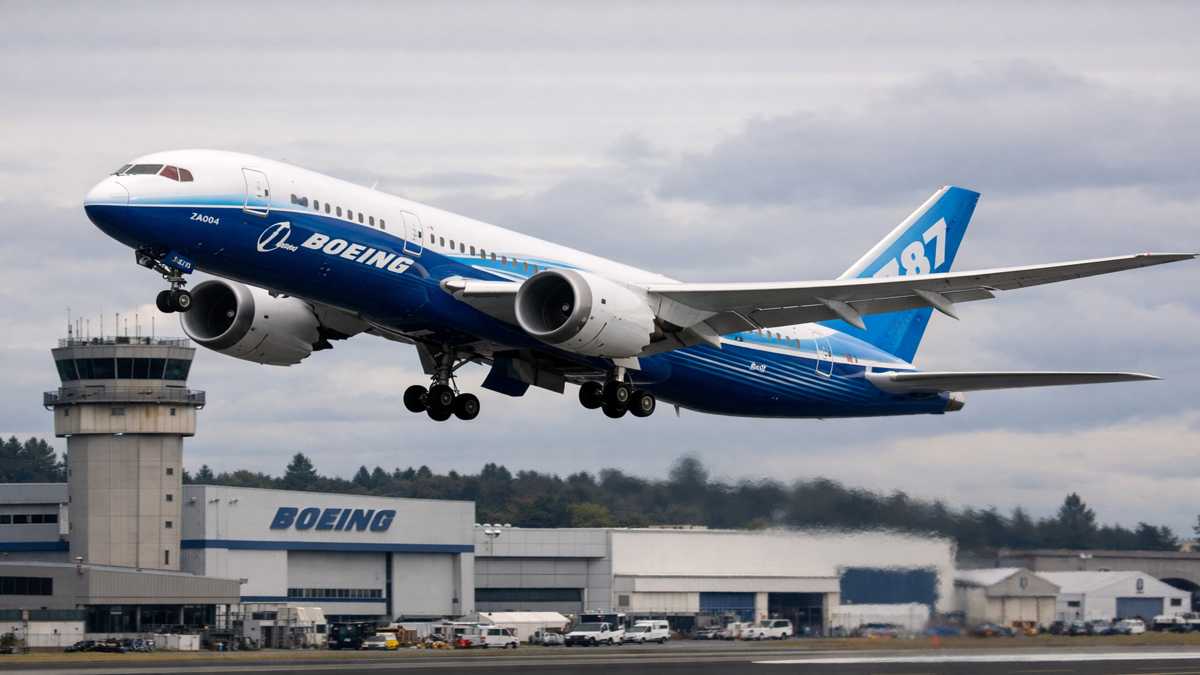
Final Flight Ends a 15-Year Testing Era
Boeing has retired its last 787-8 Dreamliner test aircraft, bringing to a close more than 15 years of flight testing that supported certification, performance refinement, and critical engine upgrades for one of the most influential widebody aircraft programs in modern aviation.
The aircraft, known internally as ZA004, recently completed its final departure from Boeing Field before being transferred to long-term storage at Pinal Airpark in Arizona. The move marks the end of an era for the 787 program, which relied heavily on the jet throughout its development and subsequent improvement campaigns. The retirement was first reported by The Air Current.
ZA004 first flew on February 24, 2010, and was among the earliest Dreamliners to take to the air. Over the next decade and a half, the aircraft became a workhorse within Boeing’s flight test fleet, supporting both original certification efforts and later performance and propulsion upgrades as the global Dreamliner fleet expanded.
From Airline Delivery to Testbed Duty
The aircraft’s path was not originally intended to end in storage. Assembly of ZA004 began in 2008 after Northwest Airlines placed an order for the jet. However, as development delays affected the early Dreamliner program and Northwest later merged with Delta Air Lines, the aircraft’s delivery plans were reassessed.
Rather than entering commercial airline service, the airframe was reassigned to Boeing’s test fleet. That decision ultimately positioned ZA004 at the center of some of the program’s most important engineering and reliability initiatives.
Boeing marked the aircraft’s retirement internally before preparing it for relocation. Captains Heather Ross and Craig Bomben, who also conducted ZA004’s maiden flight in 2010, are expected to fly the aircraft on its final journey. Boeing has not disclosed whether the jet could eventually be preserved or repurposed following storage.
Critical Role in Engine Development
ZA004’s most significant contributions came through propulsion testing, particularly involving the Rolls-Royce Trent 1000 engine family used on early 787 variants.
Initial testing campaigns focused on improving fuel efficiency and overall engine performance. As the global fleet matured, the aircraft became increasingly involved in durability and reliability work, including certification support for the Trent 1000 XE upgrade program.
That initiative was designed to significantly extend engine time-on-wing and reduce maintenance disruptions that had affected some airline operators. Two phases of the durability upgrades are scheduled to enter airline service, with ZA004 playing a central role in validating those changes during its later years.
Through this work, the aircraft helped refine engine standards that directly influence airline operating costs and fleet reliability today.
A Program That Changed Airline Economics
The retirement of ZA004 comes as the 787 Dreamliner program stands firmly in its operational maturity phase. When introduced, the aircraft represented a step-change in aircraft design, combining advanced aerodynamics, highly efficient engines, and a more electric architecture to improve airline economics.
Roughly 50 percent of the Dreamliner’s structure is made from carbon-fiber composites, reducing weight while limiting corrosion and fatigue compared with traditional aluminum airframes. These design choices lower fuel burn, reduce inspection requirements, and help minimize maintenance downtime.
Airlines typically achieve about 25 percent better fuel efficiency compared with the aircraft the 787 replaced. Its combination of range and efficiency has allowed carriers to open long-haul routes that were previously uneconomical or too risky to sustain.
Global Impact on Networks and Passengers
Today, more than 1,200 Dreamliners operate worldwide, serving roughly 500,000 passengers each day. The fleet connects cities across more than 85 countries, many of which previously lacked nonstop long-haul service.
The aircraft’s ability to deliver widebody comfort with mid-size operating economics has reshaped airline network planning. Carriers have used the 787 to launch hundreds of nonstop routes, reduce reliance on large hubs, and tailor capacity more closely to demand.
Since entering service, the Dreamliner fleet has carried more than one billion passengers and enabled the launch of over 520 nonstop routes, fundamentally changing how airlines approach long-haul growth.
Closing a Foundational Chapter
The retirement of ZA004 signals the closing of a foundational testing chapter for the 787 program. While newer aircraft now support ongoing certification and development work, ZA004’s contributions helped transform early engineering challenges into long-term operational success.
As the aircraft enters storage, it leaves behind a legacy tied closely to the reliability, efficiency, and performance standards that define the Dreamliner fleet today.
