


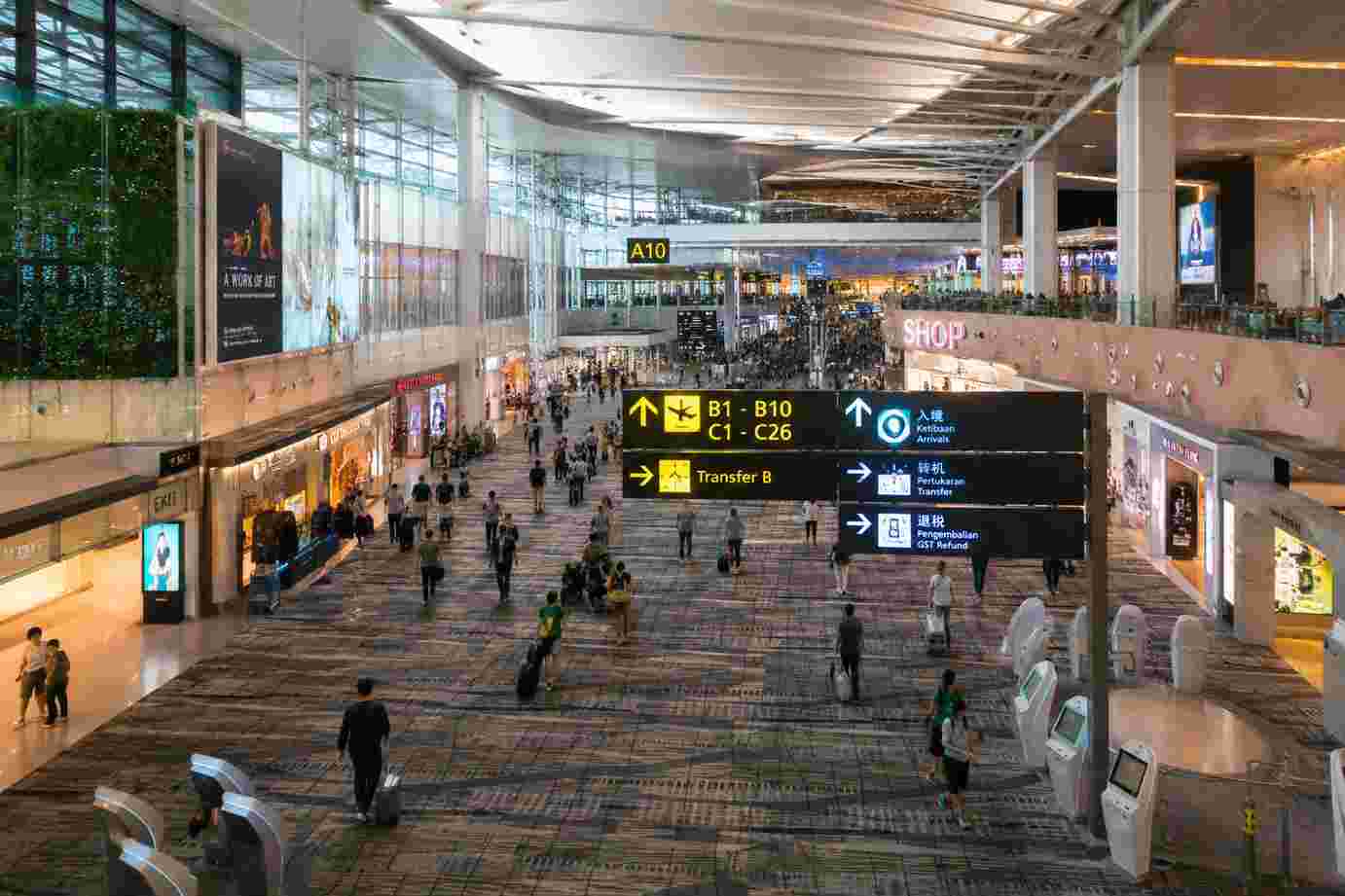
Singapore Changi Retains Top Spot as Asia and Europe Dominate Passenger Experience Rankings
Skytrax has released its 2026 rankings of the world’s best airports handling between 60 million and 70 million passengers annually, highlighting aviation hubs that combine large-scale operations with high-quality passenger experiences.
Airports in this category occupy a significant position within the global aviation industry. They serve millions of international and domestic travelers each year while maintaining operational efficiency, customer service, and modern facilities that distinguish them from larger mega-hubs.
The Skytrax World Airport Awards 2026, based on passenger feedback, evaluate airports across multiple service categories, including terminal comfort, cleanliness, shopping, dining, staff professionalism, security screening, and ease of transfers. The latest rankings recognize airports that consistently deliver high standards despite handling substantial passenger volumes.
Skytrax’s Top Airports Handling 60–70 Million Passengers
1. Singapore Changi Airport (Singapore)
Singapore Changi Airport once again claimed first place in the category, reinforcing its reputation as one of the world’s premier aviation facilities.
Widely recognized for its seamless passenger experience, Changi combines efficient operations with an extensive range of attractions that extend well beyond traditional airport services. Indoor gardens, art displays, entertainment areas, premium lounges, and the renowned Jewel complex have helped transform the airport into a destination in its own right.
Passengers continue to praise the airport for its cleanliness, well-organized immigration procedures, prompt baggage delivery, and efficient transfer process. Staff professionalism and multilingual customer service remain key strengths that contribute to its consistent top ranking.
Despite serving tens of millions of travelers annually, Changi continues to provide a calm, organized, and comfortable travel environment.
2. Hong Kong International Airport (Hong Kong)
Hong Kong International Airport secured second place, maintaining its position among Asia’s leading international aviation gateways.
Located on Chek Lap Kok Island, the airport plays a central role in connecting East Asia with destinations across the globe. Spacious terminals, efficient passenger flow, and advanced airport technologies enable smooth operations even during peak travel periods.
Passengers also benefit from an extensive selection of retail stores, restaurants, premium lounges, and convenient transportation links. The airport’s staff continue to receive positive feedback for their professionalism and multilingual assistance.
Its ongoing investment in operational improvements has helped preserve its standing among the world’s most respected international airports.
3. Amsterdam Schiphol Airport (Netherlands)
Amsterdam Schiphol Airport ranked third, remaining one of Europe’s most important international hubs.
Unlike many major airports that rely on multiple disconnected terminals, Schiphol’s integrated layout simplifies navigation and minimizes transfer times, making it especially attractive for connecting passengers.
The airport also offers a broad selection of shopping, dining, business facilities, and relaxation spaces while maintaining high standards for cleanliness and customer service.
Its strategic location and extensive international route network continue to strengthen its importance within European and global aviation.
4. Bangkok Suvarnabhumi Airport (Thailand)
Bangkok Suvarnabhumi Airport placed fourth in the rankings, continuing its role as Southeast Asia’s busiest international gateway.
Its distinctive architecture, expansive terminal spaces, and growing range of passenger amenities have made it a preferred choice for travelers visiting Thailand and connecting throughout the region.
Passengers frequently recognize the airport for its hospitality, efficient operations, diverse retail offerings, and wide selection of dining options. Ongoing investments in infrastructure and technology are expected to further improve capacity while maintaining service quality.
5. Adolfo Suárez Madrid-Barajas Airport (Spain)
Adolfo Suárez Madrid-Barajas Airport rounded out the top five, remaining Spain’s largest and busiest airport.
Serving as a major connection point between Europe and Latin America, the airport accommodates substantial international traffic while providing modern passenger facilities. Spacious terminals feature extensive shopping options, restaurants, airline lounges, and comfortable waiting areas.
Travelers also highlight the airport’s efficient layout, helpful staff, and strong rail and road connections that provide convenient access to central Madrid.
Why These Airports Continue to Lead
The highest-ranked airports in the 60–70 million passenger category share several characteristics that consistently earn positive feedback from travelers.
These airports prioritize efficient operations, well-designed terminals, reliable passenger services, high standards of cleanliness, diverse retail and dining options, and customer-focused staff. Their ability to balance heavy passenger volumes with a comfortable travel experience has become a defining competitive advantage.
Technology and Sustainability Shape the Future
As international air travel continues to recover and expand, airports handling between 60 million and 70 million passengers are expected to invest further in technology and infrastructure.
Artificial intelligence, biometric identity verification, automated passenger processing, and sustainable airport development are likely to become increasingly important components of future airport operations. At the same time, customer service and hospitality will remain central to maintaining competitive advantage as airports compete for both airlines and travelers.
The airports featured in the 2026 Skytrax rankings demonstrate how thoughtful planning, continuous investment, and operational excellence can deliver a consistently high-quality passenger experience, even at one of the busiest scales in global aviation.
Bottom Line
The Skytrax World Airport Awards 2026 underscore that handling tens of millions of passengers does not have to come at the expense of service quality. Singapore Changi Airport once again leads the category, while Hong Kong International, Amsterdam Schiphol, Bangkok Suvarnabhumi, and Adolfo Suárez Madrid-Barajas continue to set benchmarks for operational efficiency, passenger comfort, and customer satisfaction. Together, these airports represent some of the strongest examples of world-class aviation infrastructure serving 60 million to 70 million passengers each year.
