


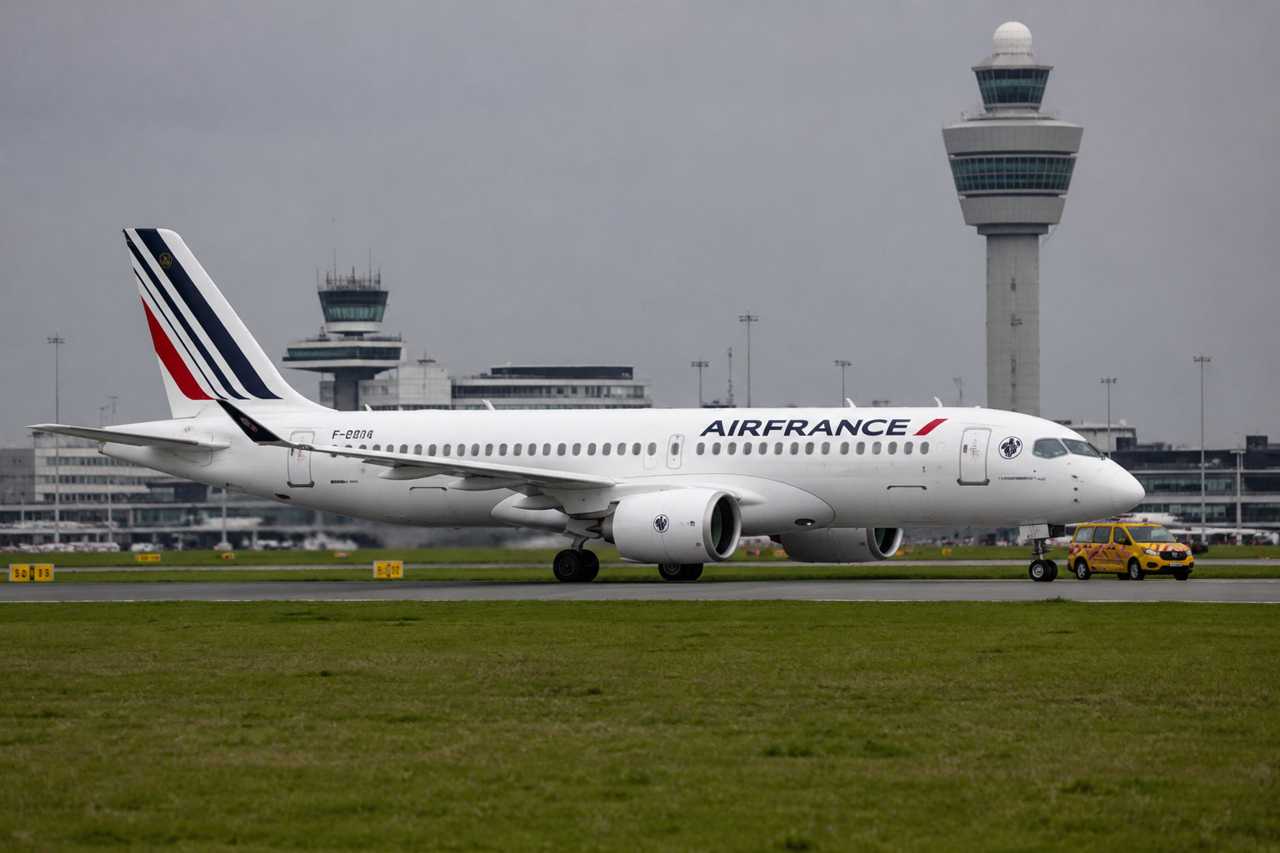
Smoke Detected Onboard Forces Diversion to Schiphol Airport
An Air France passenger flight traveling from Paris Charles de Gaulle Airport to Copenhagen Airport made an emergency diversion to Amsterdam Schiphol Airport on Monday after smoke was detected inside the aircraft cabin.
The Airbus A220-300, operating a scheduled short-haul European service, diverted safely while flying over the Netherlands. Emergency crews were deployed at Schiphol Airport ahead of the aircraft’s arrival, though authorities later confirmed that no injuries were reported among passengers or crew members.
Airport officials said the aircraft landed safely after the crew declared an onboard issue and requested priority handling from air traffic control.
Air France A220 Diverts After Smoke Detected
The incident occurred during the late morning hours as the Air France aircraft was flying near Groningen in the northern Netherlands. According to preliminary reports, flight crews noticed smoke inside the cabin and decided to divert the flight as a precautionary measure.
Pilots contacted air traffic controllers and requested immediate assistance for landing at Amsterdam Schiphol Airport, one of Europe’s busiest aviation hubs. Emergency services, including airport firefighters, ambulances, and security teams, were positioned near the runway before the aircraft touched down.
Schiphol Airport authorities later confirmed that the diversion and landing were completed safely. Officials added that the source of the smoke has not yet been identified and remains under investigation.
Emergency medical teams remained on standby during the operation, although authorities ultimately determined that no medical intervention was necessary after the aircraft arrived at the gate.
Modern Airbus A220 Aircraft Under Investigation
The aircraft involved in the incident was an Airbus A220-300, one of the newest narrowbody aircraft models in Air France’s fleet. The jet is commonly used on short- and medium-haul European routes due to its fuel efficiency, lower operating costs, and modern passenger cabin configuration.
Under international aviation safety regulations, any indication of smoke onboard an aircraft is treated as a high-priority operational event. Even limited smoke detection can lead crews to initiate precautionary diversions in order to protect passengers and maintain safe cabin conditions.
Airline crews are trained extensively to manage smoke or fire-related emergencies. Standard safety procedures include identifying possible sources of smoke, communicating with passengers, coordinating with air traffic control, and preparing for emergency or precautionary landings if conditions deteriorate.
Air France has not yet released additional technical information regarding the incident or the possible cause of the smoke event. Maintenance engineers are expected to conduct a full inspection of the aircraft before it is cleared to return to commercial service.
Schiphol Emergency Response Highlights Aviation Safety Protocols
Amsterdam Schiphol Airport activated emergency response procedures immediately after receiving notification from the incoming aircraft. Multiple emergency vehicles responded as part of standard airport operational protocol for onboard smoke events.
Authorities said the rapid deployment ensured that rescue and firefighting teams were prepared for any escalation during landing and taxi operations. Officials later confirmed that the situation remained stable throughout the aircraft’s arrival.
European aviation regulators closely monitor smoke-related incidents because they can originate from a range of onboard systems, including electrical wiring, avionics equipment, galley systems, or air-conditioning components.
Investigators are expected to review cockpit communications, maintenance records, and aircraft systems data as part of the inquiry into the incident.
The diversion also underscored the strategic importance of major European hub airports such as Amsterdam Schiphol, which regularly accommodate emergency landings from aircraft operating throughout regional airspace.
While the incident caused operational disruption to the Paris-to-Copenhagen service, aviation authorities emphasized that the diversion demonstrated the effectiveness of established airline and airport safety procedures designed to protect passengers and crew during inflight emergencies.
