


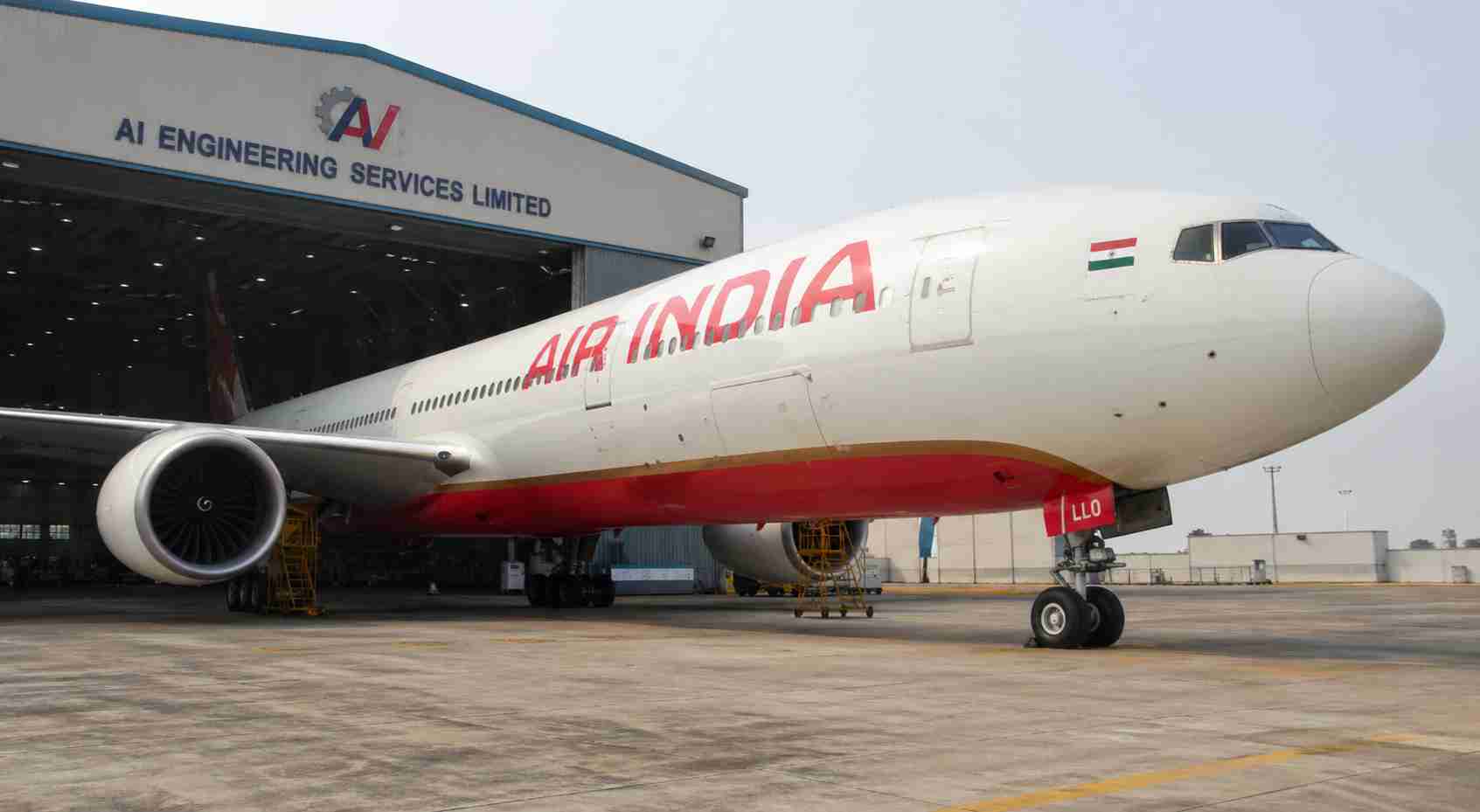
State-Owned MRO Provider Targets Global Clients and New Capabilities
NEW DELHI — AI Engineering Services Limited (AIESL) is stepping up efforts to position its Nagpur maintenance hub as a competitive global player, pursuing international airline clients while seeking key regulatory approvals and new technical capabilities.
The government-owned Maintenance, Repair, and Overhaul (MRO) provider is expanding operations at its Nagpur (NAG) facility and has initiated the process to secure certification from the European Aviation Safety Agency (EASA) for Airbus base maintenance. The move is expected to significantly broaden its customer base by enabling the servicing of European-registered aircraft.
Expanding International Footprint
AIESL, which previously operated as a division of Air India before the airline’s privatization, now functions independently under government ownership. The company’s leadership has identified international expansion as a key growth driver, with Nagpur serving as its flagship maintenance hub.
An AIESL official confirmed that customer feedback for aircraft serviced at the Nagpur (NAG) facility has been consistently positive.
The facility has already built a sizable operational track record, completing more than 240 maintenance checks across a mix of wide-body Boeing 777 aircraft and narrow-body Boeing 737 and Airbus A320 family jets. This experience strengthens AIESL’s positioning as a reliable MRO partner for foreign carriers seeking cost-effective and technically capable service providers in Asia.
EASA certification remains a critical milestone. Approval would allow AIESL to perform base maintenance on Airbus aircraft registered in Europe, expanding its addressable market beyond airlines regulated by India’s Directorate General of Civil Aviation (DGCA).
Boeing 777 Freighter Conversion Plans
Beyond routine maintenance, AIESL is exploring entry into the passenger-to-freighter (P2F) conversion segment, specifically targeting Boeing 777 aircraft.
The global P2F market has seen steady growth, driven by rising e-commerce demand and the need for additional cargo capacity. Airlines and logistics operators are increasingly converting aging passenger aircraft into freighters rather than investing in new builds.
If implemented, the capability would make Nagpur one of the few facilities in India equipped to handle complex structural modifications on wide-body aircraft. Such a move would not only diversify AIESL’s revenue streams but also elevate its standing in the global MRO ecosystem.
VT-ALL Restoration Highlights Technical Capability
A defining recent achievement for the facility was the return to service of an Air India Boeing 777-300ER, registered as VT-ALL, after more than six years on the ground.
The aircraft had been grounded since February 2020 due to multiple unserviceable systems and aging components. It was inducted into the Nagpur facility in May 2025 for an extensive restoration program.
Engineering teams carried out a comprehensive nose-to-tail overhaul, installing more than 3,000 new components and completing over 4,000 maintenance tasks. Each phase of the restoration underwent rigorous testing, documentation, and regulatory oversight by the DGCA, with technical support from Boeing.
The project required near-continuous operations, with engineering teams working around the clock to restore the aircraft to airworthy condition.
An AIESL official noted that the VT-ALL project reinforced strict compliance processes across aircraft inspection, material sourcing, and testing. The learnings from this programme are expected to strengthen the facility’s overall maintenance standards going forward.
Infrastructure and Development Challenges
The Nagpur facility is equipped with two wide-body hangars, an engine run-up bay, aircraft wash infrastructure, and a large engine test cell. These capabilities allow simultaneous heavy maintenance operations on both narrow-body and wide-body aircraft.
However, some expansion plans remain incomplete. Construction of a dedicated jet engine shop has stalled due to unresolved issues. Once completed, the shop would add engine overhaul capability, enabling AIESL to offer a more comprehensive suite of MRO services.
Strategic Outlook
AIESL’s push for EASA certification, combined with potential entry into the freighter conversion market, reflects a broader strategy to reposition itself as a global MRO provider rather than a primarily domestic service organization.
With demonstrated expertise through projects like the VT-ALL restoration and a growing portfolio of completed maintenance checks, the Nagpur facility is emerging as a central asset in that strategy.
As international demand for cost-efficient maintenance and cargo conversion solutions continues to rise, AIESL’s next phase of growth will likely hinge on regulatory approvals and its ability to execute complex, high-value projects at scale.
