


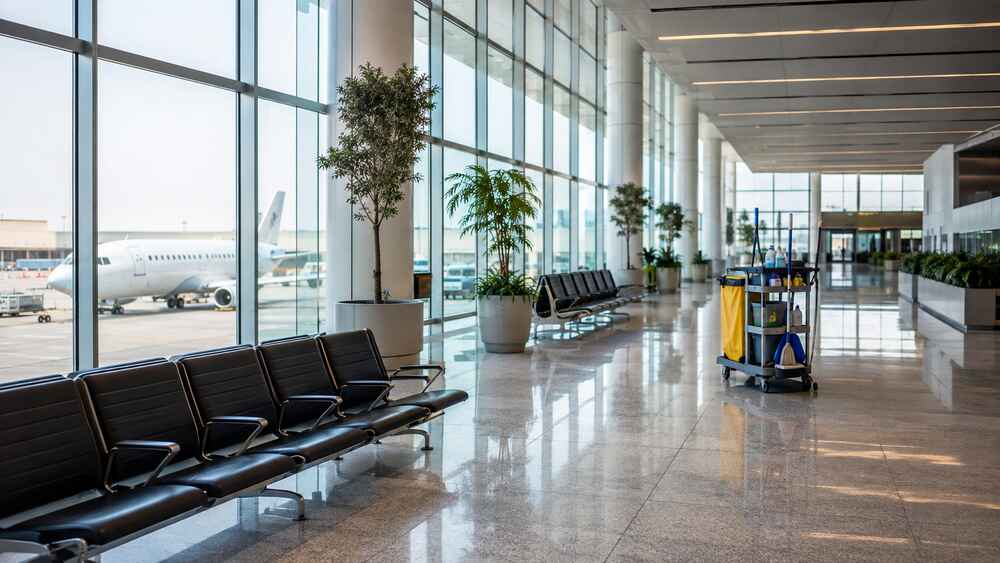
Skytrax has named the world’s cleanest airports handling up to 30 million passengers annually, highlighting facilities that earned strong marks for terminal hygiene, restroom maintenance, seating areas and overall presentation. Japanese airports dominated the 2026 ranking, securing four of the top five positions.
Japanese Airports Dominate the 2026 Cleanliness Ranking
Airport cleanliness has become an important measure of passenger satisfaction as travelers place greater value on hygienic, comfortable and well-maintained terminals. Airports are responding with larger housekeeping teams, advanced sanitation equipment, sustainable cleaning practices and continuous maintenance programs.
1. New Chitose Airport, Japan
New Chitose Airport, which serves Sapporo and Japan’s northern island of Hokkaido, ranked first in the category.
The airport is recognized for its polished floors, clean seating areas, well-maintained restrooms and orderly public spaces. Cleaning teams regularly monitor high-touch surfaces and remove waste throughout the day.
Its restaurants, retail stores, family areas, observation decks and entertainment facilities are also maintained to high standards despite steady domestic and international traffic.
2. Centrair Nagoya Airport, Japan
Chubu Centrair International Airport near Nagoya placed second. Its compact terminal design allows maintenance employees to reach passenger areas quickly, including departure halls, boarding gates, lounges and retail facilities.
The airport also uses efficient waste-management systems and environmentally responsible cleaning practices as part of its broader sustainability efforts.
3. Fukuoka Airport, Japan
Fukuoka Airport completed Japan’s sweep of the first three positions. Located close to central Fukuoka, the airport handles heavy domestic traffic as well as a growing number of international services.
Its bright interiors, clean food courts, maintained seating areas and frequently serviced restrooms help it preserve a fresh appearance despite substantial passenger turnover.
4. Bahrain International Airport, Bahrain
Bahrain International Airport ranked fourth and was the highest-placed airport from the Middle East.
Its modern terminal features expansive glass walls, polished flooring, clean seating areas and carefully maintained restrooms and prayer rooms. Housekeeping teams operate around the clock to accommodate flight schedules and changing passenger volumes.
5. Osaka Itami Airport, Japan
Osaka Itami Airport, which primarily handles domestic flights, took fifth place. Although smaller than nearby Kansai International Airport, Itami is known for its efficient layout and comfortable passenger environment.
Waiting areas, family facilities, restaurants, shops and restrooms receive continuous attention from maintenance teams.
Airports Across Four Continents Earn Recognition
6. Brisbane Airport, Australia
Brisbane Airport ranked sixth and was Australia’s highest-rated airport in the category. Its spacious domestic and international terminals feature ample natural light, polished floors and well-maintained passenger facilities.
Waste reduction and environmentally responsible maintenance practices also support the airport’s overall cleanliness program.
7. Cam Ranh International Airport, Vietnam
Cam Ranh International Airport placed seventh. Serving coastal destinations in Vietnam, the airport has gained recognition for its modern infrastructure, bright terminals and clean passenger areas.
Maintenance teams regularly service security checkpoints, baggage-claim areas, food courts and restrooms, helping the airport provide a positive first impression for international visitors.
8. Helsinki-Vantaa Airport, Finland
Helsinki-Vantaa Airport ranked eighth, combining minimalist Nordic design with high standards of hygiene and operational efficiency.
The airport’s boarding gates, lounges, restaurants, family facilities and restrooms are maintained through extensive behind-the-scenes cleaning operations. Environmentally responsible products and procedures form part of its maintenance strategy.
9. Muscat International Airport, Oman
Muscat International Airport placed ninth. Its terminal is distinguished by polished marble flooring, spacious public areas and architecture reflecting Omani design traditions.
Cleaning operations continue throughout the day in seating areas, restaurants, lounges, prayer rooms, children’s facilities and baggage-claim zones.
10. Houston Hobby Airport, United States
Houston’s William P. Hobby Airport completed the top 10 and was the only U.S. facility on the list.
The airport benefits from efficient operations, upgraded facilities and established maintenance programs. Travelers encounter orderly terminals, modern restrooms, maintained seating and clean dining areas.
Why Airport Cleanliness Matters to Travelers
Clean terminals provide benefits beyond appearance. Consistent sanitation can strengthen public confidence, support health and safety, reduce travel-related stress and improve perceptions of an airport and the airlines serving it.
The 2026 ranking also shows that airport size does not determine cleanliness. Facilities handling fewer than 30 million passengers can establish global standards through effective management, continuous maintenance and sustained investment in the passenger experience.
