


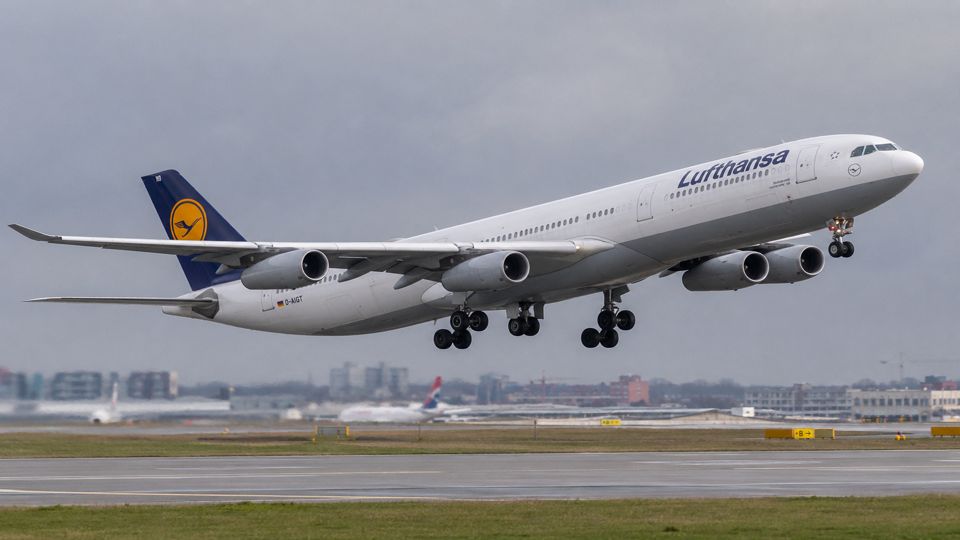
Air Traffic Control Flags Unapproved Turn During Lufthansa Flight LH405 Departure From JFK
A Lufthansa Airbus A340-300 departing New York John F. Kennedy International Airport (JFK) for Frankfurt was issued a possible pilot deviation warning after air traffic control said the aircraft made an unapproved turn while attempting to avoid severe weather.
The incident involved Lufthansa Flight LH405, operated by Airbus A340-300 registered D-AIGT, during its initial climb out of JFK. According to air traffic control communications, the flight crew sought to navigate around intense storm activity, but a breakdown in communication with the departure controller resulted in a heading change that had not been authorized.
Although the controller issued a formal warning, the flight continued safely after receiving new instructions, and no loss of separation or emergency was reported.
Weather Avoidance Request Led to Communication Breakdown
Shortly after takeoff, Flight LH405 encountered significant weather along its planned departure route. Air traffic control recordings indicate that the pilots requested alternate headings to steer clear of storm cells that were developing ahead of the aircraft.
Initially, the departure controller assigned the Lufthansa flight an easterly heading before issuing a sequence of left turns toward the flight’s first navigation fix, MERIT.
As weather conditions intensified, the crew informed the controller that the aircraft’s weather radar was showing severe precipitation directly ahead. They requested a substantially wider left turn, proposing a heading of approximately 240 degrees to avoid the hazardous weather.
The controller questioned the request, noting that other aircraft operating toward the MERIT waypoint had not reported similar concerns. Following that exchange, the Lufthansa crew indicated they would continue with the controller’s assigned routing.
ATC Issues Possible Pilot Deviation Warning
Moments later, the controller instructed the aircraft to turn right to a heading of 360 degrees while simultaneously advising the crew that the previous maneuver could be subject to review.
The controller told the crew:
“This could be a possible pilot deviation. You turned the airplane without telling me; there is an aircraft right in front of you.”
The warning reflected concerns that the aircraft had deviated from its assigned clearance while another flight was operating nearby. Maintaining adequate separation between aircraft is a primary responsibility for both flight crews and air traffic controllers, particularly during busy departure periods at major airports such as JFK.
Following the warning, the Lufthansa crew acknowledged the instruction and complied with the assigned right turn.
ATC Audio Highlights Balancing Weather and Traffic
According to air traffic control audio published on YouTube by You Can See ATC, both the pilots and the controller were attempting to manage competing operational priorities.
The Lufthansa crew sought additional maneuvering room to remain clear of severe weather, while the controller continued sequencing multiple departing aircraft in close proximity.
After the initial exchange, the controller authorized the flight to turn left to a heading of 205 degrees before transferring the aircraft to the next departure control frequency.
The communication concluded without any reported emergency, and there were no indications of an actual loss of separation between aircraft.
Lufthansa Airbus A340-300 Continues Scheduled Service
The aircraft involved in the incident was Lufthansa’s Airbus A340-300, registration D-AIGT. The four-engine widebody operates on long-haul international routes and remains part of the airline’s fleet serving transatlantic destinations.
Flight LH405 is one of Lufthansa’s scheduled services connecting New York JFK with Frankfurt Airport, the airline’s primary international hub. Frankfurt serves as Lufthansa’s largest operational base and a key gateway for flights between Europe and North America.
While many airlines have transitioned toward newer twin-engine aircraft on long-haul routes, Lufthansa continues to operate select Airbus A340-300 aircraft on specific international services.
What a Possible Pilot Deviation Means
A possible pilot deviation is a notification issued by air traffic control when an aircraft appears to have operated outside an assigned clearance or instruction. The phrase does not automatically indicate that a regulatory violation has occurred or that enforcement action will follow.
Instead, it signals that the event may be reviewed by aviation authorities to determine whether established procedures were followed and whether additional investigation is necessary.
Weather avoidance presents one of the most challenging situations for flight crews and controllers alike. Pilots must ensure the aircraft remains clear of hazardous weather, while controllers must maintain safe separation between multiple aircraft operating in the same airspace.
In situations where rapidly changing weather coincides with heavy traffic, effective communication becomes essential. Even brief misunderstandings or delayed coordination can lead to operational conflicts, making timely exchanges between pilots and controllers critical to maintaining safe flight operations.
