


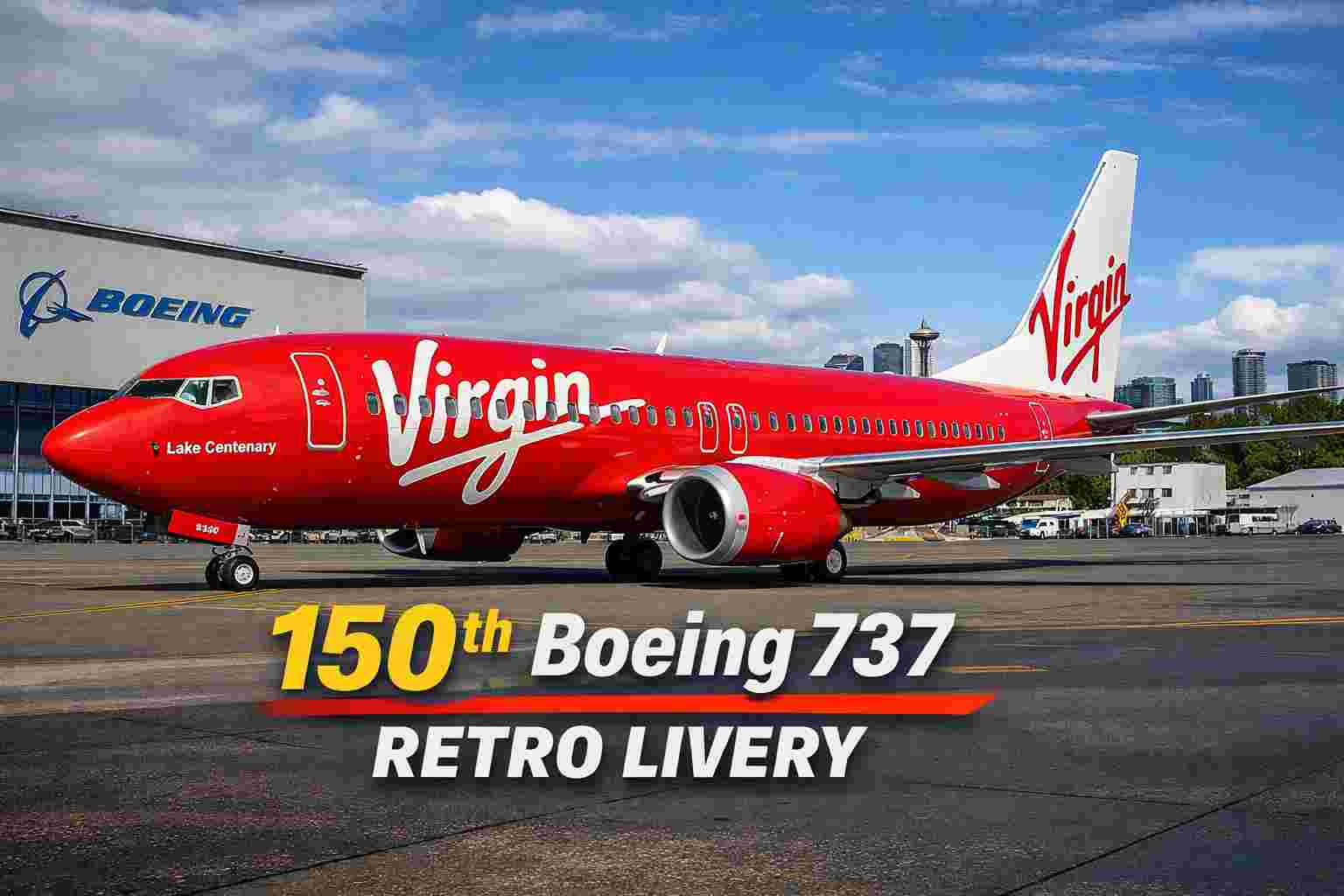
SEATTLE — Virgin Australia has introduced its 150th Boeing 737 aircraft, marking a major milestone in its fleet expansion with the unveiling of a retro-themed livery that reflects both its heritage and forward-looking strategy.
The new Boeing 737-8 was presented at Boeing Field ahead of its planned delivery to Brisbane Airport, serving as a symbolic bridge between the airline’s origins and its current position in Australia’s competitive aviation sector. The aircraft highlights the carrier’s transition from its early Virgin Blue identity into a modern full-service airline focused on efficiency and network growth.
Fleet Expansion Anchors Long-Term Growth
The aircraft forms part of Virgin Australia’s broader fleet renewal program, which is central to its operational and financial strategy. The airline confirmed it will receive 12 Boeing 737-8 jets in 2026, alongside additional regional aircraft to strengthen connectivity across its domestic and short-haul international network.
This latest delivery also represents the 100th Boeing 737 currently active in Virgin Australia’s fleet, while marking the 150th 737 received since the airline launched operations in 2000. The milestone underscores steady expansion over more than two decades, even as the carrier has undergone restructuring and repositioning in recent years.
The airline continues to prioritize narrowbody aircraft capable of serving both domestic routes and nearby international destinations. Executives view this approach as critical to maintaining schedule reliability while optimizing operating costs in a market characterized by fluctuating demand and rising input expenses.
Retro Livery Pays Tribute to Virgin Blue Era
A defining feature of the milestone aircraft is its retro-inspired livery, the first of its kind introduced by the airline. The design draws directly from Virgin Australia’s original Virgin Blue branding, featuring a bold red exterior reminiscent of the airline’s look between 2000 and 2011.
The aircraft has been named “Lake Centenary,” continuing the airline’s tradition of naming planes after Australian natural landmarks. This naming convention reinforces its connection to the domestic market, which remains a core focus of its operations.
The retro design functions as both a tribute and a branding initiative, aimed at celebrating the airline’s history while strengthening its identity in a competitive landscape. By revisiting its early visual identity, Virgin Australia signals continuity even as it modernizes its fleet and service offering.
New Aircraft Deliver Efficiency and Environmental Gains
The Boeing 737-8 brings measurable performance improvements compared to earlier models in the airline’s fleet. According to Virgin Australia, the aircraft delivers approximately 19% better fuel efficiency than the older 737-800 variant, a key advantage as airlines seek to manage fuel costs and reduce emissions.
In addition to fuel savings, the aircraft is roughly 50% quieter, helping reduce noise impact for communities near airports. These improvements align with broader industry efforts to balance growth with environmental considerations and regulatory expectations.
Fleet modernization remains a central pillar of Virgin Australia’s strategy, with newer aircraft providing both economic and sustainability benefits. Lower fuel consumption is widely viewed as one of the most immediate ways airlines can cut carbon emissions while maintaining operational performance.
Preparing for Entry Into Service
Before entering commercial service, the aircraft will undergo final preparations and test flights. It is expected to begin operating on domestic and short-haul international routes shortly after arriving in Australia.
The milestone also reflects Virgin Australia’s ongoing relationship with Boeing, as the airline continues investing in next-generation aircraft to support future expansion. The partnership has played a significant role in shaping the carrier’s fleet composition and operational capabilities over time.
As the aviation sector continues to recover and evolve, Virgin Australia’s latest delivery signals confidence in sustained travel demand and the importance of maintaining a modern, efficient fleet to remain competitive.
