


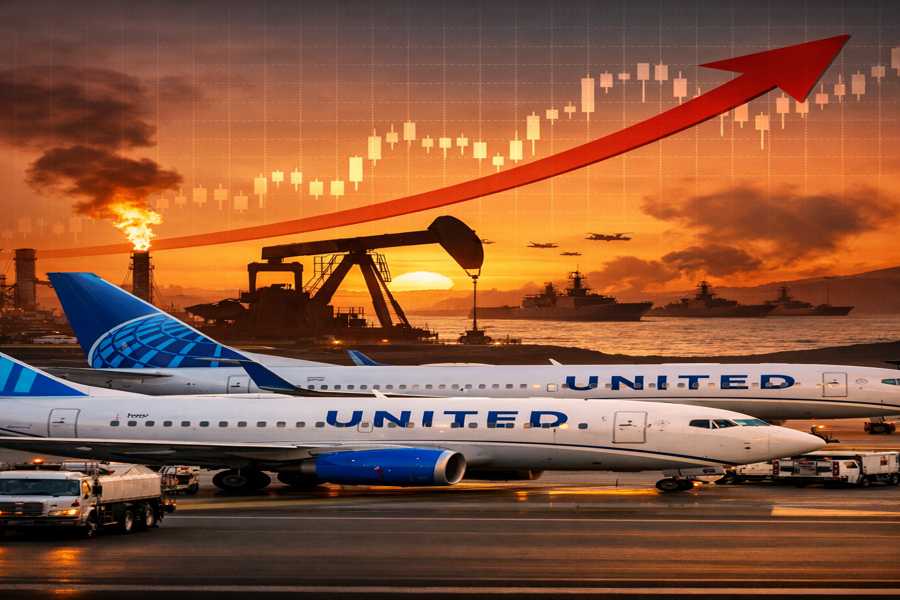
CHICAGO — Rising oil prices tied to escalating tensions in the Middle East could soon translate into higher airline ticket prices, according to United Airlines CEO Scott Kirby, who cautioned that prolonged fuel spikes may force carriers to adjust fares across the industry.
Chicago-based United Airlines said sustained increases in fuel costs would put pressure on airlines’ operating expenses, potentially pushing carriers to pass some of those costs on to passengers if elevated oil prices persist.
Oil markets have surged in recent weeks amid geopolitical tensions involving the United States, Israel, and Iran. The rapid rise in crude prices has already driven up jet fuel costs, one of the airline industry’s most critical and volatile expenses.
United CEO Warns of Higher Airfares
Fuel is typically the second-largest cost for airlines after labor. When oil prices climb sharply, airline operating costs increase almost immediately, putting pressure on margins across the sector.
Recent geopolitical tensions in the Middle East have pushed Brent crude prices toward the $90 per barrel range. Energy markets reacted strongly due to concerns that the conflict could disrupt oil shipments through the Strait of Hormuz, a key global energy shipping route.
In the United States, oil futures recorded a weekly jump of roughly 35 percent following renewed political and military tensions in the region. Such rapid increases directly influence jet fuel prices, which airlines must pay daily to operate their fleets.
For airlines, even small changes in fuel costs can significantly affect profitability. A sustained rise in oil prices often forces airlines to reconsider ticket pricing strategies and route planning, Live and Let’s Fly reported.
Airlines Face Direct Exposure to Fuel Price Swings
Most major U.S. airlines no longer hedge fuel purchases as aggressively as they did in previous decades. Fuel hedging once allowed airlines to lock in prices months or years in advance, reducing exposure to sudden spikes.
Without strong hedging protection, carriers now feel the impact of fuel price changes almost immediately.
United Airlines CEO Scott Kirby highlighted this risk during a discussion at the Harvard John A. Paulson School of Engineering and Applied Sciences on March 5, 2026. Kirby stated that if current fuel prices remain elevated, airlines will likely start raising fares soon.
He noted that higher fuel prices could affect airline financial results in the second quarter if the trend continues.
Airlines also face a timing challenge. Tickets are typically sold months before travel dates. When fuel costs rise suddenly, airlines must initially absorb the extra expense before adjusting fares in future sales cycles.
Middle East Conflict Adds Uncertainty to Oil Markets
Energy markets remain highly sensitive to developments in the Middle East conflict. The Strait of Hormuz plays a critical role in global oil transportation, with a large share of the world’s petroleum passing through the narrow waterway.
Any disruption to tanker traffic could quickly push oil prices even higher.
Government assurances that oil shipments will remain protected have not fully calmed market concerns. Investors continue to monitor the risk of further escalation in the region.
If the conflict expands or disrupts shipping lanes for an extended period, airlines could face additional operational challenges. These include higher fuel costs, longer routes due to airspace closures, and scheduling disruptions.
Why Airfares May Gradually Increase
Airline ticket prices rarely increase overnight after fuel spikes. The industry usually adjusts fares gradually as new tickets are released for future travel periods.
However, fuel remains a major cost component for every airline. If oil prices stay elevated for weeks or months, airlines may have little choice but to pass part of the additional cost to passengers.
Competitive market conditions can slow fare increases, but they cannot eliminate the financial pressure caused by rising fuel prices.
For travelers, the result may be higher ticket prices later in the year if geopolitical tensions continue to affect global oil supply.
