


Carrier Expands “Elevate” Cabin Strategy From San Francisco Hub
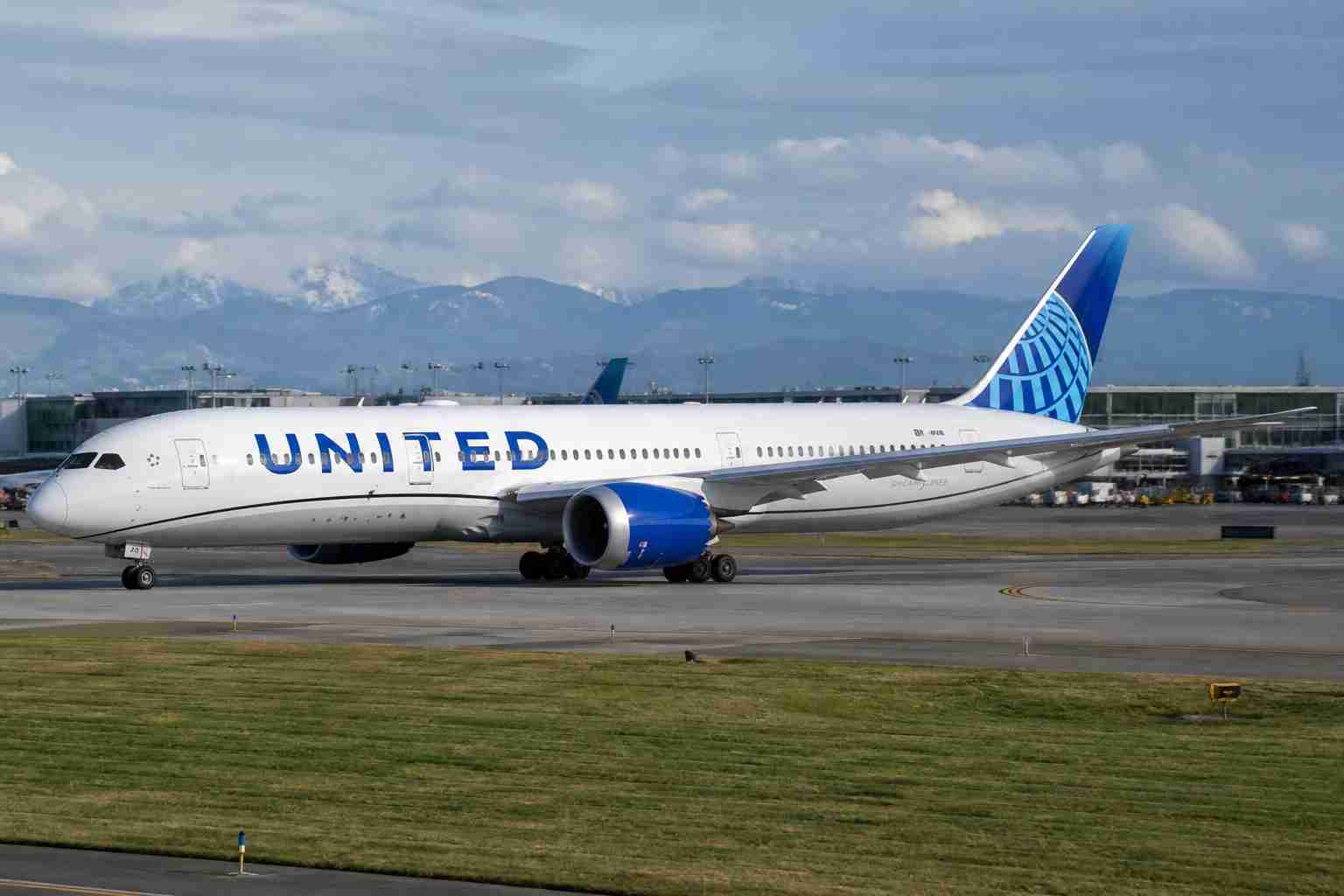
CHICAGO — United Airlines has begun deploying a new configuration of its Boeing 787-9 Dreamliner, marking a strategic push toward higher-margin premium travel on long-haul international routes.
The newly introduced aircraft, branded under the airline’s “Elevate” cabin concept, feature a significantly redesigned interior with fewer total seats but a higher proportion of premium offerings. The planes are now operating from San Francisco International Airport to major global hubs including London Heathrow Airport and Singapore Changi Airport, with further expansion planned through 2026.
Premium-Focused Configuration Signals Strategic Shift
United’s Elevate-configured 787-9 aircraft carry 222 passengers, down from 257 seats in earlier versions of the same model. The redesigned layout reflects a deliberate emphasis on premium seating, particularly in business and premium economy cabins.
The aircraft include 64 Polaris business class seats arranged in a 1-2-1 configuration across 16 rows. Among these are eight Polaris Studio seats, positioned in the front row and marketed as an enhanced business class experience. Behind the business cabin, the aircraft feature 35 Premium Plus seats in a 2-3-2 layout.
The economy section includes 123 seats in a standard 3-3-3 configuration, with 39 designated as Economy Plus extra legroom seats.
United already operates more than 80 Dreamliners across multiple variants, but the Elevate 787-9s stand apart due to their premium-heavy configuration. The airline has a total order book of 71 aircraft in this category, alongside an additional 56 Boeing 787-10 Dreamliner jets scheduled for delivery starting in 2028.
Route Expansion Planned Through 2026
Currently, four Elevate-configured 787-9 aircraft are in active service, all based at San Francisco. These aircraft operate daily flights between San Francisco and Singapore (UA1/2) and San Francisco and London Heathrow (UA901/900).
United plans to expand the deployment of these aircraft steadily over the next year as additional units enter service. Beginning May 21, 2026, the airline will introduce a second daily San Francisco–London Heathrow service (UA930/939).
Further expansion follows on August 1, 2026, when a second daily San Francisco–Singapore route (UA29/28) is added. By September 1, 2026, United will launch a third daily London Heathrow frequency (UA948/949) and introduce a new route between San Francisco and Zurich Airport (UA44/45).
By September 2026, every daily United flight from San Francisco to London, Singapore, and Zurich is expected to feature the Elevate cabin product, according to industry reports.
Fleet Growth Targets and Operational Considerations
United Airlines expects to operate 33 of these reconfigured 787-9 aircraft by 2028, with approximately one new aircraft entering service each month. However, all published schedules remain subject to change, particularly in light of ongoing delivery uncertainties affecting aircraft manufacturers.
The airline has also used these aircraft intermittently on domestic routes, including flights between San Francisco and George Bush Intercontinental Airport, primarily for crew training and familiarization.
Booking Challenges and Identification Tips
Despite the significance of the new cabin product, United has not introduced a clear label within its booking system to distinguish Elevate-configured aircraft. Instead, travelers must rely on indirect indicators.
One of the most reliable signs is the presence of a “Polaris Studio available” tag under business class fare options, assuming those seats have not sold out. Additionally, the seat map provides clues, as the 222-seat layout and 1-2-1 Polaris configuration differ noticeably from older aircraft.
Implications for Revenue and Customer Experience
The increased number of premium seats is expected to enhance revenue potential on long-haul routes while also creating more opportunities for upgrades and award redemptions. This aligns with broader industry trends, as airlines prioritize premium cabins to offset rising operational costs and fluctuating demand in economy travel.
United’s Elevate initiative underscores a broader shift toward maximizing yield per passenger, particularly on high-demand international routes anchored at its San Francisco hub.
As the rollout continues, the airline’s ability to execute its fleet expansion on schedule—and maintain consistency in product delivery—will be closely watched by both investors and frequent travelers.
