

Data Analytics Drive Enforcement Push
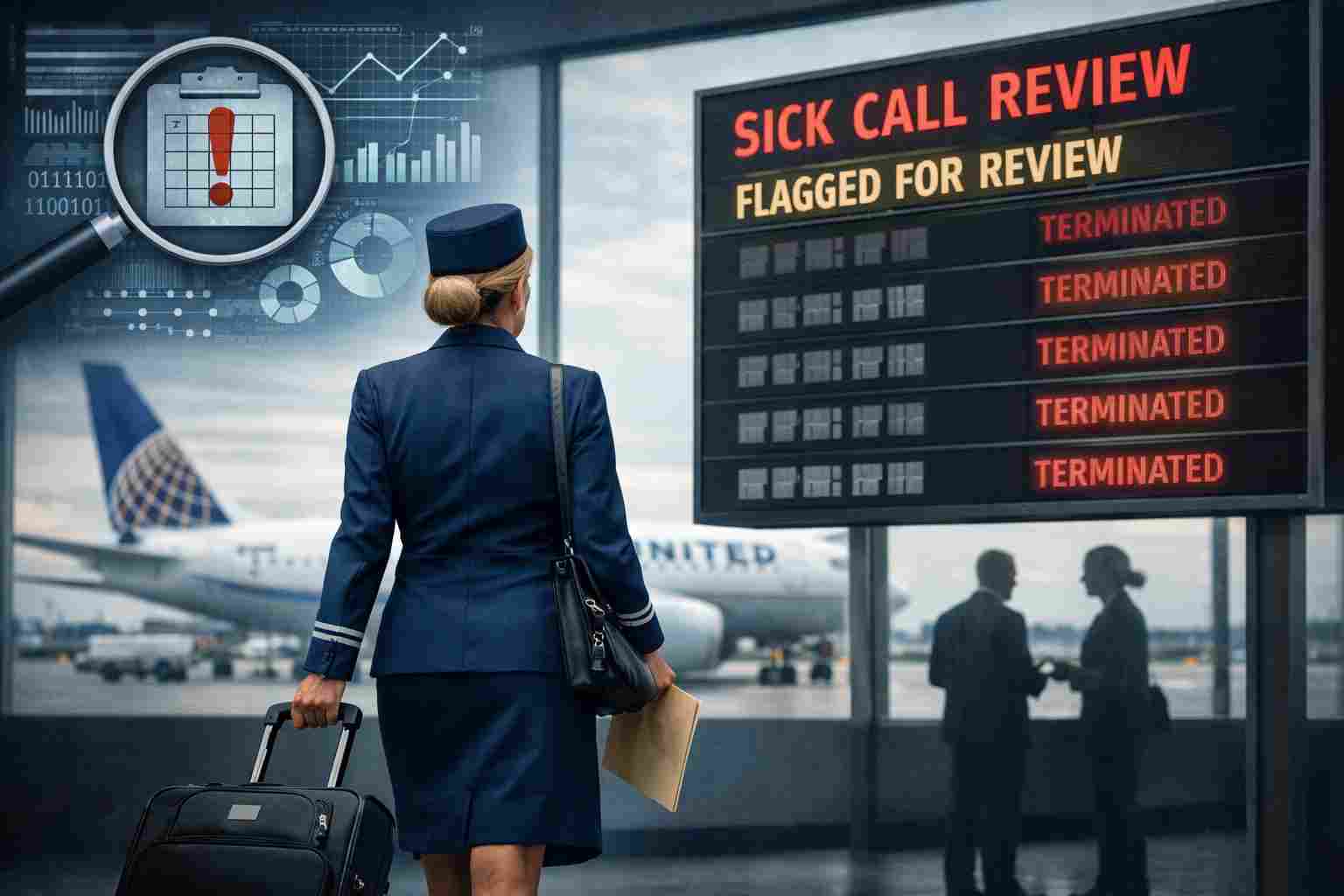
CHICAGO — United Airlines is intensifying its use of data analytics to identify what it believes may be abuse of sick leave among flight attendants, a move that has contributed to a rise in terminations and heightened tensions with labor representatives.
The Chicago-based carrier says its approach relies on internal operational data to ensure reliability across its tightly coordinated flight network. “United Airlines asserts that data analytics help protect operational integrity by identifying misuse patterns.”
At O’Hare International Airport, one of the airline’s largest hubs, flight attendants have been warned that their digital scheduling activity can be reviewed and may lead to investigations or dismissal. According to internal communications described by union officials, sick leave abuse, along with inappropriate social media activity, has become the leading cause of termination among cabin crew.
Management relies on its crew scheduling systems to analyze patterns, connecting attempts to modify schedules with subsequent sick calls. The airline says this allows it to detect potential misuse without relying on external surveillance.
How Scheduling Patterns Raise Red Flags
United reviews operational records generated during routine scheduling processes, looking for sequences that may suggest an employee attempted to avoid assigned duties. For example, if a flight attendant tries to swap a trip, requests time off that is denied, and later calls in sick for the same period, the system may flag the sequence for further review.
Even legitimate efforts to adjust schedules before reporting illness may come under scrutiny. Management’s review focuses on correlating internal data points to assess whether sick leave was used appropriately.
The Association of Flight Attendants-CWA, which represents United’s cabin crew, disputes the reliability of such conclusions. Union leaders argue that data patterns alone do not capture the full context of medical situations.
They point to scenarios in which a crew member becomes ill during a vacation and cannot return in time for a scheduled assignment, or when a worker suffers an unexpected injury after disputing a trip assignment. In those cases, the union says, legitimate medical absences could appear suspicious when viewed solely through scheduling data.
The union maintains that medical documentation and individual circumstances must be considered before disciplinary action is taken.
Doctor’s Notes and Arbitration Back Airline
United’s attendance policies have already faced scrutiny. In July 2024, the airline required flight attendants to provide doctor’s notes for weekend sick calls following an increase in such absences.
The union criticized the requirement and filed a grievance, calling the policy “reprehensible.” However, an independent arbitrator sided with United, ruling that the airline had the authority to require medical documentation when there is evidence of “abuse or misuse of sick leave.”
United has since encouraged flight attendants to seek professional medical care and obtain documentation whenever illness prevents them from working. Such documentation may help protect employees if their attendance patterns are questioned.
FMLA Leave and Notice Requirements Under Scrutiny
The airline has also faced allegations from critics who claim United intimidated employees seeking leave under the federally protected Family and Medical Leave Act. According to those claims, the company required “substantial medical facts” to support FMLA requests.
In addition, United requires flight attendants to provide at least eight hours’ notice when calling in sick, if possible. Failure to do so can result in performance warnings that may jeopardize continued employment.
United says these requirements are necessary because attendance reliability is essential to safe and efficient airline operations.
Industry-Wide Pressures Shape Attendance Policies
Strict monitoring of sick leave is not unique to United. Airlines operate complex scheduling systems in which a single absence can disrupt multiple flights and affect hundreds of passengers.
Unlike office-based workers, flight attendants cannot perform their duties remotely. As a result, airlines often enforce stricter attendance standards, particularly during peak travel periods and holidays.
Some international carriers impose even more direct oversight. For example, Emirates requires flight attendants who report sick to visit company medical facilities for verification.
While United’s approach reflects broader industry practices, the scale of its data-driven enforcement and the resulting disciplinary actions have intensified labor tensions.
Balancing Operational Needs and Worker Protections
At the center of the dispute is a fundamental question facing many large employers: how to balance technological oversight with fair treatment of workers.
United maintains that analytics help ensure operational stability and prevent abuse. Labor representatives counter that relying heavily on digital patterns risks misinterpreting legitimate medical absences.
As workforce analytics become more sophisticated, the debate over employee monitoring and sick leave enforcement is likely to continue — not only at United but across industries where reliability is critical.
The issue highlights the growing role of data in managing employees and the challenges companies face in applying technology while maintaining trust and fairness in the workplace.
