


FAA Investigating United Airlines Flight After Crew Reports Severe Headset Interference
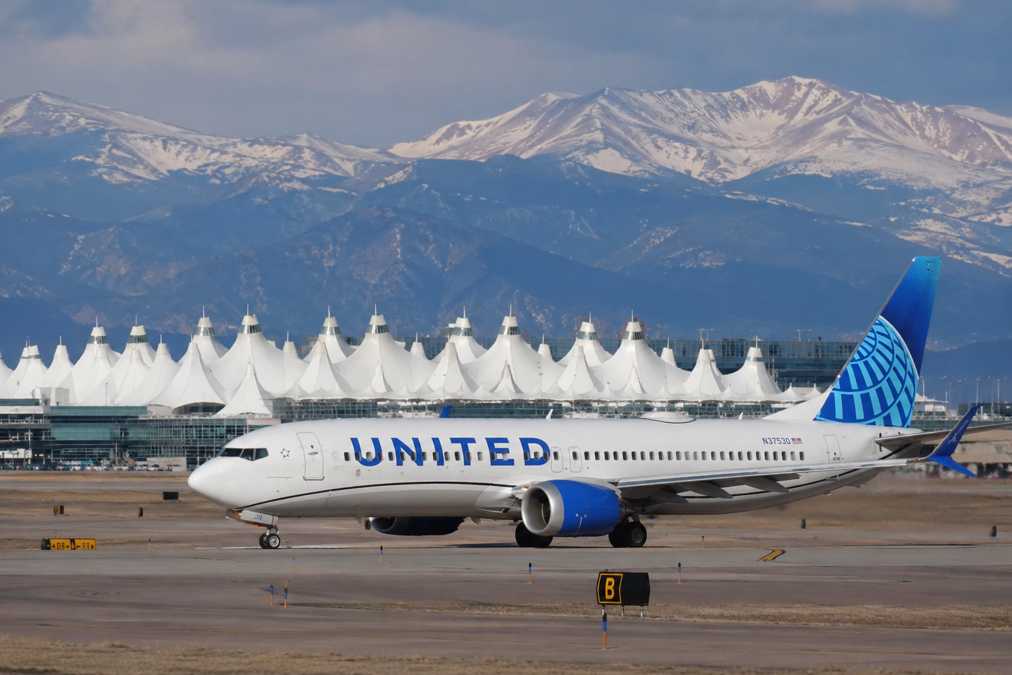
A United Airlines (UA) Boeing 737 MAX 8 operating a scheduled flight from Austin to Denver landed safely at Denver International Airport (DEN) after its flight crew reported significant electrical interference in the cockpit during the aircraft’s approach. The incident also involved a Traffic Alert and Collision Avoidance System (TCAS) Resolution Advisory, prompting the Federal Aviation Administration (FAA) to open an investigation.
The aircraft, operating as United Flight 779, touched down at approximately 12:45 p.m. local time on schedule after departing Austin-Bergstrom International Airport (AUS). Although the landing was completed without incident, the crew’s report of severe communication disruption has renewed attention on the reliability of air traffic control communications in the Denver region.
Crew Reports Severe Cockpit Interference During Final Approach
Following the landing, the flight crew stopped on the taxiway and informed air traffic controllers that they had encountered intense electrical interference through their headsets during the final stages of the approach.
According to the pilots, the disturbance became so severe that cockpit communication was significantly impaired, making it difficult to hear both each other and instructions from air traffic control.
The crew described the event in a radio transmission after landing:
“On approach, we had a severe electrical disturbance in our headsets. It got so loud that we could barely communicate in the cockpit. It was hard to hear ATC, and then we got that [TCAS Resolution Advisory] that we had to contend with as well.”
As reported by Simple Flying, the communication was later shared on X by Thenewarea51 using audio obtained from the ATC App.
TCAS Resolution Advisory Adds Significance
During the same approach, the aircraft also received a Resolution Advisory (RA) from its Traffic Alert and Collision Avoidance System (TCAS).
An RA represents the highest level of TCAS warning and directs pilots to immediately climb or descend to maintain safe separation from another aircraft. When an RA is issued, pilots are required to follow TCAS guidance, even if it temporarily differs from air traffic control instructions.
While the FAA has not indicated whether the communication interference and the TCAS alert were related, investigators are expected to examine whether the events occurred independently or shared a common cause.
Aircraft Details and Flight Information
The FAA identified the aircraft involved as a Boeing 737 MAX 8 operating United Flight 779 between Austin and Denver.
According to Planespotters.net, the aircraft is registered as N67350 and is approximately two years old. Although newer aircraft generally experience fewer technical issues, investigators have not ruled out the possibility of an onboard malfunction.
The flight normally takes about two and a half hours, and no injuries or operational disruptions were reported following the aircraft’s arrival.
FAA Focuses on Communication Reliability
The FAA routinely investigates incidents involving degraded or lost communication between flight crews and air traffic controllers.
The combination of severe headset interference and a TCAS Resolution Advisory makes this event particularly noteworthy because TCAS functions independently of ground-based communication systems, allowing aircraft to maintain separation even if radio communications become unreliable.
Investigators will likely review cockpit systems, radio equipment, aircraft data, and air traffic control recordings to determine the source of the reported interference.
Denver’s Previous Air Traffic Control Communications Failure
The latest incident comes more than a year after a major communications outage affected the Denver Air Route Traffic Control Center.
On May 12, 2025, both transmitters serving part of the Denver Center’s airspace experienced simultaneous failures, interrupting communications with aircraft at approximately 1:50 p.m. local time.
The FAA stated the disruption lasted around 90 seconds and said controllers quickly switched to another frequency while maintaining safe aircraft separation.
However, Denver7 Investigates reported that between 15 and 20 pilots experienced communication difficulties lasting as long as six minutes, a claim disputed by the FAA.
The agency later concluded that overlapping failures involving radio transmitters and communication circuits caused the outage and subsequently replaced the affected equipment.
At a House committee hearing on May 15, 2025, then-Deputy Air Traffic Organization head Frank McIntosh testified that both the primary and backup frequencies failed, although controllers successfully directed aircraft to alternate frequencies without any loss of separation.
Congress Accelerates National Air Traffic Control Modernization
The 2025 communications outage prompted Colorado lawmakers to call for urgent improvements to the nation’s aging air traffic control infrastructure.
Senators John Hickenlooper and Michael Bennet, along with Representatives Joe Neguse and Diana DeGette, urged federal transportation officials to modernize communications equipment and address controller staffing shortages.
Congress has since approved $12.5 billion for a nationwide modernization effort covering telecommunications networks, radar systems, and digital data management.
FAA Administrator Bryan Bedford told lawmakers that the original 15-year modernization schedule has been reduced to three years, with completion targeted by the end of 2028. Peraton has been selected to manage the program.
Planned improvements include replacing legacy copper communications lines with fiber-optic infrastructure, creating a new digital command center, installing Tower Simulation Systems at 113 control towers, deploying Enterprise Information Display Systems at 435 towers, adding new surface radar systems at 44 airports, and introducing Terminal Flight Data Manager technology at 89 facilities.
Denver Airport Receiving Safety Upgrades
Denver International Airport is also undergoing significant infrastructure improvements through a $43 million investment focused on operational safety.
The upgrades include advanced systems that help controllers monitor aircraft and ground vehicles on runways and taxiways while automatically identifying potential conflicts to reduce runway incursion risks.
Additional radar installations are expected by November 2026, providing controllers with improved aircraft tracking capabilities while replacing traditional paper flight strips with electronic systems.
With nearly 1,000 aircraft movements every day, reliable communications remain essential to maintaining safe and efficient operations at one of the nation’s busiest airports.
Denver’s Conspiracy Lore Continues Alongside Real Infrastructure Challenges
Denver International Airport has long attracted public fascination because of its unusual artwork and persistent conspiracy theories.
Among the airport’s most recognizable attractions are the towering blue horse statue commonly known as “Blucifer” and an animatronic gargoyle display that has greeted visitors with humorous phrases, including “welcome to the Illuminati.”
Popular television programs have further fueled speculation about the airport, including claims of a vast underground bunker beneath its runways.
While such theories continue to capture public attention, the communication issues experienced at Denver have been documented through official investigations. Federal authorities have attributed previous outages to aging infrastructure, and the modernization projects now underway are intended to improve system reliability and reduce the likelihood of similar incidents in the future.
