


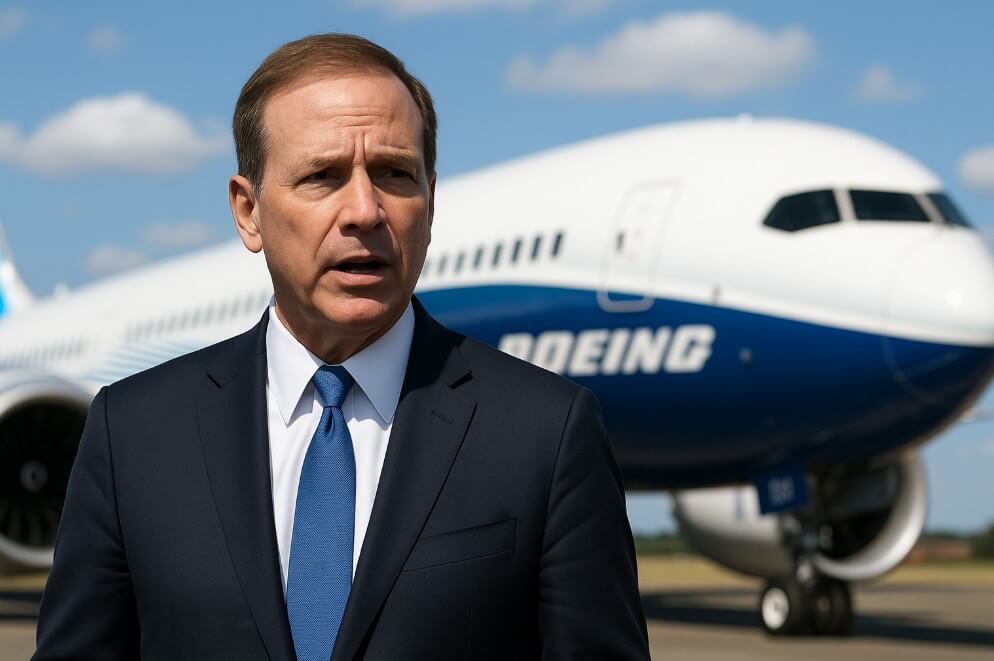
BEIJING — A delegation of U.S. lawmakers is pressing for a breakthrough Boeing aircraft order in China, seeking to secure the sale of as many as 500 planes in a move that could restore one of the company’s most critical international markets and signal warmer commercial ties between Washington and Beijing.
The visit, which marks the first U.S. House delegation to China since 2019, put aerospace cooperation squarely on the agenda. According to discussions with Chinese leadership, the potential deal could represent one of the largest commercial aircraft purchases in recent years, underscoring both the scale of China’s growing aviation sector and the U.S. intent to reestablish Boeing’s foothold in the country.
Boeing’s China Opportunity
For Boeing, the deal would be nothing short of a lifeline. Chinese airlines have historically been among the company’s biggest customers, but new orders have slowed to a halt in recent years amid heightened trade tensions, safety concerns following the grounding of the 737 MAX, and China’s push to promote its own domestic jet manufacturer, COMAC.
Representative Adam Smith, who led the congressional delegation, highlighted the long drought in orders. “It’s been a while since Boeing airplanes have been sold here in China,” Smith was quoted by Reuters as saying. His remarks underscored the urgency behind U.S. efforts to revive commercial aerospace sales in a country that represents the world’s second-largest air travel market.
U.S. Ambassador to China David Purdue offered a similarly optimistic assessment, indicating that negotiations were approaching their conclusion. Talks were in their “last days or weeks,” he said, calling the deal “very important to the president.”
High-Level Engagements in Beijing
The lawmakers’ trip was not limited to aviation. During their visit, the delegation met with senior Chinese officials including Premier Li Qiang, top economic policymaker He Lifeng, and Defense Minister Dong Jun. Conversations spanned trade, technology, defense, and regional security, reflecting a broader diplomatic mission.
Smith emphasized the importance of dialogue between the world’s two largest powers, especially on military matters. He noted that “when strategic forces grow large, dialogues become essential to avoid miscalculations.”
The group included Representative Ro Khanna, a Democrat with a strong focus on technology and U.S. competitiveness. Khanna has often pressed for policies balancing economic cooperation with strategic caution in dealings with China. The delegation’s agenda reflected this dual approach, addressing not just aviation and trade but also semiconductors, defense risks, and flashpoints such as Taiwan and the South China Sea.
A Potential Breakthrough for Boeing
A confirmed deal would mark a major recovery for Boeing in China, where sales have been virtually frozen since 2017. The proposed order of 500 jets would provide a substantial boost to the company’s commercial backlog and its manufacturing base in the United States.
The company already maintains operations in China, including a finishing center in Tianjin, but has struggled to regain traction amid the political standoff. Fresh commitments from Chinese carriers could stabilize Boeing’s Asia-Pacific strategy and counterbalance Airbus, which has expanded its dominance in the Chinese market during Boeing’s absence.
Diplomatic Stakes Remain High
Still, observers caution that the deal remains tied to broader U.S.-China dynamics. Trade disputes over tariffs, export restrictions on advanced semiconductors, and military competition in the Indo-Pacific continue to weigh heavily on the bilateral relationship. Any final announcement could hinge on broader diplomatic concessions or the state of Washington-Beijing ties.
Even so, the lawmakers’ Beijing trip suggests growing momentum toward practical cooperation. While political frictions remain, both sides appear to see commercial aviation as a relatively safe space to advance mutual economic interests.
Outlook
Boeing’s reliance on Chinese orders has long been a defining feature of its business model, and the potential resumption of large-scale deals carries both symbolic and economic significance. Securing a 500-aircraft order would not only restore lost ground but also demonstrate the viability of U.S.-China commercial engagement despite ongoing strategic rivalry.
Whether Beijing will confirm the agreement—and under what conditions—remains uncertain. But for now, U.S. lawmakers are betting that a landmark aviation deal could serve as a catalyst for easing trade tensions and rebuilding one of the aerospace industry’s most important cross-border ties.
