


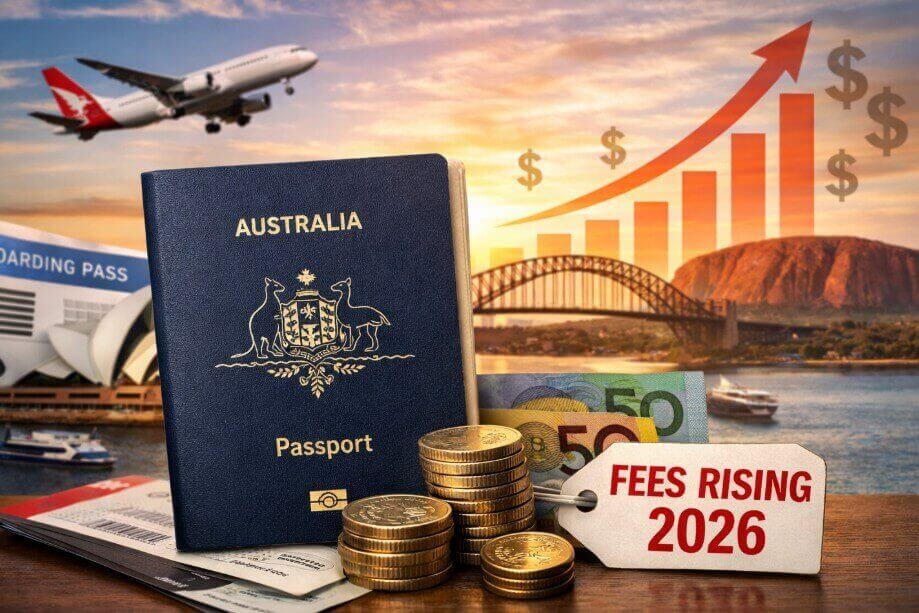
SYDNEY — Travelers holding Australian passports will soon pay more to keep them valid. The federal government has confirmed that passport application fees will increase again on January 1, 2026, continuing a long-standing policy of annual indexation tied to inflation.
Australia already issues the most expensive passport in the world, and the latest adjustment will further widen the cost gap between Australians and travelers from other advanced economies. The increase will add between five and ten Australian dollars to the current fee, depending on the final Consumer Price Index calculation. Any application lodged before January 1 will be processed at existing rates, regardless of when the passport is printed or delivered.
Fees Continue Upward Trend
A standard 10-year Australian passport currently costs 412 Australian dollars. The Department of Foreign Affairs and Trade (DFAT) says the price reflects the document’s advanced security features and fraud prevention measures, which place it among the most technologically sophisticated passports globally.
The upcoming increase follows legislation requiring automatic indexation of passport fees, a mechanism that has been in place since 2011. Last year, Australians absorbed two separate increases, including a substantial 15 percent hike that took effect on July 1. In 2023, the same passport cost 325 Australian dollars, underscoring the rapid escalation in fees over a short period.
Airlines and travel agents are already advising customers planning international trips in 2025 to submit applications early. For travelers departing from major hubs such as Melbourne Airport or flying internationally with carriers like Qantas, timing the application could result in modest but meaningful savings.
Global Ranking Slips Despite High Cost
While Australia leads the world in passport pricing, its global mobility ranking has slipped. According to major passport indices, Australia now ranks equal seventh, providing visa-free or visa-on-arrival access to 185 destinations.
That marks a decline from last year’s equal sixth position, when Australian passport holders could access 189 destinations. Singapore currently holds the top ranking, offering broader access while charging roughly 80 Australian dollars for its passport — a fraction of Australia’s cost.
The contrast has reignited debate about value for money, particularly as Australian travelers pay more while receiving access to fewer destinations than in previous years.
What It Means for Travelers
For frequent travelers and business professionals, the latest increase reinforces the importance of forward planning. Submitting an application before the January 1 deadline locks in current pricing and avoids the higher indexed fee.
The government maintains that the cost structure supports document integrity, border security, and international trust in Australian travel documents. Still, the rising fees continue to set Australia apart from peer nations, especially as global competition for talent and tourism intensifies.
Australia Remains a Major Travel Draw
Despite rising passport costs, Australia remains one of the world’s most sought-after destinations for international visitors. The country’s vast geography, varied climates, and distinct regional identities shape every trip, often surprising first-time travelers with the distances involved.
Sydney and Melbourne anchor the urban experience, offering iconic architecture, museums, and waterfront precincts. Queensland’s tropical north attracts visitors with rainforests, reef systems, and laid-back coastal towns, while Western Australia delivers remote landscapes and fewer crowds. The Northern Territory showcases Indigenous culture and dramatic desert scenery.
Natural landmarks continue to define Australian travel itineraries. Uluru draws visitors for its cultural significance and changing light at sunrise and sunset. The Great Barrier Reef offers world-class snorkeling and diving, while the Whitsundays attract sailors and beach-focused travelers.
Costs, Safety, and Getting Around
Travel within Australia requires careful budgeting. Hostel dorm beds typically start between 30 and 40 Australian dollars per night, while midrange hotels average around 150 Australian dollars. Dining costs range from affordable pub meals to higher-priced casual restaurants, with groceries for a week averaging 90 to 150 Australian dollars per person.
Australia is considered safe, but authorities emphasize the importance of respecting natural hazards, particularly in remote areas. Long distances, extreme weather, and wildlife require preparation and awareness. Emergency services can be reached by dialing 000.
Public transport networks in major cities are reliable, while flights remain the most efficient option for crossing long distances. Rail journeys such as the Ghan and Indian Pacific offer scenic alternatives for travelers with flexible schedules.
Looking Ahead
As passport fees climb again in 2026, Australians face higher upfront costs for international mobility. While the government points to security and technological standards as justification, the rising price and slipping global ranking ensure the issue will remain a point of discussion for travelers and policymakers alike.
