


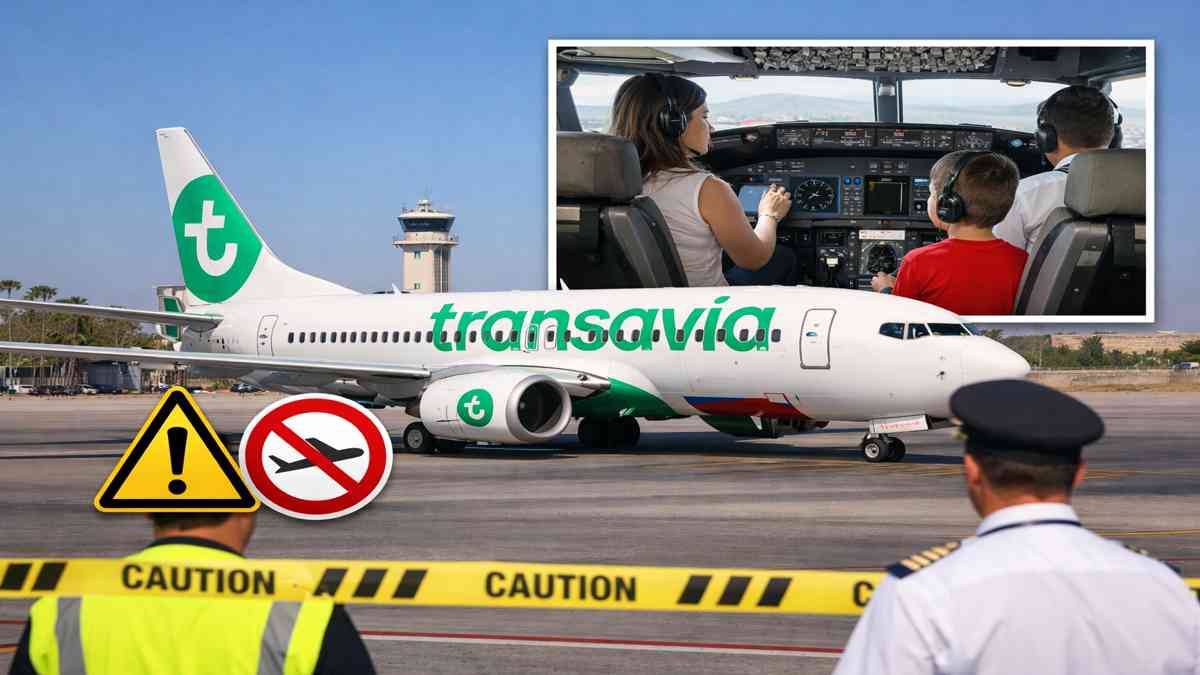
A February 21 flight operated by Transavia is under investigation after a reported cockpit seating decision involving a woman and a child raised safety and regulatory concerns on a six-hour journey from Hurghada to Amsterdam.
The incident, first described by a passenger identified as William, has prompted scrutiny of airline procedures for handling overbooked flights and compliance with European aviation safety standards. According to the account, airline staff at the departure gate requested volunteers to sit in the cockpit before boarding began—an unusual move that immediately drew concern.
Cockpit Seating Raises Immediate Concerns
William said a woman and a child, estimated to be around ten years old, accepted the request and were allowed to board early. As later reported by RTL, the pair occupied jump seats located behind the pilots for the duration of the nearly six-hour flight.
Such seating arrangements are typically reserved for authorized personnel, including off-duty crew members or inspectors. Under rules set by the European Union Aviation Safety Agency (EASA), cockpit access is tightly restricted and generally limited to trained individuals, except under specific and controlled circumstances.
The reported decision to allow passengers—particularly a minor—into the cockpit has raised concerns among aviation observers about whether standard protocols were followed.
Overbooking Practices Under Spotlight
The situation also draws attention to the airline industry’s widespread practice of overbooking. Airlines routinely sell more tickets than available seats to account for no-show passengers, a strategy designed to maximize load factors and revenue.
In most cases, when all ticketed passengers arrive for boarding, airlines manage the situation by denying boarding to some travelers or rebooking them on alternative flights. Compensation may also be offered depending on applicable regulations.
In this instance, however, the decision to place passengers in the cockpit instead of following traditional denied-boarding procedures has sparked debate. Aviation experts note that while a captain has final authority over onboard decisions, those actions must still align with strict safety and regulatory guidelines.
Investigation and Regulatory Response
Transavia confirmed that it has launched an internal investigation into the February 21 flight. The airline stated that its policies comply with EASA regulations and emphasized that the captain is ultimately responsible for safety decisions onboard.
The Dutch Human Environment and Transport Inspectorate has acknowledged the situation but has not initiated a formal investigation. However, the regulator indicated that allowing passengers in the cockpit could be considered an undesirable practice.
Authorities have also noted that certain exceptions may exist under approved safety procedures. If the captain’s decision falls within those guidelines, it may not constitute a formal violation, though it could still prompt further review.
Passenger Complaint and Potential Fallout
The reporting passenger has filed a formal complaint, describing the situation as a breach of contract and raising concerns about potential safety risks. He has requested compensation for all affected passengers, though the airline has not yet issued a response regarding compensation.
The case could have broader implications for how airlines handle overbooking situations and enforce cockpit access rules. It also underscores the delicate balance between operational flexibility and strict adherence to aviation safety standards.
As the investigation continues, industry observers will be watching closely to see whether the incident leads to changes in policy or enforcement within European aviation.
