


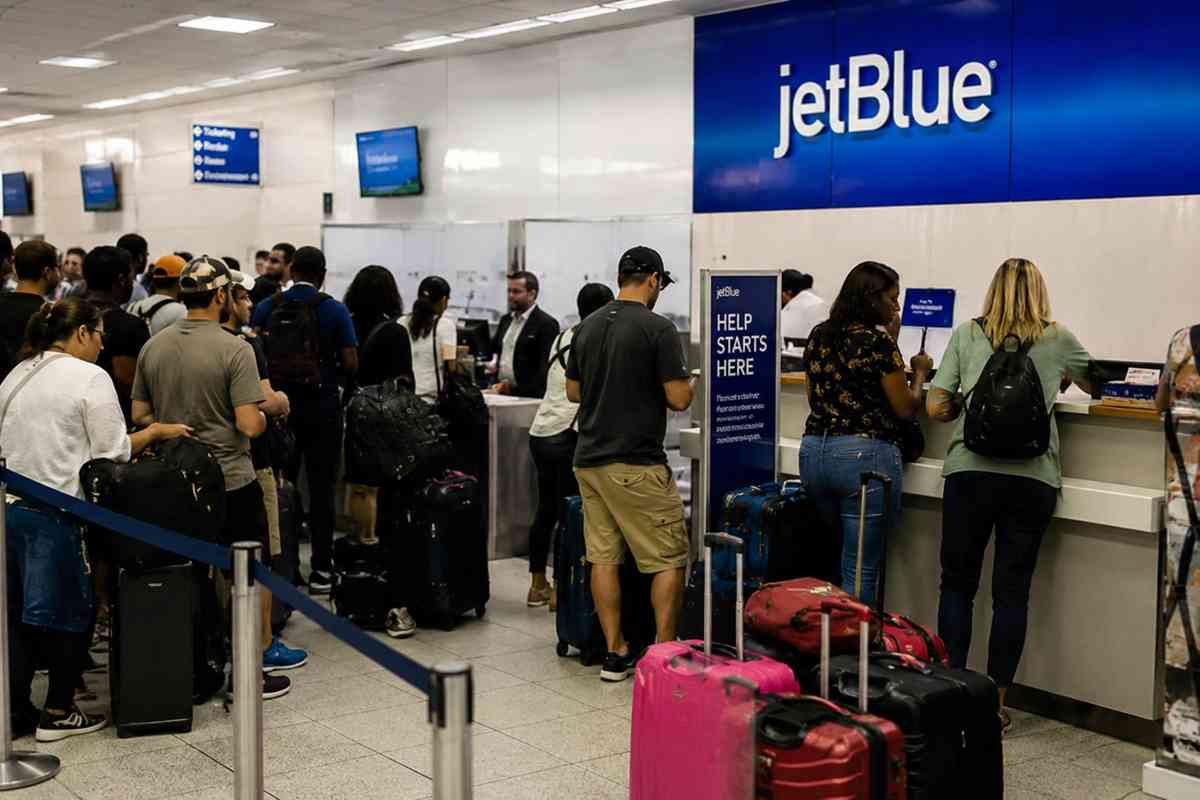
JetBlue Declines Hotel Coverage Following Operational Disruption
Passengers traveling on JetBlue Airways flight 882 from Hewanorra International Airport in St. Lucia to New York’s John F. Kennedy International Airport were left stranded overnight after a bird strike forced the airline to delay the flight until the following morning.
The disruption occurred Friday when the aircraft scheduled to operate the route suffered a bird strike, preventing the flight from departing as planned. The service was subsequently rescheduled for 11 a.m. the next day. JetBlue confirmed that affected passengers would not receive hotel accommodations or other overnight assistance from the airline.
The carrier said the incident fell under what airlines classify as an “extraordinary circumstance,” placing it outside the scope of compensation obligations typically associated with controllable operational failures.
Passengers seeking reimbursement for hotels, meals, or incidental expenses were instead advised to rely on personal travel insurance policies or trip delay protections tied to eligible credit cards.
Why JetBlue Is Not Required to Provide Compensation
JetBlue’s decision reflects long-standing airline industry policy regarding uncontrollable disruptions.
Under the airline’s customer service framework, passengers are generally entitled to assistance when delays stem from factors within the airline’s control, including maintenance issues linked to operational oversight or staffing problems caused by internal scheduling decisions.
A bird strike, however, is treated differently. Airlines classify such incidents as external events that cannot reasonably be prevented or controlled.
“JetBlue classifies a birdstrike as an extraordinary circumstance, not a controllable delay.”
The distinction is important because it determines whether an airline assumes financial responsibility for stranded travelers.
In this case, the airline maintained that the delay did not result from maintenance negligence or avoidable operational shortcomings. Even if flight crews later exceeded legally permitted working hours because of the delay, the carrier does not categorize the issue as a staffing failure.
“The sequence of events originates externally, and JetBlue argues it cannot be held responsible for nature-driven disruptions.”
Industry experts note that the airline’s position is legally defensible under both U.S. and international aviation standards.
International Aviation Rules Support Airline Position
The treatment of bird strikes as extraordinary events is not unique to JetBlue or the United States aviation sector.
European aviation regulators have reached similar conclusions under passenger protection frameworks that are generally stricter than those in the United States.
“This stance is also consistent with rulings at the international level. The European Court of Justice has confirmed that even under EU Regulation 261/2004, European carriers are not required to compensate passengers when a birdstrike causes a delay or cancellation.”
The ruling effectively established that wildlife-related incidents fall beyond the reasonable control of airlines, exempting carriers from mandatory compensation requirements in many cases.
While the legal interpretation may shield airlines from liability, the outcome can still create significant financial and logistical burdens for passengers, particularly when delays occur in international destinations where lodging costs may be high and alternative transportation options limited.
Travel Insurance and Credit Card Protections Become Critical
The incident underscores the growing importance of supplemental travel protections for consumers.
Passengers carrying travel insurance policies with trip delay coverage are often eligible for reimbursement of hotel stays, meals, and other expenses once delays exceed a specified number of hours.
“Depending on the policy terms, overnight accommodation, meals, and incidental expenses may all qualify for reimbursement after a documented delay of a specified number of hours.”
Travel-focused credit cards may also offer protection automatically when airfare is purchased using the card. Such benefits can include reimbursement for hotels, food, and transportation costs associated with unexpected delays.
Passengers without either form of protection, however, often have few options beyond covering expenses out of pocket.
“For passengers without either option, the situation is considerably harder. JetBlue (B6) has no contractual or legal obligation to provide a hotel in this scenario, and the airline’s financial position gives it little incentive to absorb discretionary costs.”
Growing Tension Between Passenger Expectations and Airline Policies
The disruption also highlights a broader challenge facing the airline industry: the widening gap between consumer expectations and the legal obligations carriers are required to meet.
Travelers typically purchase airline tickets expecting transportation to their destination on a scheduled timeline. When flights are delayed or canceled, many passengers assume airlines will provide accommodations regardless of the underlying cause.
The aviation industry, however, draws a sharp distinction between controllable and uncontrollable events.
“Airlines are not insurers, and the legal framework in most jurisdictions draws a clear line between controllable and uncontrollable disruptions.”
Bird strikes remain firmly within the latter category, leaving passengers exposed to unexpected costs despite having no role in causing the disruption.
“That distinction, while legally defensible, offers little comfort to a traveler spending an unplanned night in a foreign country at their own expense.”
For frequent travelers, the event serves as another reminder that airline goodwill has limits during extraordinary disruptions.
“The practical takeaway is straightforward: travel insurance and credit card trip protections exist precisely for situations like this. Passengers who rely solely on airline goodwill during extraordinary events often find that goodwill has hard limits.”
