


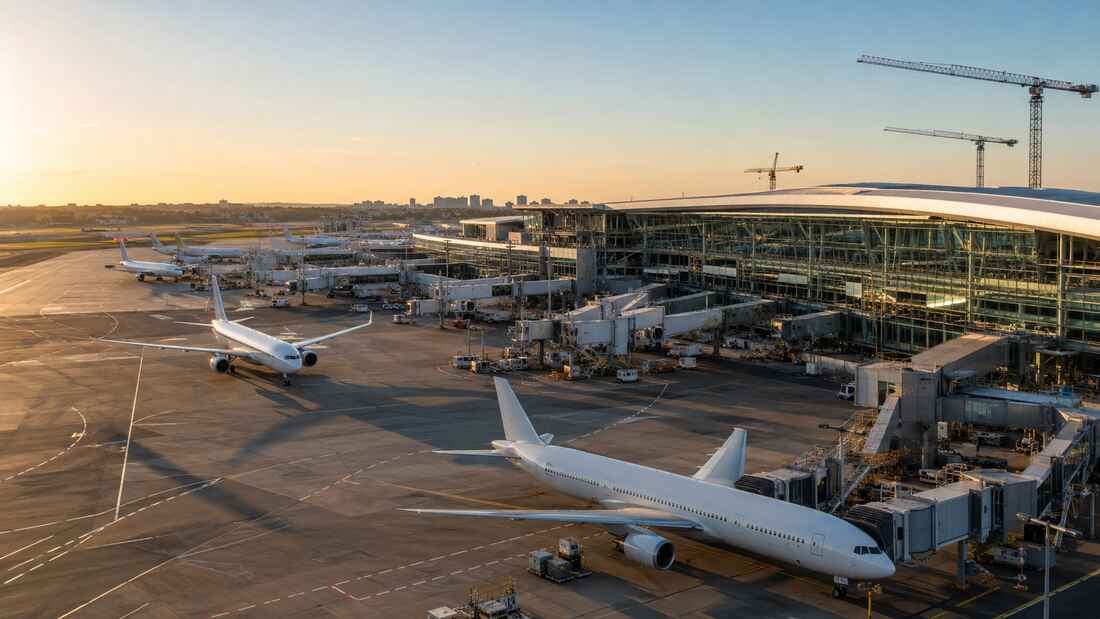
Government-Approved Strategy Targets 72.6 Million Annual Passengers and 105,000 Direct Jobs
Sydney Airport has received Australian Government approval for its Master Plan 2045, clearing the way for a two-decade expansion involving larger terminals, improved transportation links and increased capacity for passengers and airfreight.
The approved framework outlines how Australia’s busiest airport intends to manage rising aviation demand while strengthening Sydney’s position as an international gateway for tourism, trade and investment. By 2045, the airport expects to handle approximately 72.6 million passengers annually, an increase of roughly 75% from current levels.
Sydney Airport also projects that its annual economic contribution will reach about $70.6 billion, while the number of direct jobs supported by its operations will exceed 105,000.
Passenger Traffic Expected to Rise Across International and Domestic Markets
The airport’s long-term forecasts anticipate significant growth in both international and domestic travel over the next two decades.
International Traffic Could More Than Double
International passenger volume is expected to increase from approximately 16 million travelers today to 36.4 million annually by 2045. That growth would give international services a larger share of Sydney Airport’s overall traffic.
The projected increase reflects expectations for continued demand from overseas visitors, Australian travelers and businesses requiring global connectivity. Additional international capacity could also support the broader tourism and hospitality sectors across Sydney and New South Wales.
Domestic and regional passenger traffic is forecast to reach approximately 36.2 million annually by 2045. Combined with international demand, that would bring total annual traffic to about 72.6 million passengers.
Airfreight Volume Forecast to Reach 1.4 Million Tonnes
Sydney Airport is also preparing for substantial growth in air cargo operations. Annual airfreight volume is projected to reach approximately 1.4 million tonnes by 2045, more than double current levels.
Higher freight capacity could strengthen supply chains for Australian exporters and importers, particularly companies handling time-sensitive and high-value products. The airport serves as an important logistics connection for industries including agriculture, pharmaceuticals, manufacturing and online retail.
Terminal Expansion to Increase Airport Capacity
A central component of Master Plan 2045 is the redevelopment of Sydney Airport’s domestic precinct. The proposal calls for a more integrated terminal environment that would bring domestic, regional and international operations closer together.
The changes are intended to make transfers between flights more efficient while providing additional capacity as passenger numbers rise.
Development Planned Across T1, T2 and T3
The airport’s broader terminal development program covers all three major terminals. Earlier proposals included a substantial expansion connecting the T2 and T3 domestic terminals, with the potential addition of up to 12 international gates. Two additional gates have also been proposed for the T1 international terminal.
Further upgrades are expected to focus on passenger processing, terminal efficiency and ground operations. The airport will need to complete construction while maintaining service levels during busy travel periods.
The approved master plan establishes the overall development framework, but individual infrastructure projects may still require detailed planning, investment decisions and additional regulatory reviews before construction begins.
Environmental Strategy Accompanies Long-Term Growth
Master Plan 2045 includes a five-year Airport Environment Strategy intended to address the environmental effects of future expansion.
The strategy focuses on lowering emissions, strengthening climate resilience and supporting more sustainable airport operations. It also addresses aircraft noise and the airport’s relationship with nearby communities.
Road and Public Transportation Improvements Planned
Ground transportation is another major part of the long-term framework. Sydney Airport plans to improve road access, public transportation and connections for pedestrians and cyclists around the airport precinct.
These improvements will be important as passenger numbers and employment increase. Greater use of public transportation could help reduce road congestion while improving access for travelers and airport workers.
Sydney Airport CEO Scott Charlton said the government’s approval establishes a clear pathway for investment and future capacity. The airport expects the plan to support tourism, international commerce and employment while allowing growth to be managed responsibly.
With government approval secured, Master Plan 2045 will guide decisions involving terminal capacity, freight infrastructure, ground transportation and environmental management. The framework positions Sydney Airport for substantial expansion as passenger and cargo demand increases over the next 20 years.
