


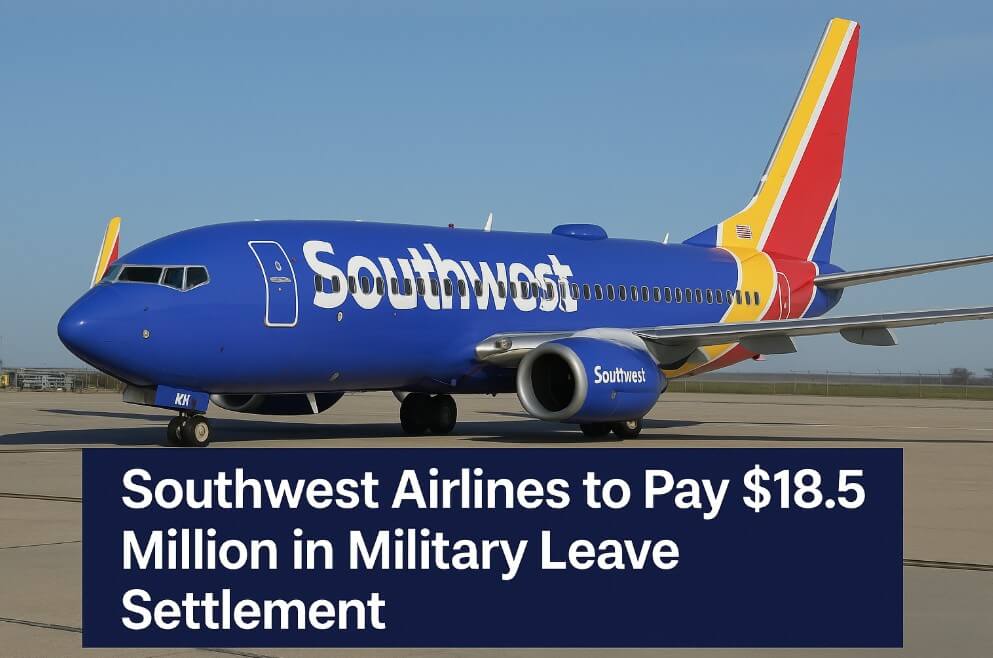
DALLAS — Southwest Airlines has agreed to pay $18.5 million to settle a class-action lawsuit alleging that it failed to provide equal paid leave benefits for employees serving in the U.S. military. The settlement, announced this week, resolves a years-long legal battle involving pilots and crew members who claimed the airline violated federal law by denying them the same benefits offered for other types of leave.
Allegations of Unequal Treatment
The lawsuit centered on claims that Southwest Airlines violated the Uniformed Services Employment and Reemployment Rights Act (USERRA). Under USERRA, employers are required to ensure that employees who take time off for military service are treated equally to those who take other forms of short-term leave.
According to the plaintiffs, Southwest employees who were also members of the U.S. Armed Forces were not granted paid leave when they took short-term military assignments. In contrast, the airline provided compensation for comparable absences such as jury duty and sick leave.
This disparity, employees argued, left service members at a disadvantage, penalizing them financially and professionally for fulfilling their military obligations.
Settlement Terms and Next Steps
As part of the agreement, Southwest will contribute $18.5 million to a settlement fund benefiting 2,791 current and former employees who took short-term military leave. Once approved by a federal court, the payments will be distributed to eligible claimants.
Court documents indicate that each participant will receive approximately $4,421 after attorney fees are deducted. In addition to financial compensation, the settlement includes a policy change requiring Southwest to provide up to 10 days of paid short-term military leave between 2026 and 2030.
The court will oversee compliance to ensure Southwest’s leave policies align with federal law moving forward.
Recognition of Service
Legal representatives for the employees said the resolution brings long-awaited recognition to members of the airline’s workforce who serve their country in uniform. They noted that the settlement marks an important step toward ensuring military personnel receive the same benefits as their civilian colleagues.
“This settlement provides long-awaited recognition of the sacrifices made by service members within the airline’s workforce,” attorneys for the employees said.
Industrywide Implications
The Southwest settlement comes as several major airlines face similar lawsuits under USERRA. American Airlines and Delta Air Lines are currently defending comparable claims, while Alaska Airlines has previously reached a settlement in a related case.
By agreeing to the payout, Southwest avoids a potentially lengthy and costly trial. At the same time, the case underscores the broader challenge for airlines and other large employers in complying with federal protections for military personnel.
Industry observers note that these lawsuits could have far-reaching consequences for employment practices, particularly in sectors with significant numbers of military reservists on staff.
Financial and Policy Impact
The $18.5 million settlement will be divided among nearly 2,800 employees, but the implications go beyond monetary compensation. For many affected staff, the recognition of their rights under USERRA is viewed as equally significant.
“Many pilots and crew members have expressed that the recognition of their rights under USERRA is as significant as the payout itself,” the filing noted.
The settlement also reinforces the need for airlines to review and update their leave policies to ensure compliance with federal law. For Southwest, the changes will bring its benefits in line with national standards and help restore trust among employees balancing their civilian and military commitments.
Looking Ahead
For Southwest Airlines, the resolution closes the chapter on a contentious legal dispute while reinforcing its obligations to employees who serve in the armed forces. The agreement signals the company’s willingness to make changes that acknowledge both the legal requirements and the sacrifices of its staff.
For employees, the settlement provides more than a financial award. It offers a measure of assurance that their contributions — both in the skies and in uniform — will be respected and protected going forward.
As the aviation industry continues to navigate similar lawsuits, the Southwest case highlights the growing importance of aligning workplace policies with federal law to safeguard the rights of service members in civilian employment.
