


Policy Change Triggers Frustration Among Employees
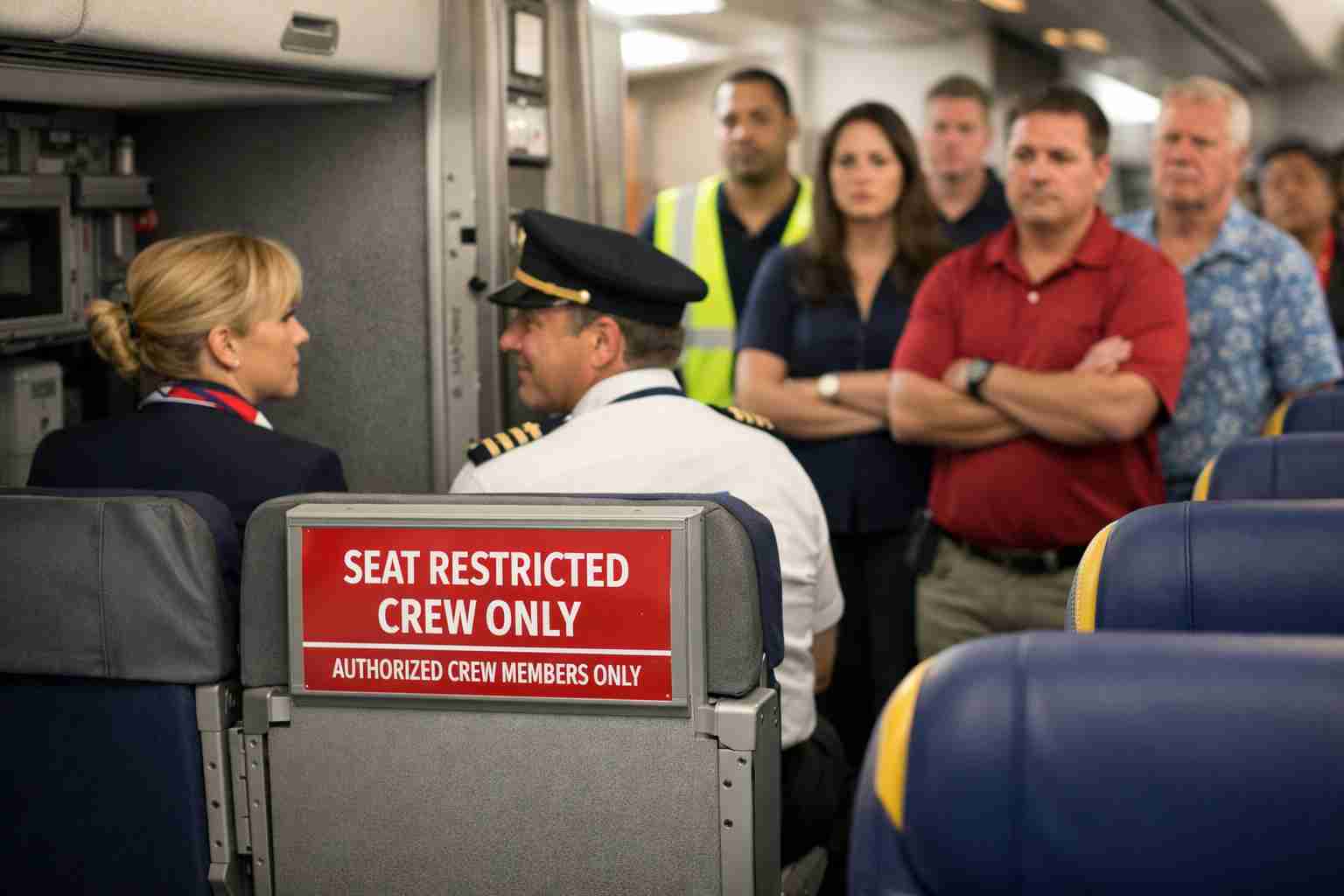
Southwest Airlines has introduced a new internal policy that limits access to cabin jumpseats exclusively to pilots and flight attendants, a move that has triggered frustration among many employees who previously relied on the seats for standby travel. The policy change affects non-revenue travelers within the airline’s workforce—employees who fly on standby when passenger seats are unsold.
The restriction is particularly significant at busy hubs such as Dallas Love Field, Southwest’s headquarters airport, where employees frequently attempt to travel using standby privileges. When flights depart full, spare cabin jumpseats have historically served as a last opportunity for airline staff to board.
Under the updated policy, those seats will now be reserved strictly for operational aircrew, effectively ending a long-standing informal practice that occasionally allowed other employees to occupy them.
Understanding Non-Revenue Travel
Non-revenue travel, commonly referred to as “non-revving,” is a widely used benefit across the airline industry. Airline employees and sometimes their eligible family members can travel free or at steeply discounted rates if open seats remain on a flight.
The catch, however, is that non-revenue passengers are the lowest priority in the boarding process. If a flight sells out, employees must wait until the final moments before departure to see whether a passenger fails to show up. Only then can they take an empty seat.
In rare cases when every booked passenger arrives, a spare jumpseat near the aircraft door has historically provided the final opportunity for an employee to travel. With the new rule in place, that fallback option is no longer available to non-crew personnel.
Flight Attendant Union Advocated for the Change
The change follows advocacy from the Transport Workers Union Local 556 (TWU 556), which represents Southwest Airlines flight attendants. The union pushed for the policy, arguing that limiting jumpseat access improves safety and operational efficiency.
According to TWU 556, individuals seated in cabin jumpseats must understand the operational environment around the aircraft doors and galleys and be trained in evacuation procedures. Flight attendants undergo regular training in emergency response and are responsible for managing passengers during evacuations.
Union representatives have also argued that allowing non-crew personnel to sit in jumpseats could interfere with in-flight operations or emergency procedures. By restricting the seats to trained crew members, the union believes the airline can maintain clearer operational protocols.
The policy change follows years of union advocacy and has been welcomed by many flight attendants who see it as both a safety improvement and a practical measure for commuting crew members.
Prioritizing Commuting Crew
The new rule may also help Southwest employees who must commute by air to reach their assigned bases. Nearly one-third of the airline’s flight attendants commute from cities other than their official work locations.
For these employees, full flights can create serious logistical challenges. If they cannot secure a standby seat, they may risk arriving late for scheduled duties.
By reserving jumpseats for pilots and flight attendants only, Southwest effectively prioritizes transportation for crew members who must reach their work assignments to operate flights.
However, the change also means other airline staff traveling either for personal reasons or commuting to work will no longer have access to those seats when flights are full.
Internal Tensions and Labor Dynamics
Not all employees support the decision. Some workers say the policy removes a critical travel option during busy periods when flights operate at or near capacity.
Standby travel is inherently unpredictable. Employees often build complex backup plans, listing themselves on multiple flights and routes in the hope that a seat becomes available. The removal of jumpseat access reduces those options even further.
Industry observers have also suggested the policy may be tied to broader labor negotiations at Southwest Airlines. Aviation analysts have pointed out that the airline and the flight attendant union have been discussing several operational issues in recent contract talks.
One of those discussions involves storage space for crew luggage. Following Southwest’s introduction of assigned seating in 2025, the airline considered moving dedicated crew-only overhead bin space from the front of the cabin to the rear. Flight attendants have pushed back against the idea, citing security concerns about their belongings.
Some analysts believe the jumpseat policy may have been one concession made as part of ongoing negotiations.
Industry Practices Vary Widely
Jumpseat policies differ significantly across airlines. Some carriers allow spare jumpseats to be used by employees traveling on standby, while others restrict them strictly to the operating crew.
In certain airlines, the seats may be used only by airline staff but not by friends or family traveling on employee benefits. In other parts of the world, including several Middle Eastern carriers, non-operating personnel are rarely permitted to occupy cabin jumpseats at all.
With its latest policy change, Southwest Airlines is aligning more closely with the stricter approach already used by several international airlines.
While the new rule may improve operational clarity and ensure commuting crew can reach their assignments, the move has also intensified debate inside the company about employee travel benefits and workplace priorities.
