


Starting from: 06/19/2022 3:08 PM
AI should enable trucks to run on the road without a driver in the future. The manufacturer Daimler collects the necessary data in the US state of New Mexico. A field visit.
In Albuquerque, New Mexico, a city of half a million people, one color prevails: terracotta. Throughout the stony desert, the air is dry and dusty. “If you can do Albuquerque, you can do all of America,” says Peter Vaughan Schmidt, responsible for autonomous trucks at Stuttgart-based Daimler Trucks. “For us, the data is actually the source of improvement.” It’s data from “a very difficult environment here in Albuquerque.”

Three years ago, Daimler joined US software manufacturer Torc Robotics. The Stuttgart-based company is a leading manufacturer of trucks. But when it comes to software and, in particular, to autonomous driving of trucks, all European manufacturers have a significant shortcoming.
Up to 20 trucks on the road every day
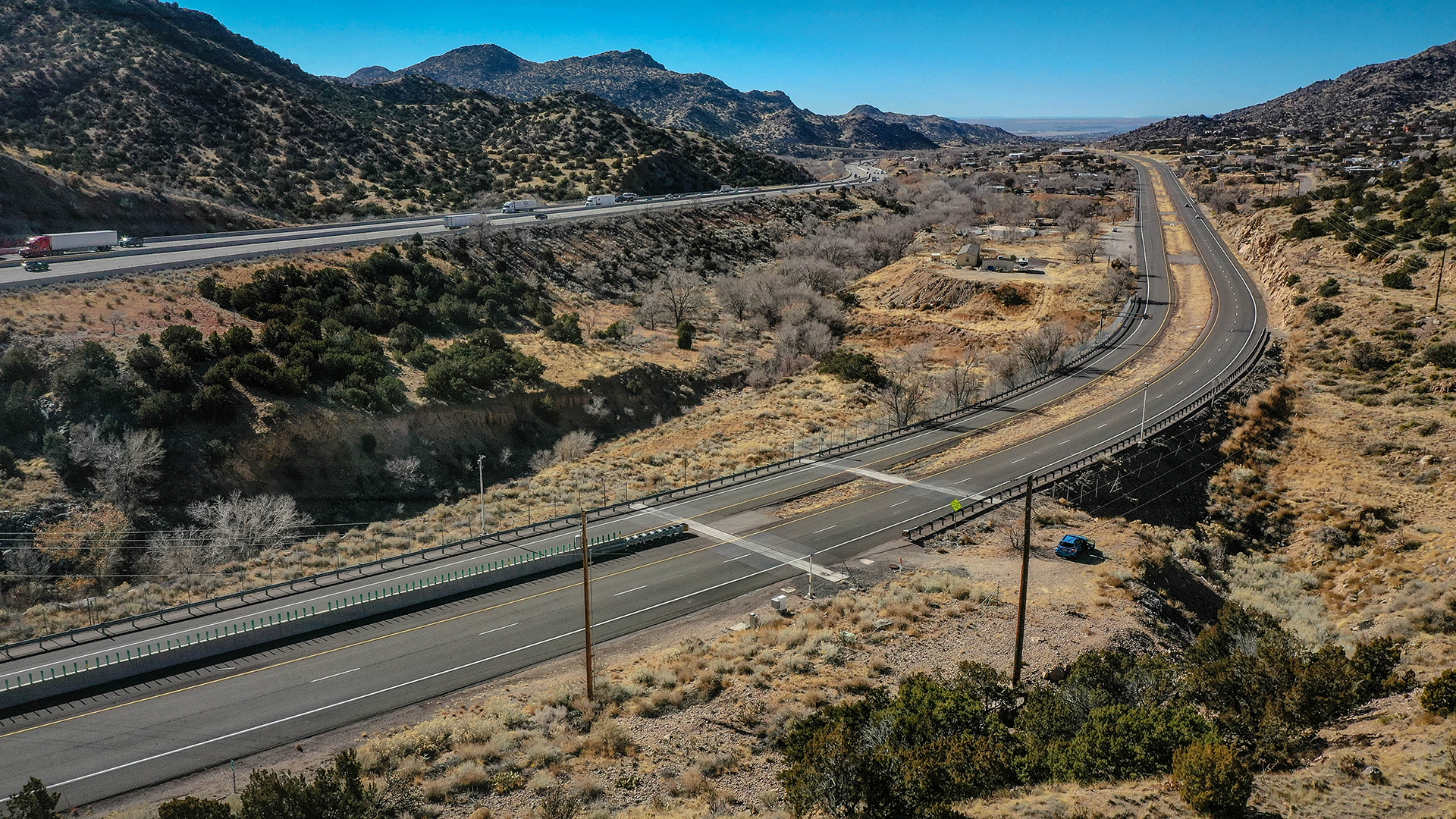
The Cascadia is a powerful truck of the Freightliner brand, which is a 100 percent subsidiary of Daimler in the USA. From its test site in Albuquerque, Daimler sends up to 20 trucks on highways around town every day – day and night. Training is everything for AI systems.
Torc has different teams that rate and grade each test drive. This is the only way for the AI system to know how to respond later. “Visualization is really how you see the world. What’s around me? What’s moving now? This is the only really way to drive safely,” says Andrew Culhane, chief strategy officer at Torc. “But we’re also evaluating the behavior. Is the truck changing lanes, is it accelerating, decelerating, is it merging? This gives us an overview of how the truck is interacting.”
AI systems are only as good as their training data. This is fed to the computers in the test truck. This is already happening today with Daimler trucks in the USA, which have on-board assistance systems and are operated by trucking companies. These also collect data for future robotic trucks.
Initially used only in the USA
Anyone sitting in the driver’s cabin will notice that there is a locker in the back. There is a vibrant server that evaluates dozens of sensors, including lidar, i.e. special optical distance meters, laser sensors and cameras. The high-performance computer is the brain of the car. You must be able to respond to all possibilities.
“A motorcyclist can fall down the highway at night wearing all black,” Vaughan Schmidt says. “Can we deal with something like this or not when the autonomous truck arrives? This is a resolved case. There are also many difficult cases that you can’t even imagine.”
Trucks are probably the first vehicles to move on our roads without a driver. At Daimler, it is expected that in a good seven years, that is, in 2030, the time may come. However, only in the USA. Because of its borders and narrow roads, it will likely be Europe after several years.
Slower speed, wider streets
The advantage of the United States: here all vehicles go slower, trucks and cars move at the same speed. The roads are wider and there are fewer curves. The plan is for the trucks to only drive parts of the road independently. At the highway exit, a person enters and takes on the task.
Daimler also provides a control room for freight forwarders. There must be people here – often thousands of kilometers away – who can remotely intervene in any truck. “In the autonomous truck, we need the ability to communicate. This is especially important because real-time communication is essential in logistics to keep everything running,” says Daimler’s Klara Oberhollenzer. “In the future, our mission control system will enable driver managers to communicate with this autonomous vehicle without being software engineers.”
It turns out that the world of motorized vehicles is a lot less exciting than Elon Musk and Tesla think.
