


Airline Reviews Long-Standing Uniform Rules Amid Industry Changes
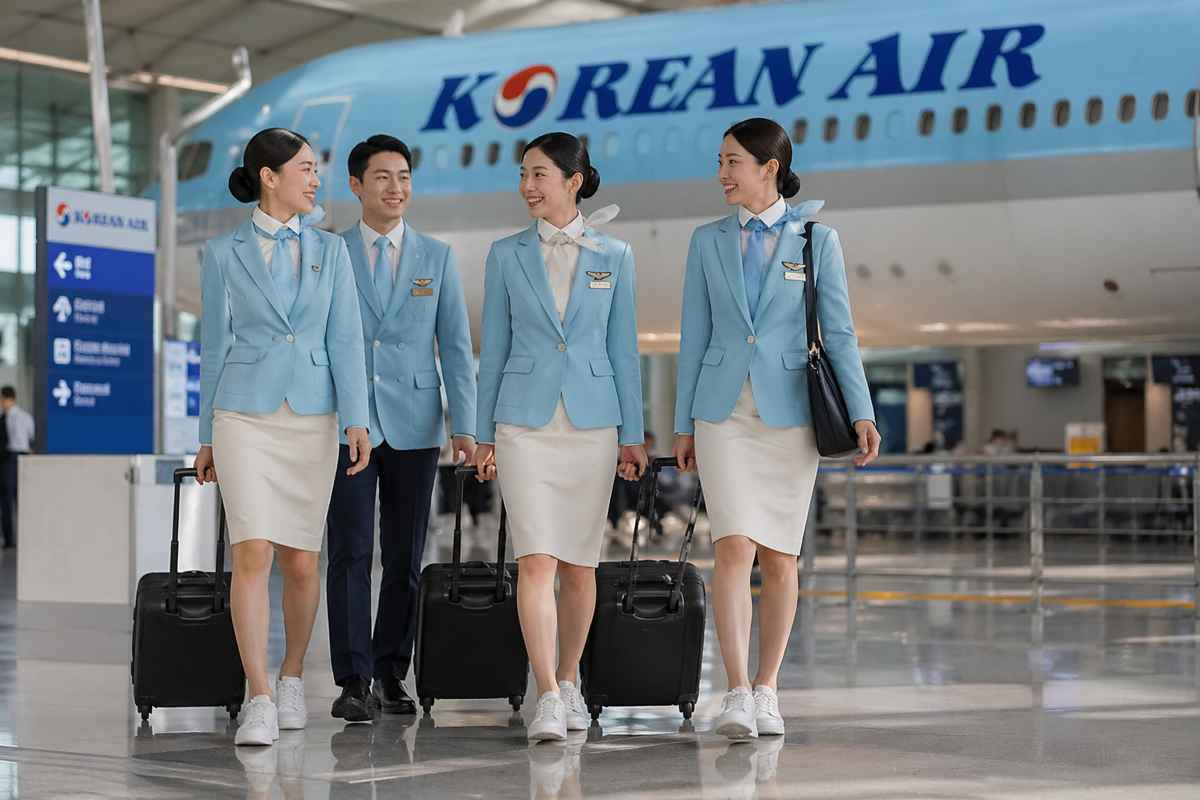
SEOUL — Korean Air is reviewing its long-standing uniform and grooming policies, weighing a potential update that could allow flight attendants to wear sneakers while on duty, according to people familiar with internal discussions.
The move reflects a broader reassessment within the Seoul-based carrier as it looks to improve employee comfort while maintaining the polished brand image that has defined its global reputation for decades. The airline has not confirmed a timeline for any changes, but internal consultations suggest that employee feedback is playing a significant role in shaping the outcome.
Historically, Korean Air has enforced strict appearance standards for its cabin crew, with detailed guidelines governing attire, grooming, and presentation. While these rules have contributed to a consistent and recognizable brand identity, they have also faced criticism for being overly rigid in a modern workplace increasingly focused on employee well-being.
Potential Shift Signals Cultural Change
From Heels to Sneakers
Under current policy, female flight attendants at Korean Air are required to wear high heels measuring between 3 and 5 centimeters while moving through airport terminals. The expectation is that crew members maintain a formal appearance during passenger-facing moments, particularly in transit areas where first impressions are formed.
Once onboard, however, flight attendants are permitted to change into flat shoes, reflecting a practical concession to the physical demands of in-flight service. The proposed policy change would extend that practicality to all stages of duty by introducing sneakers as an approved footwear option.
Such a move would align Korean Air with evolving workplace standards in aviation, where airlines are increasingly balancing aesthetics with functionality. The potential adoption of sneakers signals a shift toward prioritizing employee comfort without abandoning professional presentation.
Regional Airlines Lead Modernization Efforts
Asia Embraces Flexibility
Across Asia, airlines have begun updating uniform policies to better support frontline staff. Japan Airlines recently revised its grooming guidelines, allowing employees to wear plain black sneakers with both trousers and skirts.
The change marked a notable departure from traditional norms, particularly as it extended flexibility to female staff regardless of uniform style. The airline introduced the update after determining that improved comfort could enhance overall service quality.
In South Korea, low-cost carrier Aero K set an early precedent by launching with a gender-neutral uniform that includes sneakers as standard footwear. This approach challenged long-standing conventions and underscored a growing emphasis on inclusivity and practicality in airline operations.
Global Industry Reflects Broader Workplace Trends
European Carriers Set Early Examples
The shift toward more flexible uniform standards is not limited to Asia. Several international airlines have already embraced similar changes, reflecting a wider industry trend.
Iberia was among the first full-service carriers to permit sneakers for cabin crew, setting a precedent that others soon followed. European airlines including KLM Royal Dutch Airlines, Finnair, and SAS Scandinavian Airlines have also adopted more relaxed uniform policies in recent years.
These updates reflect a growing recognition that employee well-being can directly influence service delivery, operational efficiency, and customer satisfaction. Airlines are increasingly viewing comfort as a business consideration rather than a cosmetic detail.
Balancing Brand Image With Practical Needs
For Korean Air, the challenge lies in modernizing its policies without diluting the premium image that has long differentiated it in the competitive global aviation market. The airline’s uniforms have historically symbolized discipline, elegance, and consistency—qualities that remain central to its brand identity.
However, industry trends suggest that passengers are becoming more receptive to subtle shifts in presentation, particularly when they are tied to improved service outcomes. A more comfortable cabin crew may be better equipped to deliver attentive and efficient service, a factor that airlines are increasingly prioritizing.
Korean Air’s ongoing review indicates that even traditionally conservative carriers are adapting to changing workforce expectations. While no formal announcement has been made, the consideration of sneakers represents a meaningful step in the airline’s evolution toward a more modern and employee-focused operational model.
As discussions continue, the outcome could position Korean Air alongside a growing list of global airlines redefining what professionalism looks like in the skies.
