


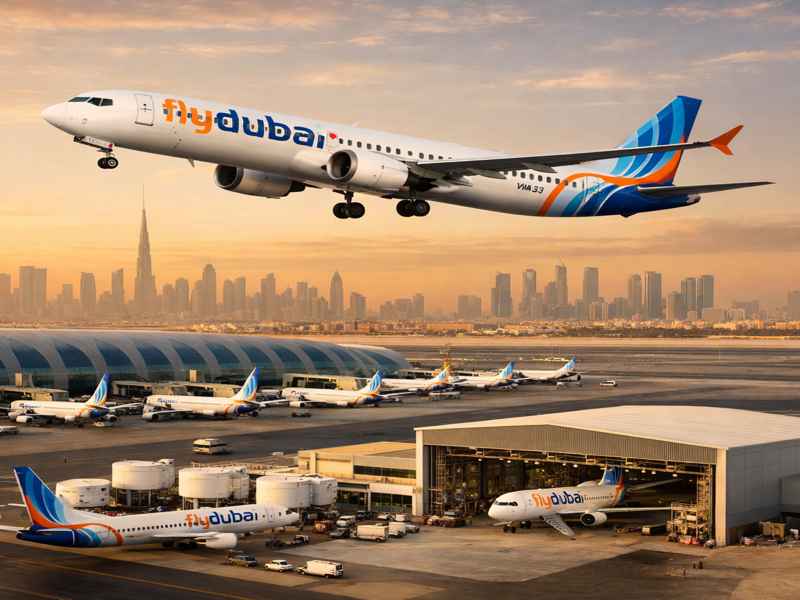
DUBAI — Flydubai is ramping up investment in larger Boeing 737 MAX 9 aircraft as surging demand for premium travel helps drive record financial performance and reshapes the airline’s fleet strategy.
The Dubai-based carrier said it plans to receive 12 Boeing 737 MAX jets in 2026, including seven MAX 9 aircraft and five MAX 8s, subject to manufacturer delivery schedules. The move means the higher-capacity MAX 9 will account for more than half of the airline’s incoming aircraft this year, underscoring a deliberate shift toward increasing business-class capacity across its network.
The expansion comes as Flydubai reported strong earnings, highlighting the airline’s recovery momentum and growing appeal among higher-yield passengers.
Fleet Expansion Signals Premium Strategy Shift
Flydubai currently operates just three Boeing 737 MAX 9 aircraft, all delivered between 2018 and 2019. The addition of seven more jets will significantly expand its ability to offer additional premium seating, particularly on medium-haul routes connecting Dubai with destinations across Europe, Asia, and Africa.
Last year, the airline took delivery of 12 Boeing 737 MAX 8 aircraft, increasing its total fleet to 97 jets after retiring three older leased Boeing 737-800 planes.
The latest delivery mix reflects a broader recalibration of Flydubai’s fleet planning, balancing overall capacity growth with an increased focus on premium cabin offerings that generate higher margins.
Beyond this year’s deliveries, Flydubai has committed to a substantial long-term order book that includes 75 additional Boeing 737 MAX aircraft and 150 Airbus A321neo jets. The combined order positions the airline for continued expansion while diversifying its fleet and enhancing operational flexibility.
Premium Demand Climbs Sharply
The decision to expand the MAX 9 fleet follows a sharp increase in demand for business-class travel.
According to Flight Global, Flydubai reported a 19% year-over-year increase in business-class passengers, reflecting strong demand from corporate travelers as well as affluent leisure customers.
The MAX 9 variant plays a central role in this strategy. Compared with the smaller MAX 8, the aircraft allows Flydubai to install more business-class seats while maintaining efficiency on medium-haul routes. This enables the airline to capture greater revenue per flight without significantly increasing operating costs.
Chairman Sheikh Ahmed bin Saeed Al Maktoum described the airline’s recent profitability as evidence of a disciplined strategy and strong operational resilience.
Flydubai posted a pre-tax profit of Dhs2.2 billion ($591 million) in 2025 and a net surplus of Dhs1.9 billion. Revenues rose 6% to Dhs13.6 billion, reflecting steady travel demand and improved yields.
The results mark one of the strongest performances in the airline’s history and reinforce its position as a key contributor to Dubai’s aviation sector.
Investment in Aircraft Upgrades and Infrastructure
Alongside fleet expansion, Flydubai is investing heavily in upgrading its existing aircraft and operational infrastructure.
The airline recently completed a retrofit program for its Boeing 737-800 fleet, upgrading eight additional aircraft and bringing the total number of modernized jets to 25.
The retrofit initiative is designed to standardize cabin interiors across the fleet, improving passenger comfort and ensuring consistent service quality in both business and economy class.
Flydubai is also expanding its training capabilities. Its flight-training center now includes four full-flight simulators, increasing its ability to train pilots as the airline adds more aircraft.
In addition, the company plans to open a new maintenance facility at Dubai South once construction is completed in the fourth quarter of this year. The facility will strengthen Flydubai’s in-house maintenance capabilities and support its growing and increasingly diverse fleet.
Positioned for Long-Term Growth
Chief Executive Ghaith Al Ghaith stated that the airline is well-positioned to meet both business and leisure demand across its network.
With premium travel demand rising, a steady pipeline of aircraft deliveries, and continued investment in infrastructure, Flydubai is aligning its fleet, operations, and financial strategy to sustain long-term growth.
The airline’s expanding MAX 9 fleet, in particular, highlights its focus on attracting higher-value passengers while maintaining efficiency — a combination that is proving critical as global airlines compete for profitable premium travelers.
As Flydubai continues to grow, its evolving fleet strategy reflects both confidence in future demand and a commitment to strengthening its competitive position in the international aviation market.
