


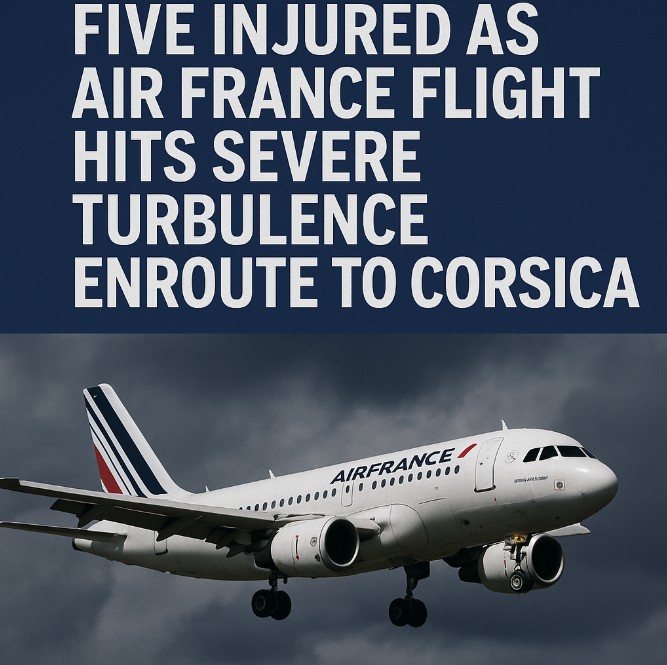
PARIS, Aug. 21, 2025 — An Air France Airbus A320-200 carrying 143 passengers and six crew members encountered severe turbulence on its way from Paris-Orly to Ajaccio, Corsica, leaving five people injured and underscoring growing concerns about unpredictable weather patterns affecting aviation safety.
The incident occurred on August 20 during the cruise phase of flight AF4236 at an altitude of 11,000 meters. According to the airline, the aircraft was suddenly struck by a dry thunderstorm, a phenomenon notorious for its lack of rainfall and difficulty of detection by standard radar systems.
Turbulence Strikes Mid-Flight
At the time of the encounter, crew members were in the cabin checking seatbelts. “The crew was checking seatbelts when the turbulence struck, while the injured passengers were not wearing theirs,” the airline said in its statement. Two passengers and three crew members sustained minor injuries, including back, head, leg, and arm pain.
The aircraft, registered F-HBNJ, landed safely on runway 20 at Ajaccio-Napoléon Bonaparte Airport roughly 15 minutes after the turbulence event. Emergency medical teams were waiting on the ground to provide immediate assistance. “Air France staff assisted all passengers and crew on the ground, ensuring a smooth response,” the airline said.
Weather Challenges and Safety Protocols
Dry thunderstorms, like the one encountered, differ from typical storms in that they produce little to no precipitation at ground level, making them nearly invisible to traditional weather-tracking equipment. This sudden onset caught the flight crew off guard despite standard safety procedures.
“This event highlights the challenges of unpredictable weather in aviation and the importance of passenger safety measures,” the airline said. Air France also commended its pilots for their professionalism in managing the situation and praised ground teams for their swift response.
Aviation Experts Weigh In
The aviation industry has long warned that turbulence is one of the most common causes of in-flight injuries, with passengers not wearing seatbelts at highest risk. Experts say the AF4236 incident provides a sobering reminder of why safety announcements urge passengers to remain buckled even when the seatbelt sign is switched off.
“This incident underscores the importance of keeping seatbelts fastened during flights. Turbulence can occur without warning, and unbuckled passengers are at higher risk of injury,” the airline said.
Beyond individual safety, specialists note that climate change may play a role in the rising unpredictability of such weather events. Research suggests that a warming atmosphere can increase the frequency and intensity of turbulence by altering jet stream patterns. “Aviation experts note that climate change may increase the frequency of such unpredictable weather events, posing ongoing challenges for airlines,” the statement added.
Airline Response and Next Steps
The Airbus A320-200 involved in the incident is 13.8 years old, part of Air France’s narrowbody fleet operating domestic and regional routes. While the injuries were classified as minor, the airline confirmed it is conducting a review of the encounter to evaluate whether additional safety measures are necessary.
“Air France is reviewing the incident to enhance safety measures and better prepare for similar conditions in the future,” the carrier said.
The airline emphasized that the quick coordination between flight crew, ground teams, and emergency responders prevented more serious outcomes. “The quick response from the airline and medical teams ensured no serious injuries occurred. Passengers were able to continue their journeys with minimal disruption.”
A Broader Industry Reminder
For passengers, the turbulence episode is a cautionary tale. Even in seemingly calm conditions, atmospheric instability can develop suddenly and without visual warning. The event also highlights the industry-wide push to upgrade weather monitoring and turbulence detection systems.
“This event serves as a reminder for passenger to stay vigilant and follow safety instructions, even during seemingly calm flights,” the airline said.
While turbulence-related incidents rarely result in fatalities, they are a consistent cause of injuries and operational disruptions. With climate dynamics expected to heighten risks in the years ahead, airlines face renewed urgency to adapt flight planning, training, and passenger education to these evolving challenges.
For Air France, AF4236’s safe landing and rapid response reflect both the vulnerabilities and resilience of modern air travel: sudden shocks are inevitable, but preparation and professionalism can make the difference between disruption and disaster.
