


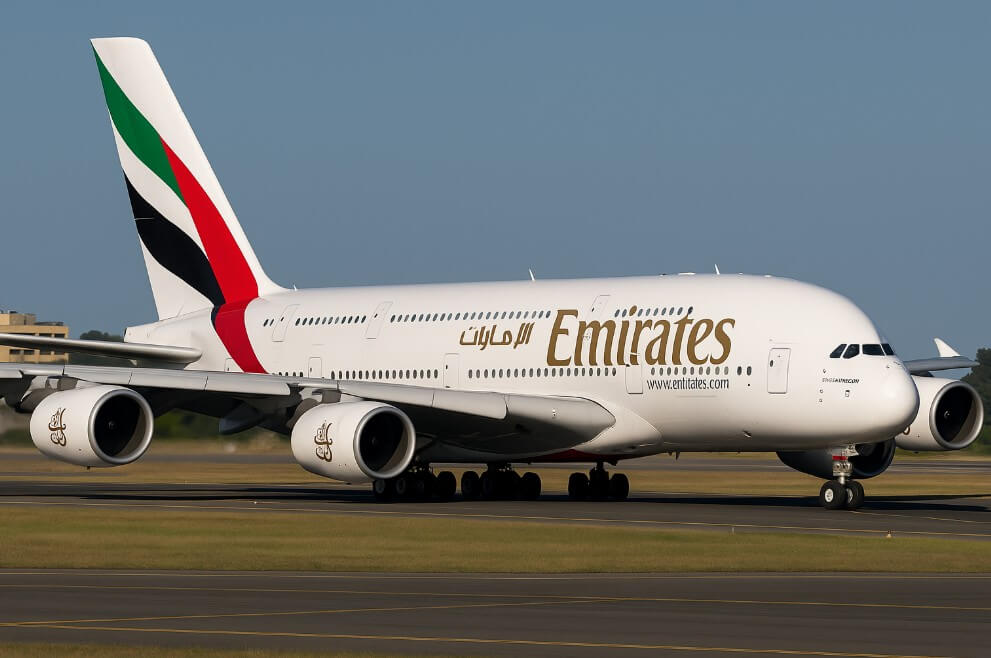
PERTH, September 11, 2025 — An Emirates Airline Airbus A380 flight from Sydney to Dubai made an unscheduled landing in Perth on Wednesday following a medical emergency onboard, delaying passengers by nearly five hours.
Flight EK413 departed Sydney Kingsford Smith Airport at 12:38 UTC on September 10, according to AirNav Radar data. The service, operated with a nine-year-old Airbus A380-841 registered A6-EUJ, was en route to Dubai International Airport when the cabin crew reported a medical issue after more than four hours in the air.
The flight crew decided to divert to Perth, landing safely at 17:34 UTC. Emirates later confirmed the diversion on its website.
“Due to a Medical emergency the flight has diverted to Perth (PER). We are in the process of rebooking any impacted connecting flights to final destination and will send updated itinerary shortly. Customers can view their updated itinerary on www.emirates.com/MYB,” the airline said in a statement on its flight status page.
Rebookings and Extended Delay
Following medical assistance at Perth Airport, the aircraft departed again at 20:09 UTC and arrived at Dubai International Airport at 6:29 UTC. The diversion caused the flight to land almost five hours later than its scheduled arrival. Emirates did not disclose the nature of the medical emergency but expressed concern for the passenger’s condition, stating hopes they received “appropriate care” and extending prayers for their recovery.
Emirates operates three daily A380 flights between Sydney and Dubai, reflecting the high demand for the route. The Airbus A380, the world’s largest passenger aircraft, is a cornerstone of the airline’s long-haul network.
Previous Medical Diversion
Wednesday’s incident was not the first time this year Emirates has diverted an A380 due to a medical emergency. On January 24, flight EK342 from Dubai to Kuala Lumpur was rerouted to Kempegowda International Airport in Bengaluru, India, under similar circumstances.
That aircraft, registered A6-EOU, departed Dubai at 11:27 a.m. GST, about 47 minutes behind schedule. Roughly three hours and 25 minutes into the flight, while crossing over the Indian state of Andhra Pradesh, the crew declared a medical emergency. Within 25 minutes, the A380 landed safely in Bengaluru at 4:22 p.m. IST, where medical teams provided immediate assistance to the passenger.
Safety Protocols in Focus
While Emirates has not shared details about the individuals involved in either incident, aviation experts note that medical diversions, though disruptive, are a critical safeguard in commercial air travel. Airlines are required to prioritize passenger health, often resulting in changes to flight plans mid-journey.
Emirates is widely recognized for its established safety and passenger welfare measures. In line with standard operating procedures, cabin crew provide immediate care in such situations, while flight deck crews coordinate diversion plans to ensure the affected passenger receives urgent medical attention as quickly as possible.
The swift response underscores the importance of diversion protocols, particularly on long-haul international flights where access to medical care may be limited during extended stretches over ocean or remote terrain.
Industry Perspective
Medical emergencies remain one of the most common reasons for unscheduled landings in commercial aviation, alongside technical issues and weather events. Airlines often face significant operational challenges in rebooking passengers and coordinating with airports when such diversions occur, but the industry emphasizes that passenger well-being takes precedence over scheduling.
For Emirates, the diversion of EK413 reinforces both the unpredictability of long-haul operations and the necessity of rapid decision-making. While the delay inconvenienced passengers bound for Dubai and beyond, the incident highlighted the airline’s adherence to established safety practices.
As Emirates continues to expand its global network with its flagship A380 fleet, the carrier’s handling of such situations will remain under scrutiny from both passengers and industry observers.
