


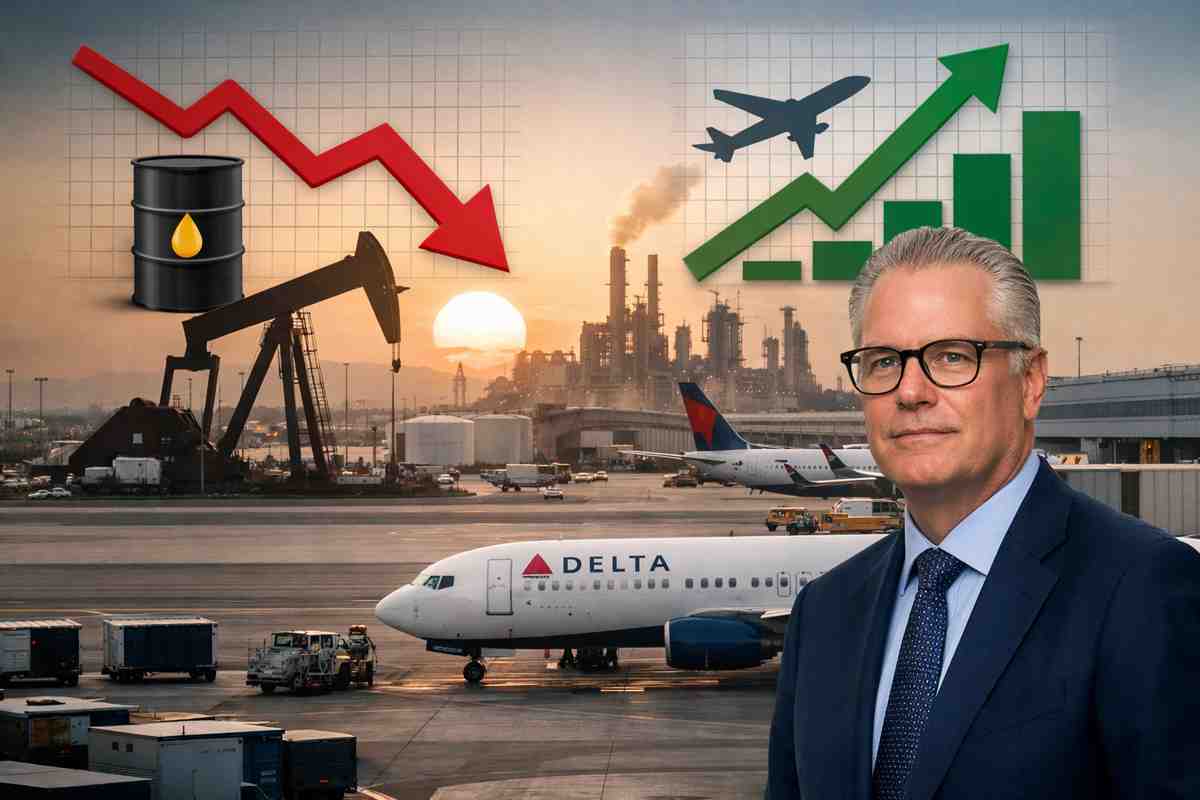
Delta Signals Pricing Discipline Despite Potential Fuel Relief
ATLANTA — Delta Air Lines’ chief executive said this week that lower oil prices may not necessarily translate into cheaper airline tickets for travelers, underscoring how airfare pricing is driven more by market capacity and demand than by fuel costs alone.
Speaking during the company’s first-quarter 2026 earnings call, Delta Air Lines CEO Ed Bastian said the carrier aims to preserve the pricing momentum it has achieved through capacity reductions and tighter industry supply, even if energy costs ease in the months ahead.
The remarks came in response to an analyst’s question about whether a steep drop in oil prices could restore Delta’s earlier financial guidance and provide upside for the remainder of the year. Bastian said the airline hopes to maintain the “pricing strength” it has built through recent operational discipline and broader consolidation trends across the airline industry.
His comments drew criticism from some consumers and market observers who interpreted the remarks as an indication that airlines would avoid passing fuel savings on to passengers. However, aviation analysts say the reaction reflects a common misunderstanding of how airline pricing works.
Airline Ticket Prices Are Not Tied Directly to Fuel Costs
Pricing Is Determined by Demand, Capacity and Market Conditions
Unlike many industries where lower input costs can quickly translate into lower prices, airlines typically do not set fares based on the cost of transporting each passenger. Instead, carriers use sophisticated revenue management systems that price tickets according to what travelers are willing to pay in a given market at a given time.
That means airfare is determined less by jet fuel prices and more by supply-and-demand dynamics, competitive conditions and seat availability.
Industry experts note that many airline seats in the U.S. market are sold below the full cost of operating a flight. Carriers often rely on premium cabin sales, ancillary fees and loyalty program revenue to offset losses on lower-fare tickets.
This economic model has helped explain why profitability remains difficult in the airline sector despite strong travel demand. Even established carriers face narrow margins, while smaller operators have struggled to remain consistently profitable.
Loyalty Programs Continue to Bolster Airline Earnings
For major airlines such as Delta, frequent flyer and co-branded credit card programs have become increasingly important profit drivers. These businesses generate high-margin revenue streams that help support the broader economics of airline operations.
As a result, airlines are less dependent on base fares alone to produce earnings, allowing them to take a broader strategic approach to pricing rather than simply adjusting fares in line with fuel fluctuations.
Capacity Cuts Remain the Key Lever for Fare Levels
Fewer Seats in the Market Support Higher Prices
Analysts say the most effective tool airlines have for maintaining ticket prices is capacity management. When carriers reduce the number of flights or available seats, they create scarcity in the marketplace, which can support higher average fares.
Conversely, when airlines add too much capacity, competition intensifies and carriers often slash prices to fill seats, sometimes below breakeven levels.
That dynamic means falling oil prices alone are unlikely to drive lower fares unless airlines also increase capacity.
If Delta and its competitors continue operating leaner schedules, ticket prices may remain elevated regardless of movements in the energy market.
Consolidation Could Further Tighten Industry Supply
Bastian also indicated he expects additional consolidation within the U.S. airline industry, a trend he suggested would benefit Delta over time by creating a more rational competitive environment.
Further consolidation could reduce pricing pressure across the sector if fewer carriers compete in overlapping markets, potentially reinforcing the industry’s ability to maintain disciplined capacity and pricing strategies.
Delta Focuses on Long-Term Profitability
Bastian’s comments highlight a broader strategic priority for Delta and other U.S. carriers: building sustainable profitability in an industry historically known for volatility, bankruptcies and cyclical losses.
Despite periodic profitability during strong demand periods, airlines have long struggled to generate stable returns through economic downturns, fuel shocks and competitive fare wars.
Delta’s strategy suggests management is prioritizing pricing discipline and margin protection over aggressive expansion, even if operating costs improve.
Bottom Line
Delta’s message to investors was clear: lower fuel prices do not automatically mean lower ticket prices.
Bastian’s remarks reflect a standard industry approach in which airlines manage fares according to market conditions, available seat supply and profitability targets rather than simply passing through changes in fuel costs.
For travelers hoping cheaper oil will produce cheaper flights, the determining factor may be less about prices at the pump and more about whether airlines choose to put more planes in the sky.
