


TAIPEI — China Airlines is trimming parts of its aircraft acquisition plan, reducing orders for select models while continuing to invest in larger, long-haul jets as part of a broader fleet strategy shift.
The airline confirmed it has revised a previous agreement covering new deliveries of the Airbus A350-900 and Airbus A321neo, citing “strategic factors” behind the decision. The update reflects a more measured approach to near-term fleet expansion while maintaining long-term growth ambitions.
Order Reductions Reflect Strategic Adjustment
China Airlines had originally disclosed plans in June last year to acquire 13 aircraft under the agreement, including five A350-900s and eight A321neos. Under the revised plan, the airline has reduced its A350-900 order to three aircraft and significantly scaled back its A321neo commitment to just two.
The company said the revision was made after considering “strategic factors,” though it did not provide further details. The changes apply specifically to the earlier agreement and do not affect other fleet commitments.
The financial impact of the revision is substantial. In a filing to the Taiwan Stock Exchange, China Airlines confirmed that the total acquisition value of the A350-900 aircraft has been reduced to approximately $1.2 billion, down from nearly $2 billion.
Industry observers note that such adjustments are increasingly common as airlines navigate fluctuating demand, delivery delays, and capital allocation priorities. By scaling back select orders, carriers can preserve financial flexibility while still modernizing their fleets.
Shift Toward Larger Widebody Aircraft
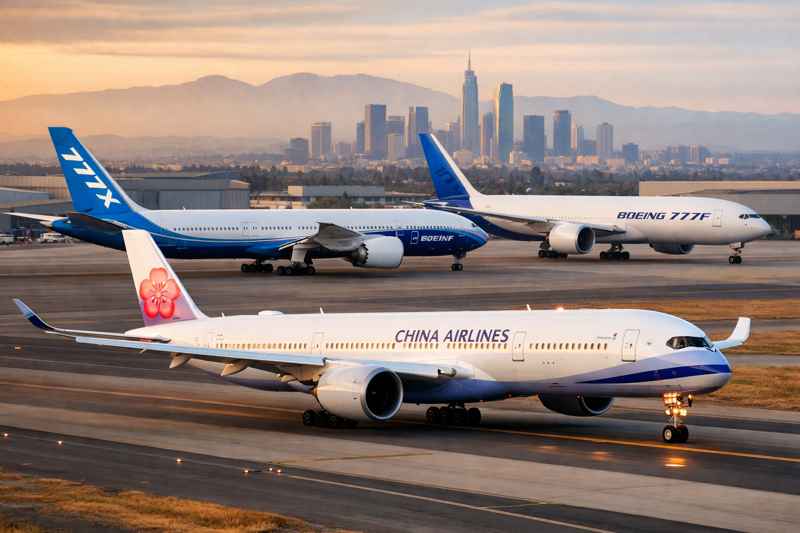
Despite cutting back on the A350-900, China Airlines is continuing to invest in larger, next-generation aircraft designed for long-haul and high-capacity operations. These include the Airbus A350-1000, Boeing 777X, and Boeing 777F.
The airline stated that these aircraft are required for “long-term operational development,” signaling a strategic pivot toward higher-capacity jets that can improve efficiency on international routes and support cargo demand.
The move suggests China Airlines is prioritizing aircraft that deliver greater range and payload capabilities, aligning with broader industry trends favoring fewer, larger aircraft over a higher number of smaller jets.
Leasing Plans Also Scaled Back
The A321neo aircraft included in the original agreement were expected to be supplied by Air Lease Corporation. With the revised order reduced from eight aircraft to two, the scope of this leasing arrangement has been scaled back accordingly.
This reduction reflects a more cautious approach to short- and medium-haul capacity expansion, particularly as airlines continue to evaluate regional travel demand and operational efficiency.
Balancing Growth and Financial Discipline
China Airlines’ latest move highlights a balancing act between controlling near-term expenditures and maintaining a clear path for future growth. By reducing its immediate aircraft intake while committing to advanced widebody jets, the airline is aligning its fleet strategy with long-term operational goals.
The decision underscores a broader industry pattern, where carriers are refining fleet plans to adapt to evolving market conditions while ensuring readiness for future demand.
As global aviation continues its recovery and transformation, China Airlines’ recalibrated approach reflects a focus on sustainability, efficiency, and strategic flexibility in an increasingly competitive landscape.
