


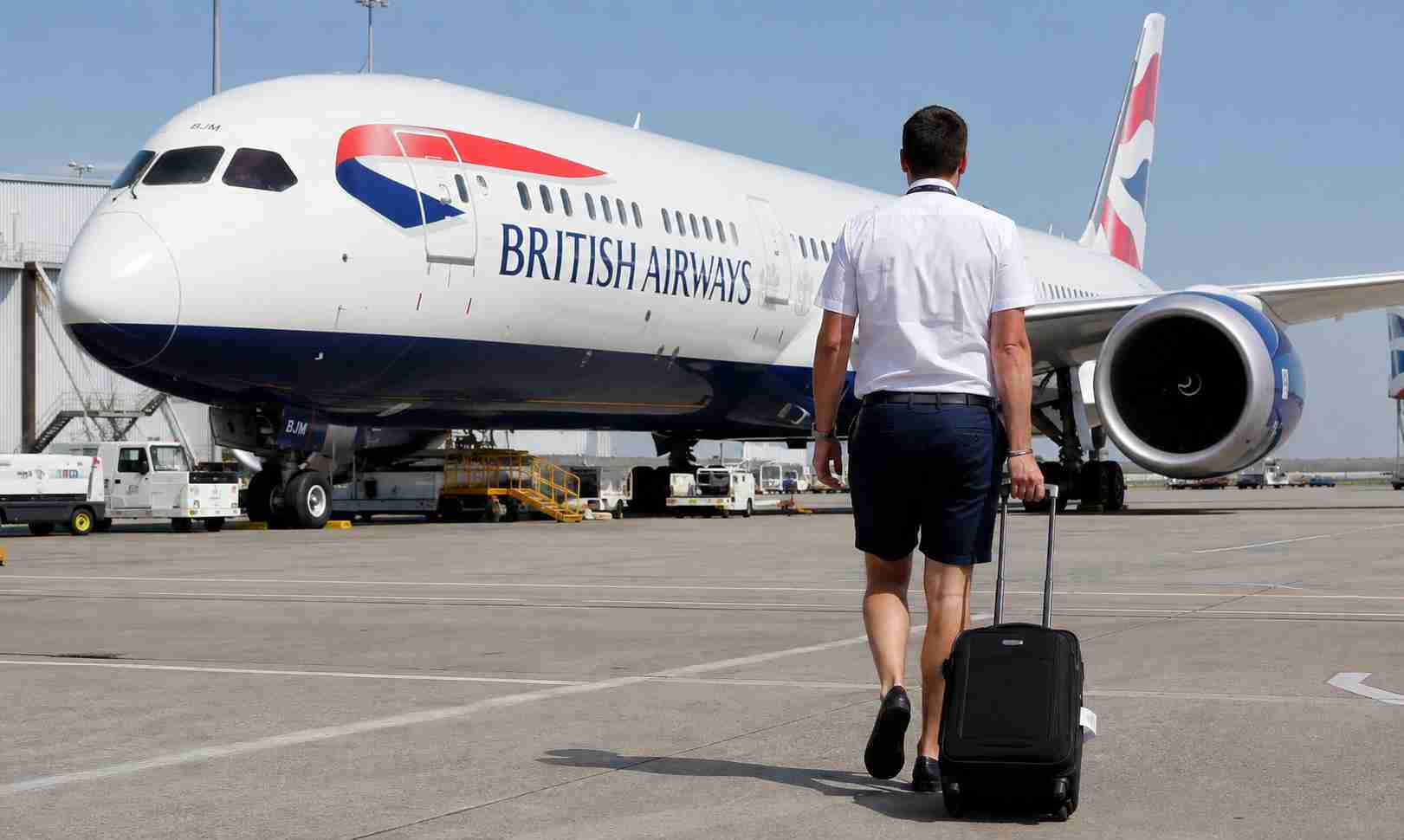
Airline Eases Seven-Year-Old Dress Code Restriction for Employees Flying Standby
LONDON — British Airways has updated its long-standing staff travel dress code, allowing employees flying on discounted standby tickets to wear tailored shorts for the first time in seven years as extreme summer temperatures continue across Europe and the United Kingdom.
The policy change took effect on July 8 and applies exclusively to airline employees and eligible travelers using non-revenue travel benefits. The update does not affect fare-paying passengers, who have never been subject to a formal dress code on British Airways flights.
The move comes as parts of Europe and the UK experience sustained temperatures above 30°C (86°F), prompting businesses and transportation providers to adapt to unusually hot conditions. According to aviation publication PYOK, British Airways revised the policy in response to the ongoing heat wave, with forecasts indicating elevated temperatures could persist for at least another week.
British Airways Introduces Limited Approval for Shorts
Tailored Styles Allowed, Casual and Beachwear Still Prohibited
Under the revised guidelines, employees traveling on standby tickets may now wear shorts, provided they meet specific standards. British Airways requires the shorts to be smart, tailored, and of an appropriate length.
The airline continues to prohibit sports shorts, cargo shorts, and beach-style shorts, maintaining its broader emphasis on professional appearance among staff travelers.
British Airways asks standby passengers to be appropriately dressed and well-groomed, and to use their best judgment when choosing travel clothing.
The airline’s policy also emphasizes that employees traveling on subsidized tickets are still viewed as representatives of the carrier. As a result, staff members are encouraged to consider the experience of fare-paying customers and dress in a manner that reflects positively on the airline.
The latest change marks a notable shift in a dress code that has historically been stricter for staff travelers than for regular passengers.
Evolution of the Staff Travel Dress Code
From Formal Business Attire to Casual Wear
The most significant revision to British Airways’ standby travel policy before this week occurred in 2018, when the airline abandoned requirements for more formal business-style clothing.
Prior to that update, male employees traveling on standby were generally expected to wear chinos, button-down shirts, and smart dress shoes. Female staff travelers were encouraged to wear dresses or smart trousers paired with closed-toe footwear.
At the time, British Airways said customers had increasingly embraced a more relaxed style of travel and that employees should be allowed similar flexibility. The revision permitted items such as jeans, T-shirts, and casual shoes while retaining a lengthy list of prohibited clothing.
Despite those changes, shorts remained banned for adult staff travelers. Children were the only exception to the restriction.
Other items that continue to be prohibited include overly revealing or sheer clothing, exposed midriffs, sportswear, activewear, beachwear, jeans with frayed or cut hems, flip-flops, V-style sandals, and garments displaying offensive language or graphics.
Dress Code Enforcement Has Led to Passenger Removals
British Airways has historically enforced its standby travel dress code closely, and violations have occasionally resulted in travelers being denied boarding.
One widely discussed example occurred in July 2025 when a passenger traveling in Club World business class reported seeing two individuals removed from a flight because they were wearing shorts.
According to the account, the passenger initially feared similar action because he was also wearing shorts. However, he later learned that the removed travelers were staff members flying on standby benefits and were therefore subject to the airline’s employee dress code. Fare-paying passengers were not affected by the restriction.
The incident highlighted the distinction between the standards applied to regular customers and those imposed on employees using travel privileges.
How British Airways Compares With Rival Airlines
Dress code requirements for non-revenue travelers vary widely across the airline industry.
Competitors Take Different Approaches
Several major carriers have already permitted shorts for standby travelers. United Airlines allows non-revenue passengers to wear shorts provided they sit no more than three inches above the knee while standing. American Airlines maintains a more flexible policy, generally allowing shorts as long as they are neat and clean.
Other international airlines continue to enforce stricter appearance standards. Lufthansa prohibits shorts as well as T-shirts, sweatshirts, and other casual clothing for eligible staff travelers.
Qatar Airways, once known for maintaining one of the industry’s most stringent staff travel dress codes, has gradually relaxed some requirements. The airline now permits smart jeans, polo shirts, and plain collarless T-shirts, although hats remain prohibited.
British Airways’ latest policy adjustment reflects a broader trend among airlines toward balancing professional appearance standards with passenger comfort, particularly as unusually high temperatures continue to affect major travel markets across Europe.
