


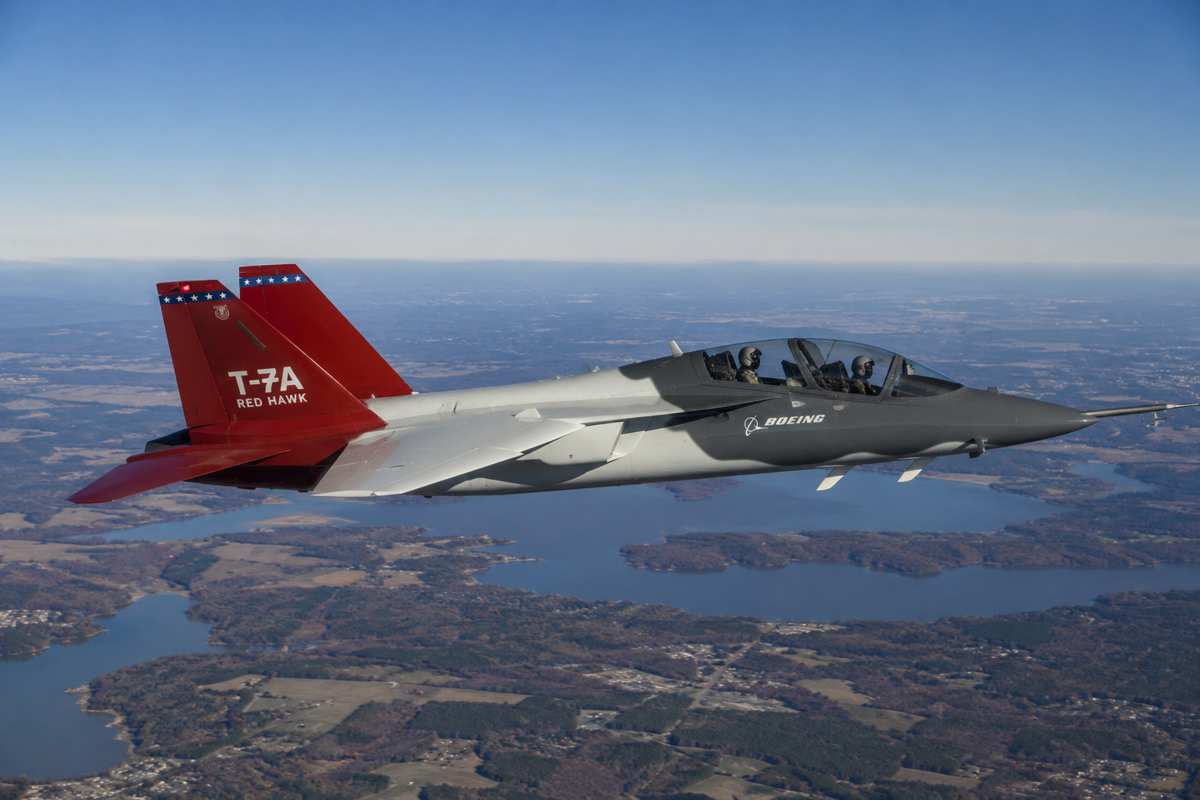
Boeing Begins Low-Rate Production of Next-Generation Trainer Aircraft
WASHINGTON, D.C. — The United States Air Force has approved Boeing’s T-7A Red Hawk advanced trainer aircraft for production, awarding the aerospace manufacturer a $219 million contract to build the first batch of jets as the service advances efforts to modernize pilot training.
The contract covers 14 aircraft as well as support systems, spare parts, and training infrastructure. The approval marks a significant milestone for Boeing and the Air Force after years of development and testing delays tied to the next-generation trainer program.
The T-7A Red Hawk is being developed to replace the Northrop T-38 Talon, a training aircraft that has remained in service for more than 60 years. The Air Force ultimately plans to acquire 351 T-7A aircraft as part of a broader modernization effort aimed at preparing pilots for increasingly sophisticated combat platforms.
The approval follows the program achieving a key acquisition milestone, allowing Boeing to begin low-rate initial production. Known within defense procurement as “Milestone C,” the authorization confirms that the aircraft has met major testing, design, and production readiness requirements necessary to move into manufacturing.
USAF Advances Long-Term Modernization Strategy
New Trainer Designed for Fifth-Generation Fighter Preparation
The Air Force views the T-7A as a critical component of its future pilot training ecosystem, particularly as pilots transition to advanced combat aircraft such as the F-35 Lightning II and F-22 Raptor.
Unlike the T-38, which first entered service in the 1960s, the T-7A incorporates modern avionics, digital architecture, and flight performance characteristics intended to better replicate frontline fighter operations.
The aircraft is expected to help trainee pilots develop higher levels of system awareness and flight control precision before advancing to operational aircraft. Officials believe the updated training platform will reduce the need for early instruction using active combat aircraft, lowering operational costs and maintenance demands.
The T-7A training ecosystem also includes 46 ground-based simulators that will be deployed across multiple Air Force training locations. The simulators are expected to play a major role in pilot development by allowing trainees to practice complex scenarios in controlled environments before transitioning to live-flight operations.
The Air Force plans to expand procurement gradually over the coming years, using early production batches to continue testing and operational evaluation before approving larger-scale manufacturing.
Phased Production Intended to Reduce Risk
Defense officials said the limited initial production approach is designed to reduce technical and financial risks as the aircraft enters operational service.
Under the strategy, the Air Force will closely monitor each production lot and assess performance data before moving forward with additional orders. The phased process allows engineers and program managers to address potential issues discovered during early manufacturing without significantly disrupting the broader procurement schedule.
The service is expected to increase production volumes steadily through the late 2020s as the program matures.
T-7 Program Faced Years of Development Delays
Technical Issues Extended Program Timeline
The T-7 program has encountered several setbacks since Boeing first secured the contract in 2018 under a deal valued at approximately $9.2 billion.
Initial plans called for the aircraft to enter operational service by 2023, but technical complications delayed the schedule multiple times. Air and Space Forces previously flagged concerns involving the aircraft’s ejection seat system, flight control software, and broader supply chain disruptions affecting production timelines.
The delays required Boeing and the Air Force to conduct additional redesign work and testing, extending the program’s development phase.
In response, the Air Force adopted a revised management strategy that increased coordination with Boeing while also expanding the program’s test fleet. The changes were intended to stabilize development and accelerate progress toward production readiness.
The latest contract award signals growing confidence in the aircraft’s readiness as the Air Force seeks to modernize one of the world’s largest pilot training operations.
Initial operational capability for the T-7A Red Hawk is currently targeted for 2027, with procurement expected to ramp up significantly once the aircraft completes its early production and evaluation phases.
