


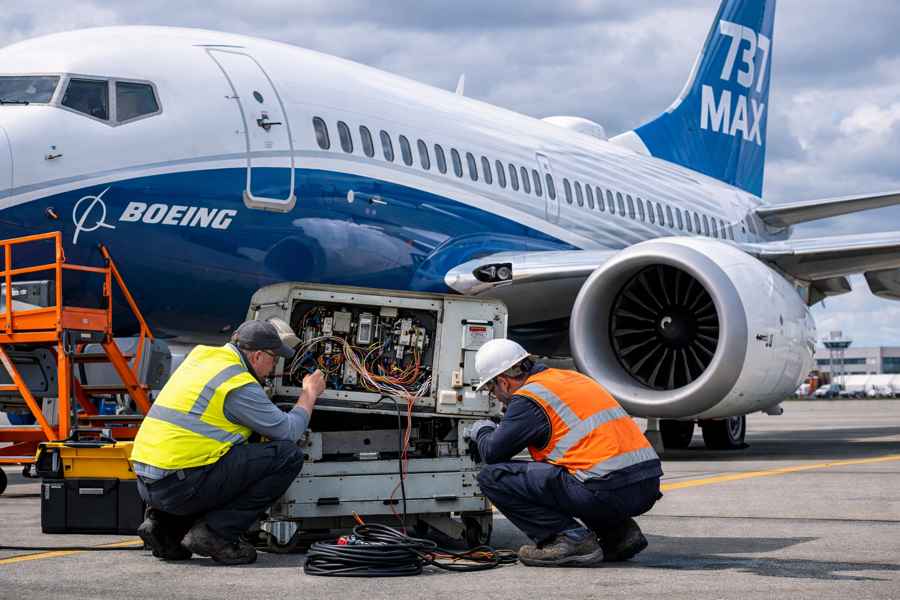
Boeing said it will delay deliveries of some 737 MAX aircraft after identifying a manufacturing defect that caused minor scratches on electrical wiring during production. The issue, discovered during routine inspections, will require repairs on affected aircraft before they can be handed over to airline customers.
The Arlington-based aerospace manufacturer said the defect does not affect aircraft already in service and can be fixed relatively quickly. However, the discovery could slow Boeing’s delivery pace during the early months of 2026, a period when the company is working to stabilize production and maintain delivery targets.
Manufacturing Error Causes Wiring Scratches
Boeing identified the issue during production checks on certain 737 MAX aircraft. Engineers discovered small scratches on electrical wiring inside the aircraft and traced the problem back to a machining error that occurred during manufacturing.
According to Boeing, the scratches are considered minor and do not require major structural work to correct. The company said engineers expect repairs to take only a few days per aircraft once the affected wiring components are inspected and corrected.
Boeing has not disclosed how many aircraft are affected by the issue. Nevertheless, the additional inspections and repairs may temporarily slow the company’s delivery schedule as production teams work through the affected jets.
Aircraft deliveries are a key financial milestone for manufacturers. Airlines typically make large final payments when planes are delivered, meaning delays can affect revenue timing for both the manufacturer and the airline.
Airlines in Service Not Affected
Boeing emphasized that the wiring problem does not impact aircraft already operating with airlines.
The aircraft maker said the issue does not affect planes currently in service with airlines such as Southwest Airlines (WN) operating from Dallas Love Field (DAL) and American Airlines (AA) from Dallas/Fort Worth (DFW). Boeing expects repairs on affected aircraft to take only a few days.
Airlines currently flying the 737 MAX have not reported any operational issues related to the defect. The company said the problem appears limited to aircraft still undergoing production or those awaiting delivery.
Boeing added that it will inform airline customers if additional inspections or corrective measures become necessary as engineers continue to evaluate the issue.
Potential Impact on Delivery Pace
Even though the repair process is relatively quick, the issue could affect Boeing’s delivery pace during the first quarter of 2026.
Aircraft deliveries play a crucial role in the commercial aviation industry. Airlines depend on new aircraft deliveries to expand routes, modernize fleets, and meet growing passenger demand. Any delay can require airlines to adjust operational plans or postpone fleet upgrades.
For Boeing, delivery performance also directly influences financial results. Delays can shift revenue recognition from one quarter to another, making production stability a top priority for the company.
Boeing Maintains Strong 2026 Production Outlook
Despite the wiring issue, Boeing remains confident in its production outlook for the year. The company expects to deliver approximately 500 Boeing 737 MAX aircraft during 2026.
The 737 MAX program remains Boeing’s most important commercial aircraft product. Demand for the narrow-body jet continues to be strong among global airlines seeking fuel-efficient aircraft for short- and medium-haul routes.
Boeing currently holds a backlog of more than 6,100 aircraft orders, with roughly two-thirds tied to the 737 MAX family.
The company also reported delivering 51 aircraft in February 2026, marking its strongest February delivery performance since 2017.
Continued Recovery After Quality Scrutiny
The latest manufacturing issue comes as Boeing continues efforts to rebuild trust following increased scrutiny over production quality in recent years.
In January 2024, a panel detached from a recently delivered 737 MAX aircraft during flight, prompting regulators to intensify oversight of Boeing’s manufacturing processes. Although the incident did not result in serious injuries, it triggered a broad review of the company’s quality control systems.
Following the event, Boeing implemented several operational changes. These included leadership restructuring, reforms inside its factories, and the acquisition of a key supplier to improve manufacturing oversight.
The Federal Aviation Administration later eased some restrictions placed on Boeing after the company demonstrated improvements in production quality and oversight.
Airlines receiving newer aircraft have also reported improvements in build quality, suggesting that Boeing’s manufacturing reforms are beginning to show results.
Financial Recovery and Long-Term Outlook
Boeing’s financial performance has also begun to improve as production stabilizes and aircraft deliveries increase.
The company reported a profit of $2.2 billion in 2025, marking its first annual profit since 2018 after several years of losses tied to production disruptions, safety issues, and pandemic-related demand declines.
Chief Executive Officer Kelly Ortberg told employees earlier this year that Boeing is making steady progress in its recovery efforts. He said strong demand for new aircraft and operational improvements provide reasons for optimism about the company’s future.
With a large order backlog and continued airline demand for fuel-efficient aircraft, Boeing remains focused on stabilizing production while addressing manufacturing issues as they arise.
