


Unprecedented View Offers Insight Into Sensitive Design Features
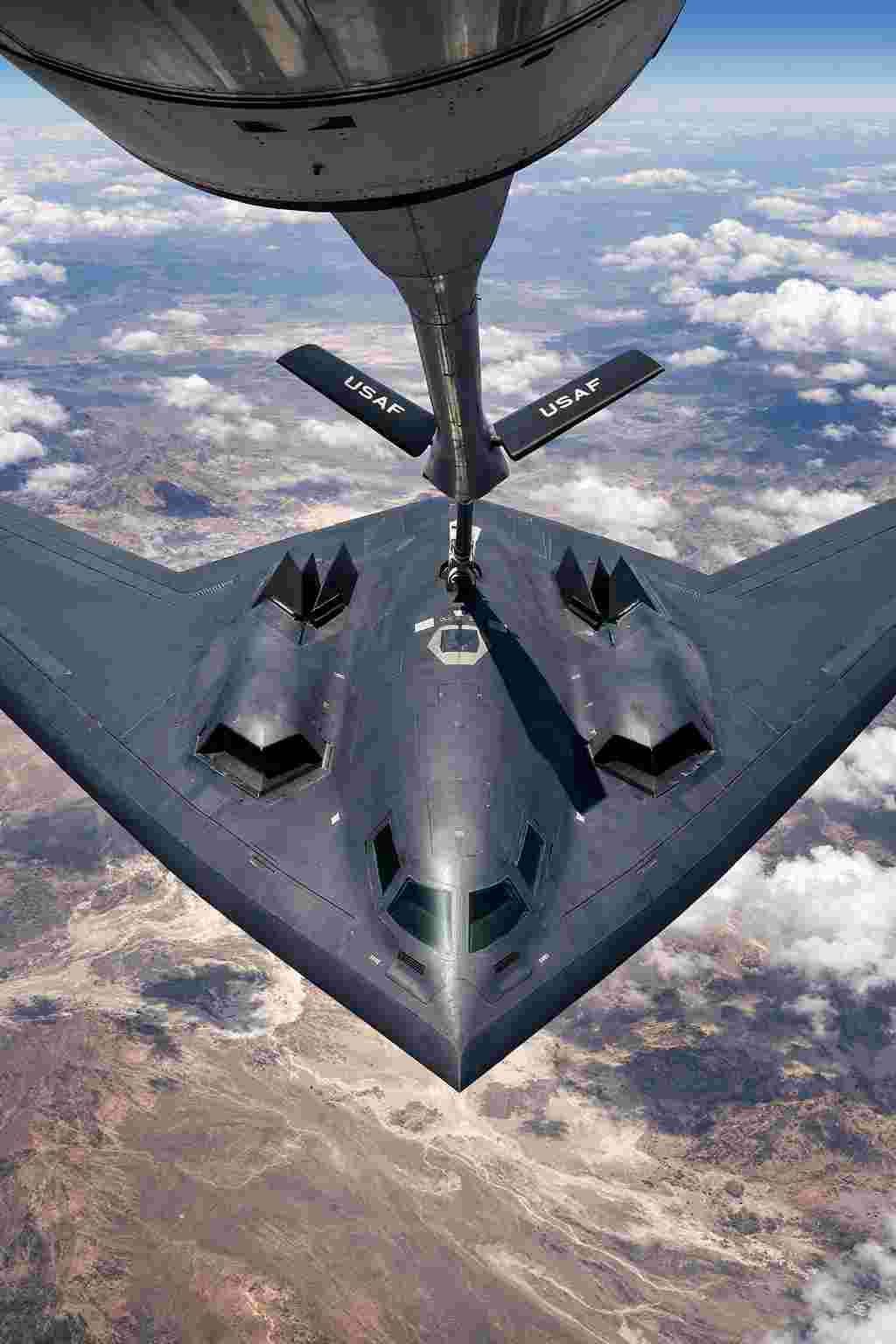
PALMDALE, CALIFORNIA — Northrop Grumman has released the first-ever full overhead image of the B-21 Raider stealth bomber, offering the most detailed public look yet at the aircraft’s upper structure and key design elements.
The image, captured during initial aerial refueling trials at Edwards Air Force Base, shows the bomber in a pre-contact position behind a KC-135 tanker. It provides an unprecedented view of the aircraft’s upper fuselage, including highly sensitive features such as its air inlets and exhaust system.
The aircraft featured in the image is the first B-21 airframe, nicknamed Cerberus. Observers note the Raider’s deeply blended air inlets, chevron-shaped exhaust outlets, and minimal cockpit glazing—design choices that underscore its stealth-focused engineering.
Northrop Grumman confirmed that the B-21 program remains on schedule, with the first operational aircraft expected to arrive at Ellsworth Air Force Base in 2027.
First Overhead Perspective Highlights Stealth Innovations
Exhaust Design Signals Advanced Thermal Management
The newly released photograph marks the first time the public has seen the B-21 from a steep upper angle, revealing details that had previously been concealed.
Of particular interest is the bomber’s exhaust system, widely regarded as one of the most sensitive components in low-observable aircraft design. The image shows deeply recessed, chevron-shaped exhaust outlets positioned significantly forward of the trailing edge.
This configuration is intended to reduce the aircraft’s infrared signature, making it more difficult for detection systems positioned below or behind the aircraft to track it. Notably, the chevron orientation appears inverted compared to the B-2 Spirit, suggesting a fundamentally different approach to managing heat emissions.
The image does not visibly show heat-attenuating materials typically associated with stealth bombers. For comparison, the B-2 features a distinct cooling area and structural elements connecting exhaust ducts to the upper airframe. Their absence in the B-21 image has led to speculation that the photograph may have been altered to conceal classified features.
Efficiency and Range Take Center Stage
Smaller Size, Greater Reach
Northrop Grumman has positioned the B-21 as the most fuel-efficient bomber ever built. According to the company, the aircraft consumes significantly less fuel than fourth- and fifth-generation platforms, reducing reliance on aerial refueling assets and enabling greater operational flexibility.
Although smaller than the B-2 Spirit, the B-21 is designed for extended range. Its aerodynamic planform emphasizes high-altitude efficiency, and analysis suggests it likely operates with two engines instead of four, based on contrail patterns and overall configuration.
While the Raider may carry a smaller weapons payload than its predecessor, it compensates with increased fuel capacity, allowing for longer missions between tanker support.
Cockpit and Airframe Details Emerge
Minimal Glazing Enhances Stealth Profile
The overhead image also reveals unusually small cockpit windows, a design choice aimed at reducing radar cross-section while still meeting aerial refueling visibility requirements.
Operating at higher altitudes further reduces exposure to radar systems, and the minimized glazing contributes to the aircraft’s low observability.
A supplementary side-view image released alongside the overhead shot highlights the B-21’s compact fuselage, estimated to be comparable in length to an F-15 fighter jet. Wingspan estimates range between 145 and 155 feet.
Additional details include a refueling receptacle and paint markings similar to those found on advanced fighters such as the F-22 and F-35, indicating design commonality across next-generation U.S. Air Force platforms.
Testing Support and Program Progress
Specialized Tanker Plays Key Role
The tanker aircraft visible in the images is Edwards Air Force Base’s “Ghost” KC-135, identified by tail number 61-0320. This unit supports classified flight testing programs and plays a critical role in the B-21’s ongoing development.
Northrop Grumman has invested more than $5 billion in digital engineering and manufacturing infrastructure for the program. The company reports that production is accelerating, with the program remaining both on schedule and within budget—a notable achievement in contrast to the B-2 program’s historical cost overruns.
Outlook: Growing Confidence in the Raider Program
The release of the overhead image signals increasing confidence from Northrop Grumman and the U.S. Air Force as the B-21 moves closer to initial operational capability.
As flight testing continues, additional imagery and technical details are expected to emerge, offering further insight into one of the most advanced stealth aircraft ever developed.
