


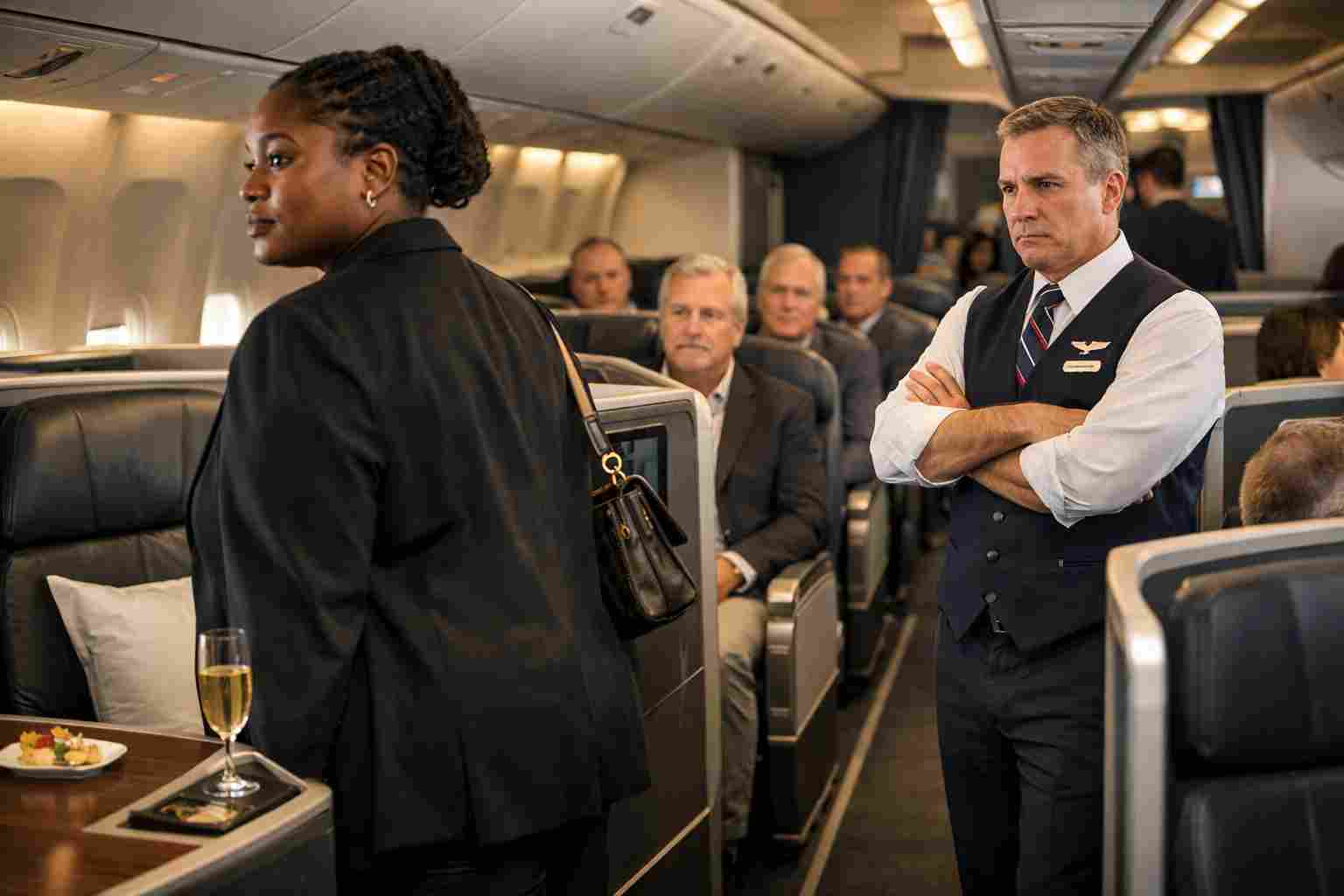
A premium cabin service dispute involving a former Vogue editor and American Airlines is drawing attention to the importance of consistent onboard service for high-value airline customers, particularly those holding elite loyalty status. The incident, which unfolded on a transatlantic flight from New York to London, highlights how customer experience can influence brand perception even among an airline’s most loyal travelers.
Elite Passenger Downgrades Mid-Flight
Gabriella Karefa-Johnson, a former editor at Vogue and an invitation-only Concierge Key member in American Airlines’ AAdvantage loyalty program, made the unusual decision to downgrade herself from First Class to Business Class during a flight from John F. Kennedy International Airport to London Heathrow. Her journey ultimately continued to Milan Malpensa Airport.
Karefa-Johnson later shared on social media that she had deliberately routed through London to access American’s First Class product, which is available on select Boeing 777-300ER aircraft. The airline’s nonstop New York–Milan route, typically operated by the Boeing 777-200ER, does not offer First Class.
According to her account, dissatisfaction with onboard service prompted her decision to leave the premium cabin mid-flight, despite having paid for and intentionally sought out the highest level of comfort offered.
She described the First Class cabin as containing six seats, occupied by five white middle-aged men and herself, a Black woman in her 30s. She alleged that from the beginning of the flight, a male flight attendant provided substandard service and engaged in repeated micro-aggressions.
Karefa-Johnson said she ultimately chose to sacrifice physical comfort to protect her emotional well-being, emphasizing that she frequently travels in premium cabins and is familiar with expected service standards.
Premium Service Under Scrutiny
The incident underscores ongoing scrutiny surrounding service consistency in American Airlines’ most exclusive cabins. Concierge Key status is reserved for top-spending customers and frequent flyers, making their satisfaction particularly important for airline revenue and reputation.
While premium cabins promise elevated service, delivery can vary depending on individual crew performance. Publicly available information does not independently verify intent behind the service concerns in this case, and it remains possible the experience stemmed from individual conduct rather than systemic issues.
Still, the situation has reignited discussion about service reliability on long-haul flights departing from JFK, where passenger feedback has historically been mixed.
In a separate previously reported incident involving a transatlantic American Airlines flight, a flight attendant reportedly told an elderly traveler, “I didn’t ask who you were with and I don’t care. Boarding pass is what I asked.” The same crew member allegedly added, “Can you speed this up?” despite the flight being nearly empty.
Such exchanges, while anecdotal, point to the variability that can define onboard experiences—even in premium cabins.
Operational and Financial Realities of Downgrading
Switching cabins mid-flight presents logistical and financial complications. Business Class cabins on overnight transatlantic routes are often fully booked, meaning any downgrade requires coordination and potentially another passenger agreeing to change seats.
Additionally, airlines generally do not refund fare differences solely due to dissatisfaction with service tone or interpersonal interactions. That means passengers who downgrade voluntarily may absorb the financial loss.
There is also no guarantee of improved service in a lower cabin, making such a move both unusual and risky from a customer experience standpoint.
On overnight flights, some travelers in similar situations may choose to remain in First Class and minimize interaction with crew rather than relocate.
The Economics of Premium Routing Choices
Karefa-Johnson’s decision to connect through London rather than fly nonstop to Milan reflects a common strategy among elite travelers: adjusting itineraries to access superior onboard products.
Airlines market First Class as a differentiated experience, but in practice, the distinction between First and Business Class on some American Airlines transatlantic routes can be incremental rather than dramatic, particularly in catering and seating comfort.
The episode raises broader questions about whether additional time and expense to secure First Class are justified when service delivery ultimately depends on human interaction.
Reputational Stakes for Airlines
For airlines, premium cabin passengers represent a disproportionate share of profits. Maintaining consistent service quality is critical not only for customer retention but also for brand reputation, particularly in the age of social media where individual experiences can quickly reach global audiences.
American Airlines has not publicly issued formal findings regarding the incident, and there is no independent confirmation of discriminatory intent.
However, the case illustrates the delicate balance airlines must maintain between delivering premium products and ensuring consistent, respectful service across crews and routes.
Industry-Wide Implications
The dispute serves as a reminder that in commercial aviation, service perception can carry as much weight as physical amenities. Even the most exclusive seating and elite loyalty tiers cannot fully offset negative interpersonal experiences.
For airlines competing fiercely for high-value customers, ensuring consistent premium service remains both a business imperative and a reputational necessity.
As carriers continue investing in upgraded cabins and loyalty programs, the human element of service delivery may remain the most critical factor determining whether premium travelers feel their loyalty is truly rewarded.
