


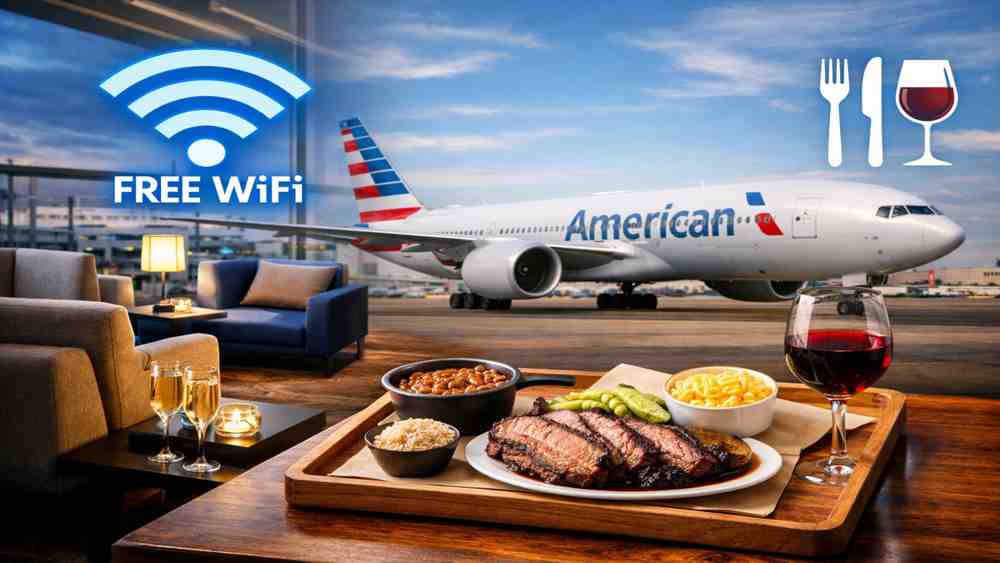
FORT WORTH — American Airlines is preparing a broad set of customer experience upgrades that include expanding free onboard WiFi to its remaining widebody aircraft, modernizing airport lounges across key hubs, and deepening food and beverage partnerships aimed at premium travelers.
The initiatives reflect a wider industry shift toward treating connectivity, lounge comfort, and dining quality as baseline expectations rather than optional extras. Early performance data from American suggests the strategy is already resonating with passengers, particularly on routes where complimentary WiFi has been introduced.
Free WiFi Expansion Nears Completion
American has completed free WiFi installation on more than 90 percent of its fleet, focusing primarily on aircraft equipped with ViaSat and Intelsat connectivity systems. Most domestic narrowbody aircraft and regional jets now offer complimentary access, a milestone that places the carrier closer to parity with competitors that have already made similar moves.
Some widebody aircraft, including portions of the Boeing 777 and Boeing 787 fleets, still rely on legacy Panasonic systems that are not yet part of the free service rollout. According to details disclosed during an internal employee meeting, the airline plans to extend free WiFi to these remaining aircraft over the next 12 to 24 months.
The move is designed to standardize the onboard experience, particularly for long-haul and international travelers who increasingly expect seamless connectivity throughout their journey.
Customer Satisfaction Gains Drive Rollout
Preliminary data cited internally shows a 15 percent improvement in passenger satisfaction scores on flights offering free WiFi. Net promoter scores also rose on routes where complimentary connectivity is available, reinforcing the view that internet access is now considered a core part of air travel rather than a premium add-on.
American initially prioritized aircraft where installation was simpler and less disruptive to operations. Widebody aircraft present greater technical challenges due to older hardware, longer installation times, and the need for additional certification approvals. These factors have contributed to the longer rollout timeline for the remaining portion of the fleet.
Clearer Communication During Disruptions
Beyond connectivity, American is also planning improvements in how it communicates delays and cancellations. Customers will soon receive more detailed notifications that explain operational causes rather than relying on broad or technical descriptions.
The airline intends to deliver these updates through digital channels and airport staff, giving travelers clearer insight into disruptions and helping them make informed decisions during irregular operations.
Major Lounge Investments Across Key Hubs
American continues to invest heavily in its airport lounge network, with renovations and expansions planned at several major hubs. Current and upcoming projects include Admirals Club upgrades at Washington National Airport, new premium lounges planned in Charlotte Douglas International Airport, and a Flagship Lounge expansion at Miami International Airport.
Additional premium lounge capacity is also planned at Dallas Fort Worth International Airport as part of the airline’s long-term Terminal F development. Executives have hinted that more lounge announcements could follow later this year, including potential expansion of the Provisions concept, which emphasizes quicker, grab-and-go dining options.
Regional Dining Partnerships Take Shape
American has also begun testing new onboard dining partnerships, starting with a collaboration with Pecan Lodge barbecue on premium cabin flights between Dallas and New York. The meals are available through a pre-order system, allowing the airline to manage catering complexity while offering higher-quality, regionally inspired options.
Executives have described the partnership as an early step in a broader food strategy, with the potential for similar collaborations on other routes if customer response remains strong. Such partnerships allow airlines to enhance premium cabin value without completely overhauling existing catering operations.
A Broader Customer Experience Strategy
Together, the WiFi expansion, lounge investments, and dining partnerships form a central pillar of American’s effort to close perceived service gaps with competitors. By standardizing connectivity and improving airport and onboard amenities, the airline aims to strengthen loyalty among frequent and premium travelers while maintaining cost discipline.
As the rollout continues over the next two years, American is positioning these upgrades not as luxury enhancements, but as essential components of a modern airline experience in an increasingly competitive market.
