


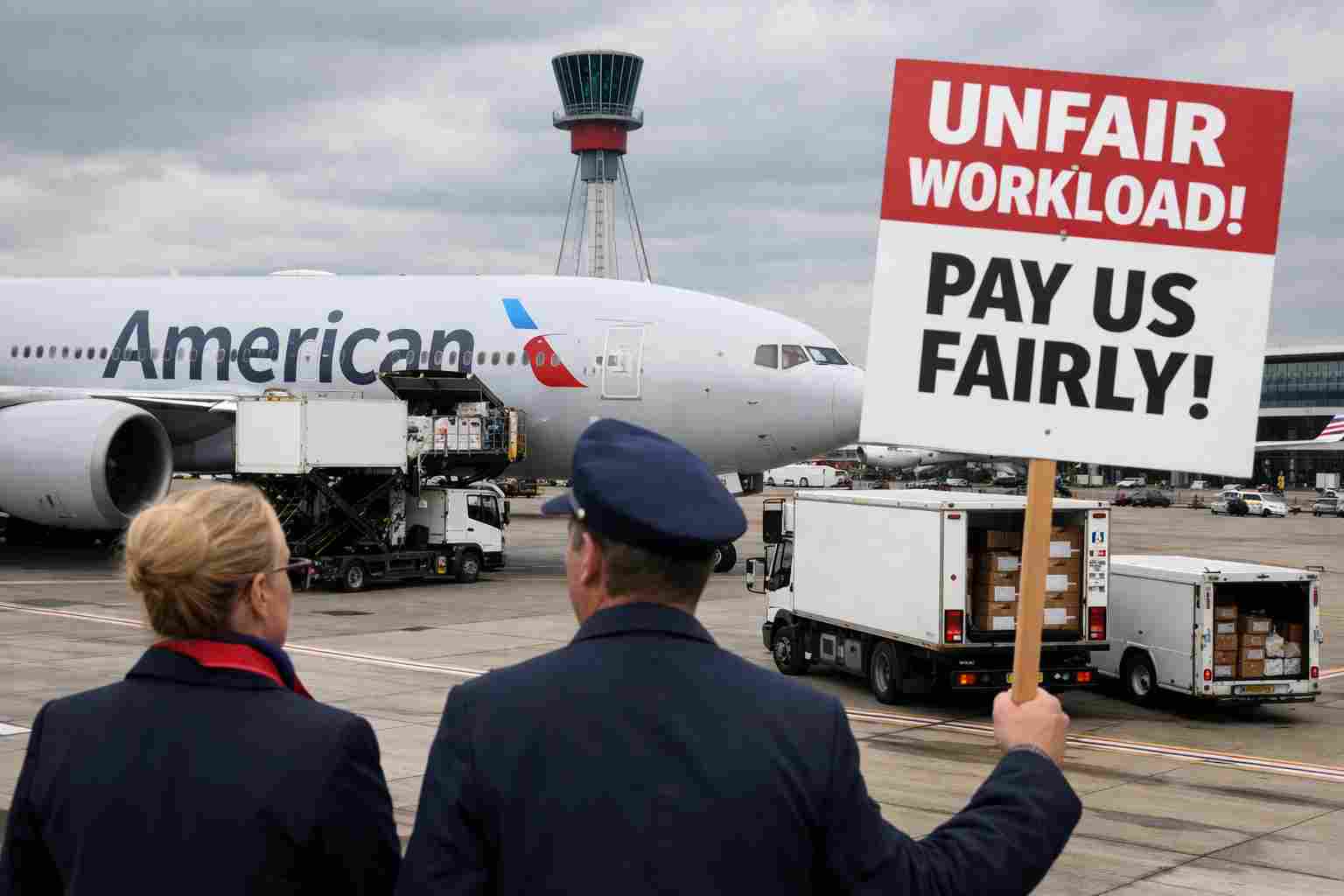
Union Pressure Mounts Over Operational Strain and Pay Disputes
LONDON — American Airlines is grappling with a growing labor dispute tied to a prolonged catering disruption at London Heathrow, a situation that is increasingly straining its transatlantic operations and prompting calls for compensation from flight attendants.
The issue, which began in early March, has evolved from an operational setback into a broader labor conflict, with union leaders warning that unresolved concerns over workload and working conditions could escalate further.
At the center of the dispute is the Association of Professional Flight Attendants (APFA), which has raised formal objections to what it describes as significantly increased responsibilities for crew members operating flights to and from London.
Catering Breakdown Triggers Operational Challenges
The disruption originated after American Airlines abruptly ended its long-standing catering agreement with dnata at London Heathrow. The move forced the airline to quickly overhaul its onboard service logistics across multiple long-haul routes.
To compensate, American implemented a “double catering” system, in which aircraft departing from the United States are loaded with meals for both outbound and return journeys. While the workaround has allowed flights to continue operating, it has introduced added complexity to onboard service routines.
A partial recovery has been achieved through support from British Airways, enabling limited catering restoration via Do&Co for premium cabin services. However, Economy Class and secondary meal offerings remain dependent on the double catering system, prolonging operational strain.
Flight Attendants Cite Increased Workload
The APFA argues that the revised catering procedures have materially altered working conditions for flight attendants. Crews are now tasked with managing larger quantities of onboard supplies, navigating tighter storage constraints, and executing more complicated service flows during flights.
Union officials maintain that these changes go beyond routine operational adjustments and constitute a significant quality-of-work-life issue.
In response, the APFA has initiated formal contractual actions, including filing a notice of dispute and signaling the possibility of escalating the matter to a Presidential Grievance. The union’s Dallas-Fort Worth division is also coordinating with representatives at New York’s JFK Airport to increase pressure on airline management.
Pay Demands and Escalation Threats
Union leaders are calling on American Airlines to provide additional compensation for crews affected by the Heathrow-related disruptions. They argue that the increased workload warrants financial recognition under existing labor agreements.
The APFA has warned that further escalation is likely if the airline fails to address what it sees as an imbalance between job demands and compensation.
The dispute now represents a critical test for labor relations at the airline, particularly as it navigates high-demand international routes during a busy travel period.
Broad Impact on Transatlantic Network
American Airlines operates up to 19 daily flights between London Heathrow and nine U.S. destinations, making it one of the largest carriers on the route. The airline transports an estimated 14.5 million passengers annually between the United States and London, underscoring the scale of the disruption’s impact.
While temporary measures have helped stabilize service levels, uncertainty remains over when a permanent catering solution will be secured at Heathrow.
Until then, the airline faces continued operational pressure and mounting labor unrest, with potential implications for both service reliability and employee relations across its international network.
