


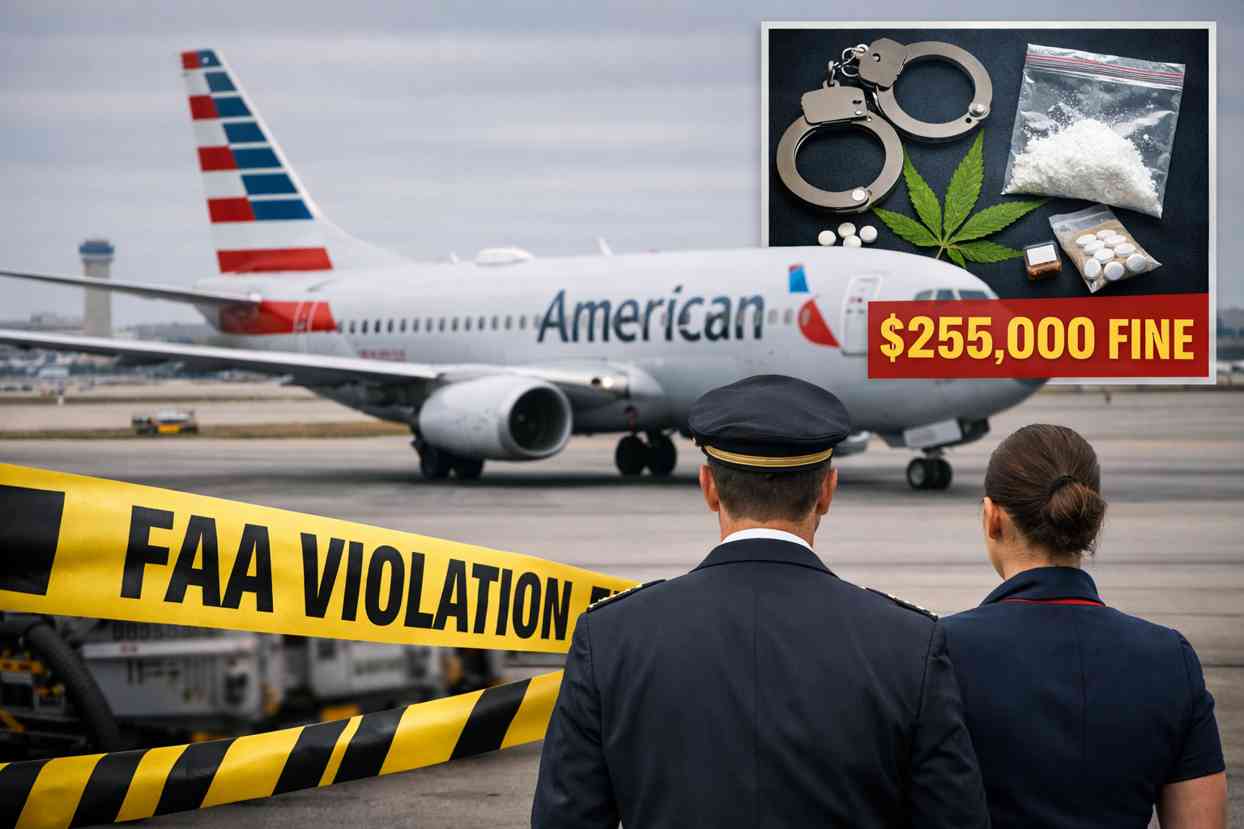
FAA Says 12 Flight Attendants Returned to Duty Without Required Follow-Up Testing
American Airlines is facing a proposed $255,000 civil penalty from the Federal Aviation Administration after regulators alleged the carrier allowed 12 flight attendants who had previously tested positive for drugs or alcohol to return to safety-sensitive duties without completing federally mandated follow-up testing, according to details provided in the enforcement action.
The FAA said the alleged violations occurred between May 2019 and December 2023 and involved employees resuming work despite not fulfilling post-reinstatement drug and alcohol testing requirements under federal regulations. The agency’s latest enforcement action marks another sign of increased scrutiny over airline compliance with safety-related substance testing programs.
The substances involved in the American Airlines case included amphetamines, cocaine, marijuana and methamphetamine, according to the FAA. Individual violations can carry penalties exceeding $100,000, with the proposed fine representing the combined total of multiple infractions. The agency has also signaled that it is considering raising penalty amounts in future cases.
Broader FAA Crackdown Sweeps in Multiple Carriers
The proposed penalty against American Airlines comes as part of a broader FAA push to tighten oversight of airline drug and alcohol testing compliance across the U.S. aviation industry.
Southwest Airlines is also under enforcement review after the FAA alleged that 11 employees—including pilots, flight attendants and aircraft mechanics—performed safety-sensitive duties without completing required follow-up drug and alcohol testing. Those alleged violations occurred during periods between August 2021 and July 2024.
The employees at Southwest had previously tested positive for alcohol or drugs, including marijuana, cocaine and amphetamines, according to the FAA.
In response, Southwest said: “Southwest Airlines takes seriously its drug-and-alcohol testing responsibilities and continues to engage with the FAA. We took immediate action more than two years ago to enhance our procedures and to strengthen oversight and accountability.”
Both American and Southwest have 30 days to respond to the FAA’s enforcement letters.
Avelo Airlines Also Targeted
The FAA has also proposed a $65,000 civil penalty against Avelo Airlines, alleging the carrier failed to include 10 flight attendants in its required drug and alcohol testing pool during periods between April 2024 and November 2024.
The actions against three carriers suggest regulators are identifying what may be a broader compliance issue across the airline sector, particularly as carriers continue to rebuild staffing and operations following pandemic-era disruptions.
Federal Rules Require Extensive Monitoring After Positive Tests
Under Title 14 of the Code of Federal Regulations Part 120, all safety-sensitive airline employees—including pilots and flight attendants—must be subject to random drug and alcohol testing. For 2026, airlines are required to randomly test 25% of safety-sensitive employees for drugs and 10% for alcohol.
Employees who test positive are not automatically terminated under FAA rules. Instead, they may return to duty only after completing a multi-step rehabilitation and monitoring process.
That process includes an evaluation by a Substance Abuse Professional, passing a return-to-duty test, and undergoing a structured follow-up testing regimen that may continue for as long as five years. FAA rules require at least six follow-up tests during the first 12 months after an employee returns to a safety-sensitive role, with all testing conducted under direct observation.
The FAA alleges American and Southwest failed to ensure employees completed those required follow-up steps before resuming operational duties.
Industry Substance-Abuse Programs Face Ongoing Scrutiny
Airline substance-abuse rehabilitation programs have also faced legal and regulatory scrutiny in recent years.
In 2022, United Airlines agreed to pay $305,000 to settle a lawsuit filed by the Equal Employment Opportunity Commission on behalf of an alcoholic Buddhist pilot who objected to participating in Alcoholics Anonymous as part of the airline’s rehabilitation process. The pilot sought permission to use a Buddhism-based peer support program instead, but alleged United declined to accommodate his religious objection.
Although United settled the lawsuit, the airline stood by its Human Intervention Motivation Study, or HIMS, program, which is widely used in the aviation industry to help pilots return to duty after substance-abuse treatment. The company has said the program has helped as many as 90% of participating pilots successfully return to the cockpit.
Regulatory Pressure Likely to Intensify
The FAA’s latest enforcement actions indicate regulators are placing renewed emphasis on strict adherence to post-positive testing protocols as part of broader aviation safety oversight.
For airlines, the penalties serve as a warning that even administrative lapses in drug and alcohol testing programs can trigger substantial financial consequences and heightened regulatory attention.
As the FAA continues its review of airline compliance systems, carriers may face additional enforcement actions if regulators uncover similar deficiencies elsewhere in the industry.
If you want, I can also reformat this into a Reuters/AP-style version or make it more publication-ready for a specific outlet tone.
